
Become a Personal Trainer
Why A Client Bounces At The Bottom Of A Squat, And What To Call It
From the FASTER syllabus: this article is taught in full in the from-scratch route to a CIMSPA-recognised qualification, no sales calls →
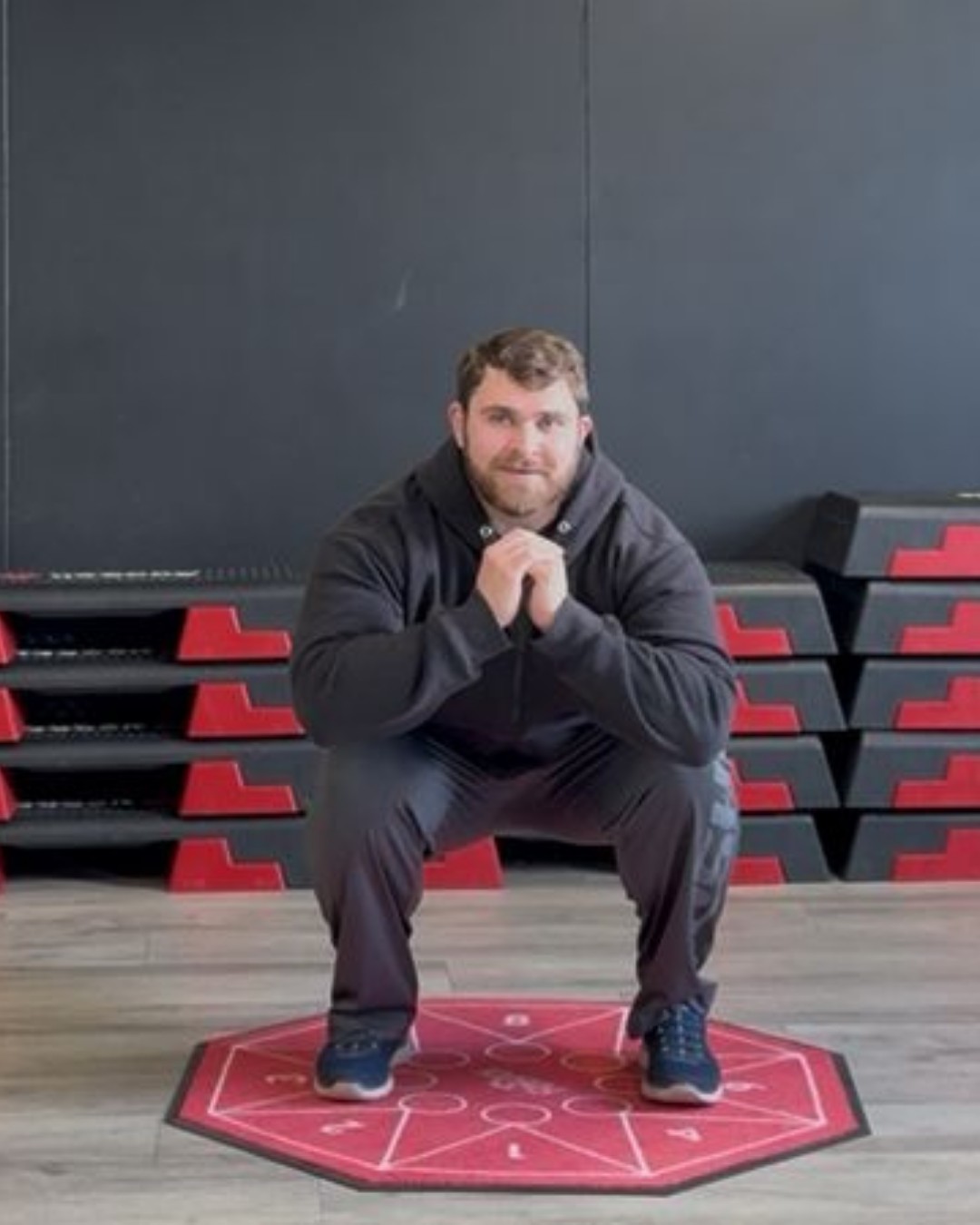
In short: The Level 3 Personal Training Certificate teaches the stretch reflex, also called the deep tendon or myotatic reflex: muscle spindles detect a fast stretch and fire a pre-programmed response before any conscious decision, which is why a client's leg jerks under a sudden load or bounces at the bottom of a squat, a normal reflex worth naming rather than a fault to fix.
The short version
A client loads a bar, sinks into a squat, and springs back out of the bottom slightly faster than they sank into it. Nothing went wrong. That small bounce has a name, a mechanism and a place in the Level 3 Personal Training Certificate, which is one of the things you learn on our CIMSPA-recognised personal training course.
Key Takeaways
- The stretch reflex, also called the deep tendon or myotatic reflex, is a pre-programmed response that fires when a muscle is stretched quickly, before any conscious decision gets involved.
- Muscle spindles inside the muscle detect the speed of the stretch and trigger the response, whether the trigger is an external load or an internal signal.
- It shows up on an ordinary gym floor: a bounce at the bottom of a squat, a leg jerking under a sudden load, a hand tightening around something that slips.
The moment anatomy usually fades
Anatomy gets learned for an exam and then, for a lot of new trainers, it quietly leaves. The worry that replaces it is specific: a client will do something, ask something, or react to something mid-session, and the answer won't be there. That worry is fair, and it's also fixable, because the Level 3 syllabus doesn't leave the stretch reflex as a diagram to memorise and forget. It gives a trainer a mechanism they can point to the next time they see it happen in front of them.
The reflex, named properly
The stretch reflex is also called the deep tendon reflex or the myotatic reflex. It's a pre-programmed response the body produces when a muscle gets stretched quickly, whether that stretch comes from an external load placed on the muscle or from the nervous system's own internal signal. Inside the muscle sit structures called muscle spindles, which pick up how fast the stretch is happening and fire the response before the brain has consciously weighed in. The course's own example is a plate about to slip from someone's hand while food is being served onto it: the grip tightens before any decision gets made to tighten it.
Where you'll see it
Move that same mechanism onto a gym floor and it turns up constantly. The bounce at the bottom of a loaded squat is the stretch reflex responding to a fast stretch across the quads and glutes. A client's leg jerking when a step gives way slightly more than expected is the same reflex, protecting the joint before the client has time to think about it. Someone's hand snapping shut around a dumbbell that starts to slide is the plate-and-food example, live, in a gym.
None of it needs correcting. It's the body doing exactly what it's built to do, faster than conscious thought moves. What changes is whether the trainer standing there can say what just happened, or has to guess.
What this earns you
Seeing movement and being able to describe it plainly, as something normal rather than a mystery, is the skill FASTER calls HMAC eyes, and it runs through the whole Certified PT course. A client who bounces out of a squat doesn't need a fix. They need a trainer who can say, calmly, exactly what their body just did and why, which is a different kind of confidence than knowing a diagram existed once.
What to do next
The Certified PT Bundle carries Level 2, Level 3 and Movement Trainer together for £1,500, and it's the same CIMSPA-recognised route into the industry that this teaching point comes from. Once a course is passed, PT Manager opens up fully, free for life.
The FASTER Journal shares the next teaching point first. Sign up at /newsletter and it arrives the moment it's ready.
You just read one answer. The course is all of them.
the from-scratch route to a CIMSPA-recognised qualification, no sales calls — taught by the people who wrote it, with free return access for life. The price is on the page, payment plans at checkout, no sales calls.
Also worth a look: the Certified PT Bundle, Level 2, Level 3 and Movement Trainer together for £1,500.
See what the course covers →Frequently asked
Do I need to memorise every reflex for the exam and then watch it fade?
No. The course ties the stretch reflex to something you'll actually see on the gym floor: a client's leg jerking under a sudden load, or bouncing out of the bottom of a squat.
Is a bounce at the bottom of a squat something to stop happening?
No. It's a normal reflex, not a fault. Naming it correctly is what lets a trainer describe what's happening instead of guessing at whether it means something's wrong.
Does finishing the course get me PT Manager?
Yes. PT Manager opens the moment you sign up with FASTER, and adding real clients unlocks once you pass a course.
Reading this for your own training? Every trainer on the FASTER register has been assessed by us — search by town or speciality, free.
Find a FASTER trainer →