
Biomechanics
Falling Into the Biomechanical Cure Hole
From the FASTER syllabus: this article is taught in full in The Games for Pain course →

In short: The Biomechanical Cure Hole is the seductive belief that you can fix clients with special techniques despite the evidence, and escaping it means holding your practice to a consistent standard of research even when that costs you status and income.
Before biomechanics took over, our industry was about FITT and the science of illness in a clinical setting, and about muscles in the bodybuilding world. Functional training meant stroke rehab and getting people back to everyday tasks. Fascia was connective tissue you learned to pass an exam. Posture belonged to the arts and rehab. Programmes were written on cards: biceps and calves for the men on the blue card, abductors and adductors for the women on the pink one.
1997 was the wrong time to enter the industry if you wanted to train people and have fun with it. I got bored, pushed for management, and that led me straight towards the Biomechanical Cure Hole (BCH).
What the Cure Hole promises
Enter the BCH and you enter a world that promises glory and riches. It makes common-sense arguments despite the evidence, and often challenges the idea of using evidence at all. It seems lovely. Its victims speak with a voice of loving and caring, showing how much they get from fixing clients. The place changes you: it makes you want everyone to live there, and it makes you feel you have to teach everyone about it.
It was a beautiful place for me to inhabit. I was pulled in by the tales of riches and the buzz of making clients feel better with temporary pain relief. It helped my trainers earn more. It catapulted me onto the world stage as a presenter, where other global presenters loved me, supported me and held me in high esteem.
As it grew, so did the ways of "changing tissue" and chasing the elixir of perfect length-tension symmetry and range of motion. An extreme wing of anatomists started talking about fascia and its miraculous ability to do everything despite the science saying otherwise. I loved it. I was handed a list of pressure points for removing pain, offered a wand to scrape pain away, taught to alter the body with foot posts, tape and cups. My clients — the ones it "worked" on — loved me, paid me more and kept coming back, because I gave them answers others wouldn't.
The lines that keep you in
When I did start asking tough questions about the science, I got hit with the standard replies:
- "You felt it work." (I didn't always, but I agreed to stay on the right side of my mentors.)
- "You can't argue with the results in your clients." (Not all my clients got results, which is exactly why I had to keep playing the healer.)
- "But what would you do instead?" (An answer must exist, no one else is giving it, so ours must be right by default.)
- "Science hasn't caught up with us yet." (The ironic claim that science will one day validate us, so believe us until it does.)
Being led out
Luckily, I had friends reaching in to drag me out. They wanted me to see the research and understand the danger of a narrative that creates dependency and more pain. I didn't want to go. I'd lose friends, status and business. But it was the right thing, so eventually I was led out.
The moment I left, the "friends" who supported the golden boy scrambled to fill the gap. They set up education companies, tried to grab our students and ridiculed my business. I lost status and I lost income. But I met new students, some of my old ones stayed, and we started to fight for the use of evidence to back techniques, even when it hurt to admit we couldn't help a particular client.
Evidence alone isn't enough, though. A good question and a real understanding of the human are needed too, or the evidence just answers the wrong questions.
The next hole
The BCH is now mainstream. People name courses and businesses after biomechanics. It got so crowded that some have had to leave and look for an alternative — and in our world that alternative is the Pain Science Cure Hole (PSCH). They hate the BCH and love the strength and conditioning world, and they claim to be with science. But they still ask skewed questions, and they still won't demand the evidence behind a technique if the author is big enough in their circle.
Inside the FASTER universe, our team of trainers and students keep each other grounded. We drop techniques and theories the moment we realise we were wrong, and we keep challenging each other with bigger questions, better research and better ways of communicating. Seeing movement, understanding psychology and social psychology, emotion and homeostasis — everything that makes a human unique — is built into what we do.
Thank you for reading.
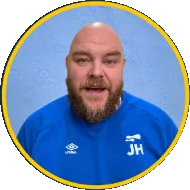
John, former BCH presenter and big shot, almost PSCH victim.
You just read one answer. The course is all of them.
The Games for Pain course — taught by the people who wrote it, with free return access for life. The price is on the page, payment plans at checkout, no sales calls.
Frequently asked
What is the Biomechanical Cure Hole?
John Hardy's term for the seductive world of fixing clients with special techniques that promise glory and results while ignoring or dismissing the evidence.
Why do trainers fall into it?
It brings status, higher earnings and grateful clients who see you as a healer, which makes the lack of evidence easy to overlook.
What are the classic defences of it?
Lines like 'you felt it work', 'you can't argue with the results' and 'science hasn't caught up with us yet'.
What is the PSCH?
The Pain Science Cure Hole, a newer trap that claims to be pro-science but still asks skewed questions and won't demand evidence when the author is big enough.
How do you get out?
By holding your work to a consistent standard of good evidence and dropping techniques the moment you realise they don't stand up, even when it costs you.
Reading this for your own training? Every trainer on the FASTER register has been assessed by us — search by town or speciality, free.
Find a FASTER trainer →