
Coaching & Mindset
Change What's Around A Client, And Their Movement Changes Itself
From the FASTER syllabus: this article is taught in full in Movement Trainer (AFT), £375 — build exercises with the right variables for the client in front of you →
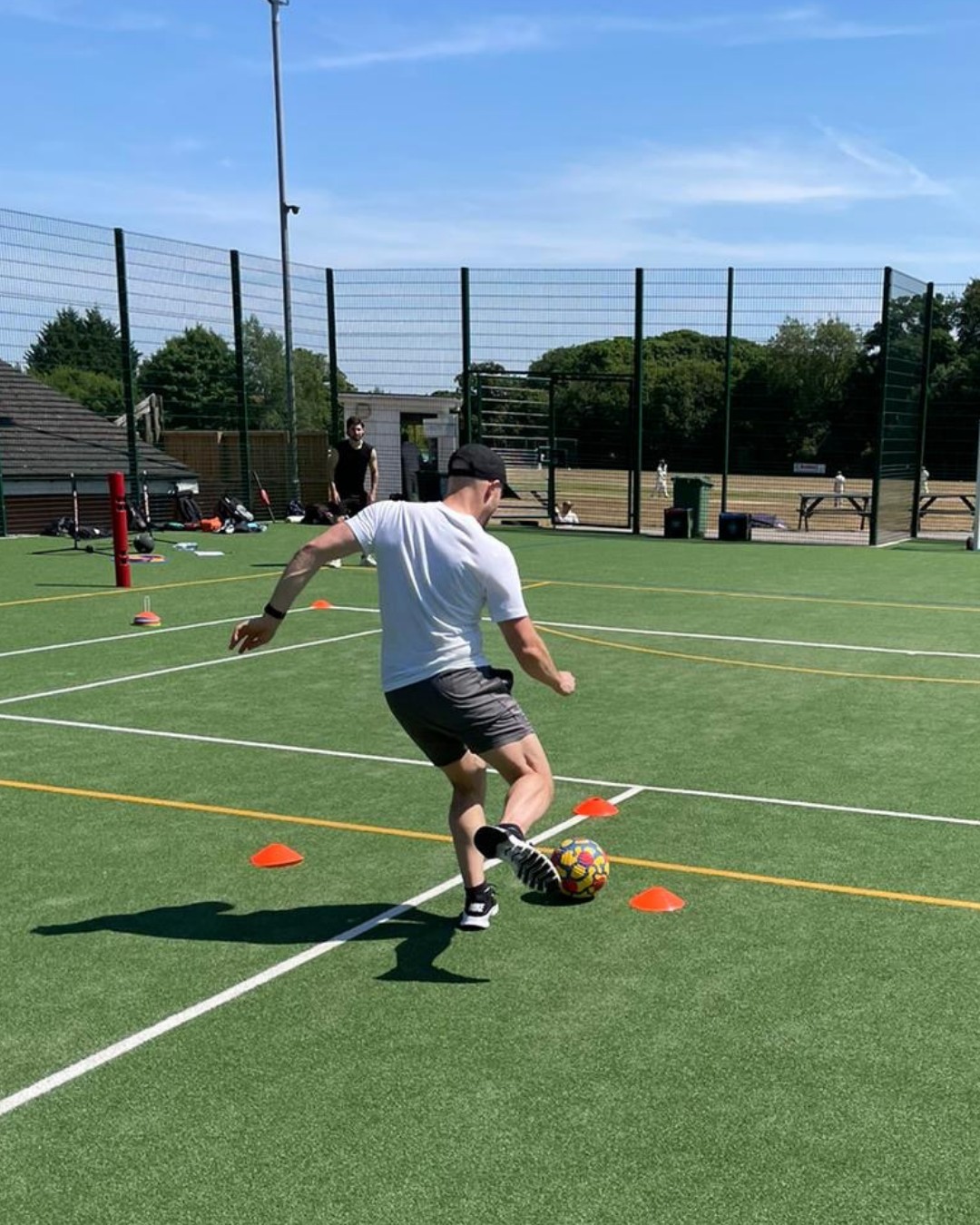
In short: FASTER's Movement Trainer course teaches a client's movement can be shaped by changing what's around them rather than adding another verbal cue: a wall, a box of cones, a line on the floor, a gradient, a hand held in space, or a training tool, each one restricting or opening a degree of freedom so the client's own body finds the solution.
The short version
The fear that shows up early in a trainer's career is the moment in front of a client when the exercise bank runs dry and there's nothing left to give beyond what a first course happened to teach. FASTER's Movement Trainer course answers that with a skill that has nothing to do with collecting more exercises: changing what's around a client so their own body finds the movement, instead of adding another instruction on top of the last one.
Key Takeaways
- A client's movement can be shaped by changing the space around them, not only by cueing them verbally.
- Removing a degree of freedom, the number of ways a client could solve a task, can help them succeed with the movement more consistently.
- A wall, a line, a gradient, a box of cones or a trainer's own hand in space are all real tools for this, and none of them need a training budget.
Running out of things to say, not things to know
New trainers picture the moment a cue doesn't land: told once, told a different way, told a third way, the movement still missing. It's easy to read that as a personal gap, something a better trainer would already know how to fix with words. FASTER's course treats it as the wrong tool for the job rather than a missing one. Some movement problems were never going to be solved by finding the right sentence.
The idea underneath it
Course text calls the range of ways a client could attempt a task their "degrees of freedom", and it treats coaching as, in part, the skill of managing how many of those options are open at once. Remove some of the options and a client tends to find the movement more reliably, because there's less to choose between. Open the options back up and the same client can build the abundance and adaptability that carries a skill from the gym into real life.
Six ways to shape it without saying a word
The course sets out a working list, and every item on it changes the room instead of the client. Put an exercise near a wall to reduce how far it can travel. Put a client inside a box of cones to bring the speed down. Create a line to stay on, adding a small consequence for stepping off it, to slow a movement down on purpose. Use a gradient to speed a movement up or slow it down. Stand, or hold a hand, in the exact spot a client would otherwise move into, closing off that option without a word said. Add a training tool that physically guides the body through a successful path.
Why the room does the work here
None of these are corrections aimed at the client. They're changes to the space the client is moving in, which the client's own body then responds to, the same way a foot finds a different path around a puddle without being told step by step how to walk. That's the shift FASTER teaches: a trainer with six ways to change the room never runs out of what to offer, even holding the exact same set of exercises they started with.
What to do next
Movement Trainer (AFT) teaches this alongside the rest of FASTER's system for building exercises with the right variables for the client in front of you, for £375. Passing it opens the full programme builder inside PT Manager, free for life.
The FASTER Journal shares the next teaching point first. Sign up at /newsletter and it arrives the moment it's ready.
You just read one answer. The course is all of them.
Movement Trainer (AFT), £375 — build exercises with the right variables for the client in front of you — taught by the people who wrote it, with free return access for life. The price is on the page, payment plans at checkout, no sales calls.
Also worth a look: PT Manager's programme builder, free the day you pass a course.
See what the course covers →Frequently asked
Does this replace giving a client verbal cues?
No, it sits alongside cueing. Changing the environment is a second way to shape movement, useful when a cue alone isn't landing or when the aim is to let the client solve the problem rather than be told the answer.
Do I need special equipment for this?
No. A wall, a line taped on the floor, a gradient, or a trainer's own hand held in space all count. Cones and a training tool are options, not requirements.
Does Movement Trainer connect to PT Manager?
Yes. Passing Movement Trainer (AFT) opens the full programme builder inside PT Manager, so an exercise built with a specific constraint can be saved straight into a client's programme.
Reading this for your own training? Every trainer on the FASTER register has been assessed by us — search by town or speciality, free.
Find a FASTER trainer →