
Coaching & Mindset
Brazil Didn't Teach Better Ball Control, They Shrunk The Ball
From the FASTER syllabus: this article is taught in full in Movement Trainer (AFT) — where constraint-led coaching is taught →
In short: Movement Trainer teaches a constraint-led approach: instead of explaining a movement in more words, a trainer changes an environmental, task or individual constraint, and the client finds the movement themselves. The course's own example is Brazilian futsal, where a smaller, heavier ball forces tighter ball control without a single word being said about technique. On a gym floor the same three levers exist: the environment (what's in the room), the task (the rules of what counts as success) and the individual (working with what this specific person brings), and a trainer who can pull any of the three doesn't need to have memorised an exercise for every situation, because the constraint does the teaching. PT Manager's Analysis Notes and video review give a trainer somewhere to keep what constraint worked for a client, and when, so it doesn't have to be rebuilt from memory the next session.
A smaller ball, not a longer explanation
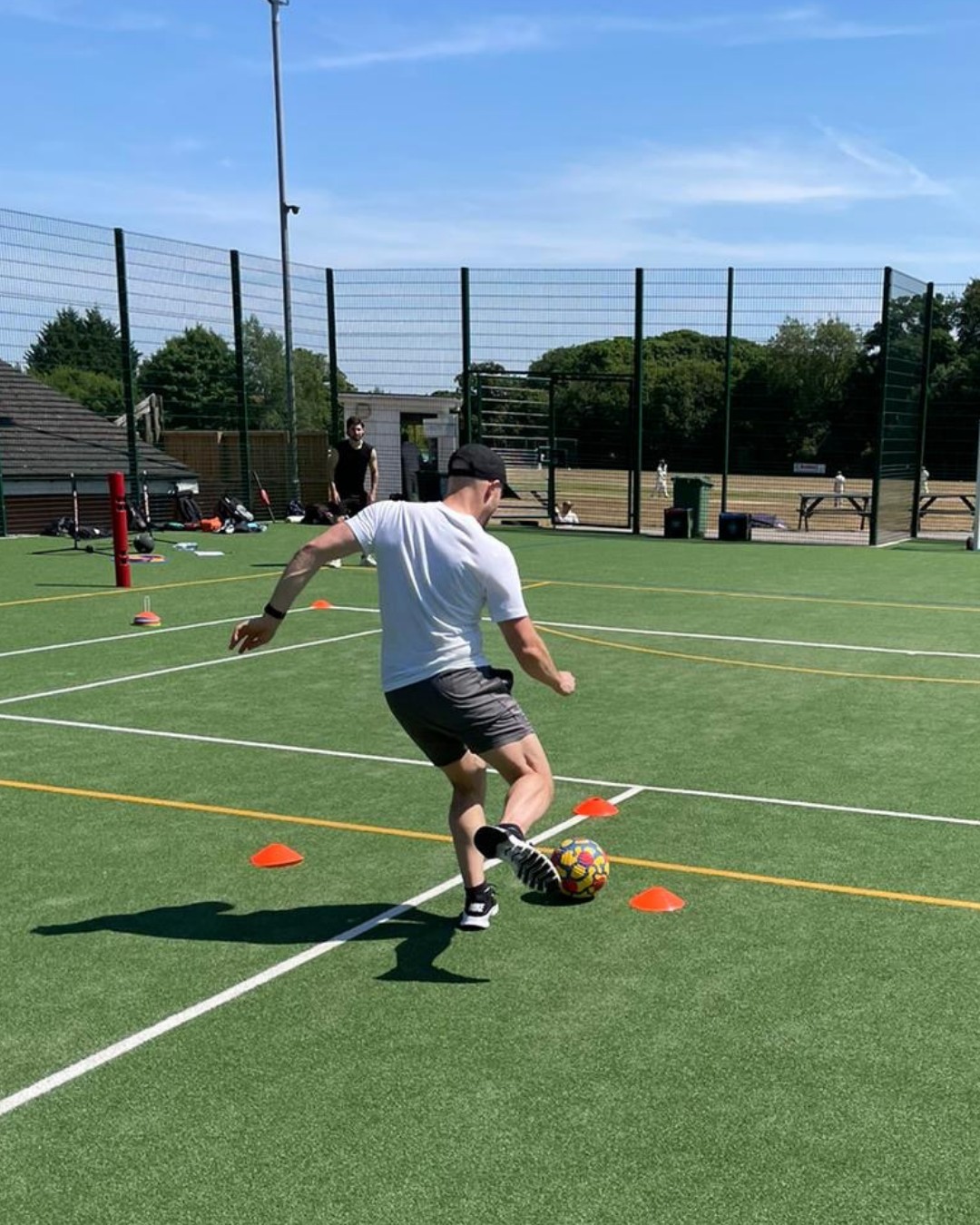
Brazil's futsal programme didn't produce a generation of players with better ball control by giving longer team talks about foot placement. They gave children a smaller, heavier ball than a normal football, on a smaller court, and the ball itself did the coaching. Miss-hit a touch and it doesn't roll kindly the way a full-size ball does. Nobody says a word about technique. The environment makes the correction before a coach has to.
Movement Trainer names that Brazil, and it names why it works.
What the course actually says
The course's own frame is specific: a constraint is "the ways you reduce the number of choices a client can make when trying to solve the movement problem," and there are three kinds available to a trainer. Environmental constraints, things like the surface, the space, or gravity. Task-specific constraints, the rules of the drill, the equipment used, what counts as a successful rep. And individual constraints, working with what this particular client actually brings rather than an average client who doesn't exist. Futsal is the course's own example of the first two at once: the ball is the environment, the smaller court is the task.
What it looks like on a gym floor
Nobody hands a client a smaller kettlebell and calls it coaching by accident. The skill is choosing which constraint to pull. A client who keeps letting a squat drift onto their toes doesn't automatically need five more sentences about weight distribution. Standing them on a slightly raised surface, or handing them a light front-loaded weight instead of nothing, can make the better position the only one that stays comfortable, which is the environment doing in one change what a paragraph of cueing was trying to do in words.
Why this beats knowing more exercises
A trainer who's memorised three hundred exercises still runs out the moment client three hundred and one shows up with something none of them fit. A trainer who's fluent in the three constraint groups never runs out, because the same football, the same kettlebell, the same empty half of a gym floor can be turned into a dozen different problems just by changing what's allowed, what's in the way, or who's being asked to solve it. The skill isn't a bigger list. It's knowing which lever to pull for the person in front of you.
What to do next
Movement Trainer (AFT) is £375, and the constraint-led approach sits inside the same module as guided discovery and chunking feedback into one piece at a time, all coaching-delivery tools that work without adding to the explanation. Read more at Movement Trainer (AFT), and PT Manager opens free the moment you sign up.
The FASTER Journal shares the next teaching point first. Sign up at /newsletter and it arrives the moment it's ready.
You just read one answer. The course is all of them.
Movement Trainer (AFT) — where constraint-led coaching is taught — taught by the people who wrote it, with free return access for life. The price is on the page, payment plans at checkout, no sales calls.
Also worth a look: PT Manager, free with any FASTER course.
See what the course covers →Frequently asked
Does constraint-led coaching mean never giving a cue?
No, it means the constraint does some of the work a long explanation would otherwise have to do, so the cues that are still needed can be shorter and land better.
What are the three things a trainer can actually change?
The environment (what's physically in the room, gravity, surface, space), the task (the rules, the equipment, what counts as success) and the individual (working with what this specific client brings rather than a textbook version of them).
Does this connect to PT Manager?
Yes. Passing Movement Trainer (AFT) opens PT Manager's full client tools, where a note on which constraint worked for a client can be pinned straight to their record instead of relying on memory.
Reading this for your own training? Every trainer on the FASTER register has been assessed by us — search by town or speciality, free.
Find a FASTER trainer →