Workouts & Exercises
Can a Functional Trainer Deadlift?
From the FASTER syllabus: this article is taught in full in The Movement Trainer (AFT) course →
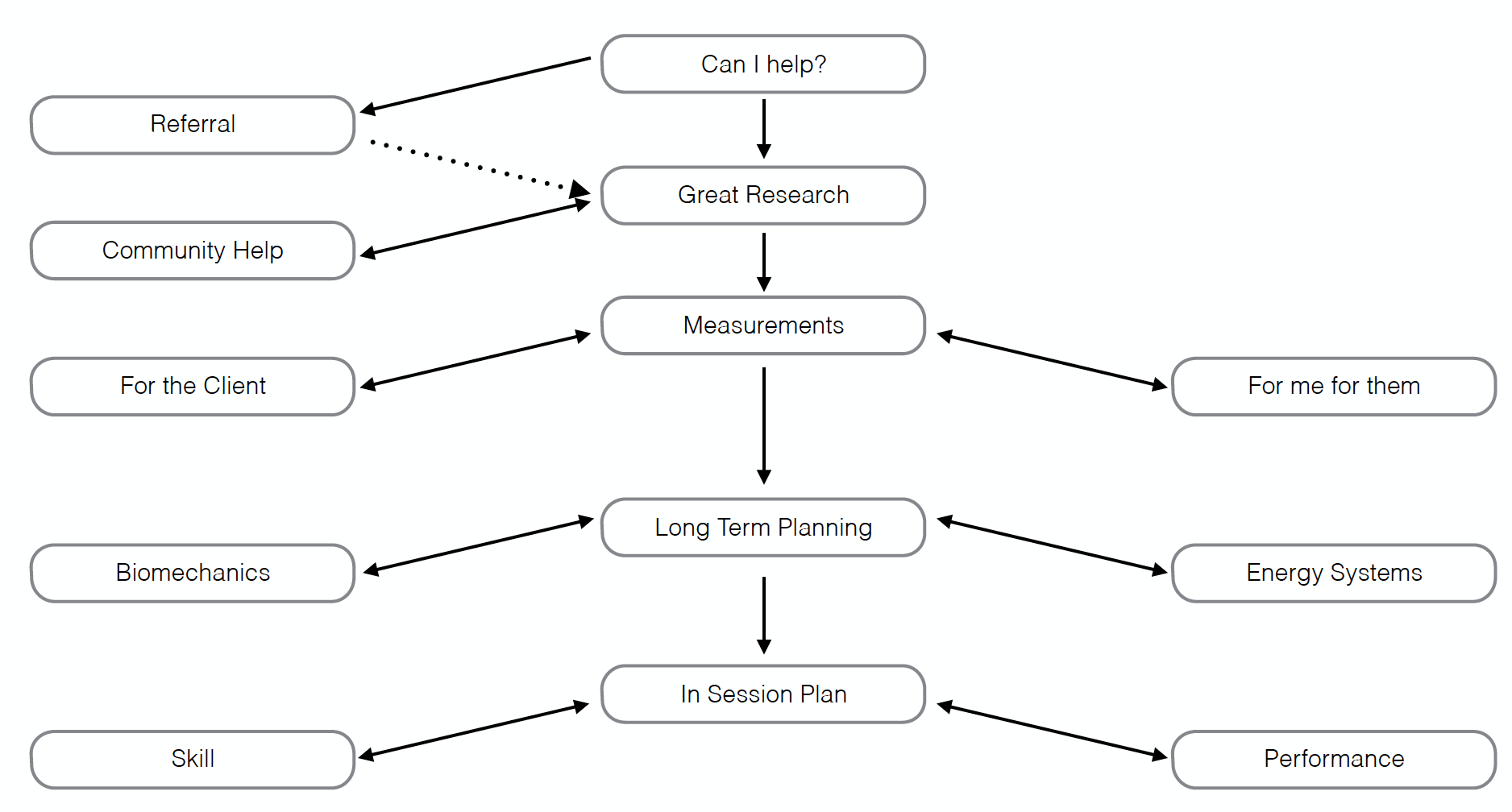
In short: You can't judge a great trainer by their exercise or tool selection — great trainers all work through the same system (identify the problem, research it, apply the research, adapt to the outcome), so their programmes converge; you only spot the labels when a trainer is coasting.
"So, are you one of those trainers who does bicep curls standing on a Bosu?" You've heard the passive-aggressive jibes — usually from someone who doesn't understand how to build an exercise, let alone a programme:
- Are you one of those trainers who pops pills, only eats meat and lives to lift?
- Are you one of those vegan trainers who names every move after an animal and prays to the moon?
I'm fed up reading about what makes a "functional trainer", a "strength and conditioning coach" or a "holistic trainer". Here's the truth: if you watch a genuinely great trainer work, you won't be able to tell anything about them from their exercise choice, their tool selection or how the client is reacting.
Great trainers work through a system
The FASTER system is simple — and it's close to the system any personal trainer, therapist, or honestly anyone in any field should use:
- Identify the problem.
- Do the research.
- Apply the research.
- Adapt to the outcomes.
Because of this, exercise choice and the loading — workload, effort and rest — follow the research. Which is why research-based trainers end up with programmes that look very similar. The label on the tin becomes irrelevant.
Where great trainers actually differ
The difference between incredible trainers comes down to how well they use the research and the breadth of knowledge they can draw on. To make full use of the evidence, a trainer should have a working knowledge of:
- Motor skill acquisition
- Motor skill application
- Enhancing performance criteria
- Fatigue
- Pain
- Motivation
- Interviewing
- Goal setting
And the practical skills to:
- See motion — the connection between bones, joints, muscles, centre of gravity and skill
- Elicit a genuine desire to move on every rep
- Build a game on the spot
- Build a story on the spot
- Adapt to the client in front of them, even when it means abandoning the plan
When it goes wrong
You can tell trainers apart in one situation: when they're coasting. A trainer who's stopped thinking uses the same or very similar exercises with everyone. (Don't confuse this with a trainer who simply has very similar clients.) And that's when the tribal defaults show:
- Functional trainers lean on lots of variables — off-balance work, agility and low weights.
- Strength and conditioning trainers stay close to the lifts, technique and load, plus physical markers.
- Holistic trainers default to slow, end-range bodyweight and band work.
None of those is the trainer being great. They're the trainer falling back on habit.
The conclusion
Do deadlifts. Lunge in three planes. Pretend you're a fish and throw yourself about on the floor — as long as you meet your client's goals scientifically. The exercise is never the point.
A few parting thoughts while I'm here:
- All movement is one-dimensional, made up of three coordinates.
- Movement is individual and task-driven.
- Fascia is a slightly sensitive sausage-skin structure, bullied by the muscles, with fewer receptors than skin — not the cause of, or saviour from, every problem in the body.
- Deadlifts don't save lives, even if you love them.
- Trainers aren't doctors, scientists are nice people who want to improve the world, and the owners of big pharmaceutical companies are probably not lizards.
You just read one answer. The course is all of them.
The Movement Trainer (AFT) course — taught by the people who wrote it, with free return access for life. The price is on the page, payment plans at checkout, no sales calls.
Frequently asked
Can a functional trainer deadlift?
Yes — deadlift, lunge in three planes, throw yourself about on the floor, whatever meets the client's goals scientifically. The label doesn't dictate the exercise.
What system do great trainers use?
Identify the problem, do the research, apply the research, then adapt to the outcomes. Exercise, load, effort and rest all follow from that.
Why do research-based trainers end up with similar programmes?
Because when your choices follow the evidence rather than a brand identity, programmes naturally converge — the differences come down to breadth of knowledge and skill.
How can you tell a coasting trainer?
They use the same or very similar exercises with every client (not to be confused with a trainer who simply has very similar clients).
Is fascia the cause of the body's problems?
No — fascia is a lightly innervated, sensitive tissue bullied by the muscles, with fewer receptors than skin. It's not the cause of, or cure for, everything.
Reading this for your own training? Every trainer on the FASTER register has been assessed by us — search by town or speciality, free.
Find a FASTER trainer →