Coaching & Mindset
Give A Client A Target To Hit, And The Movement Looks After Itself
From the FASTER syllabus: this article is taught in full in Movement Trainer (AFT) — where the full cueing module is taught →
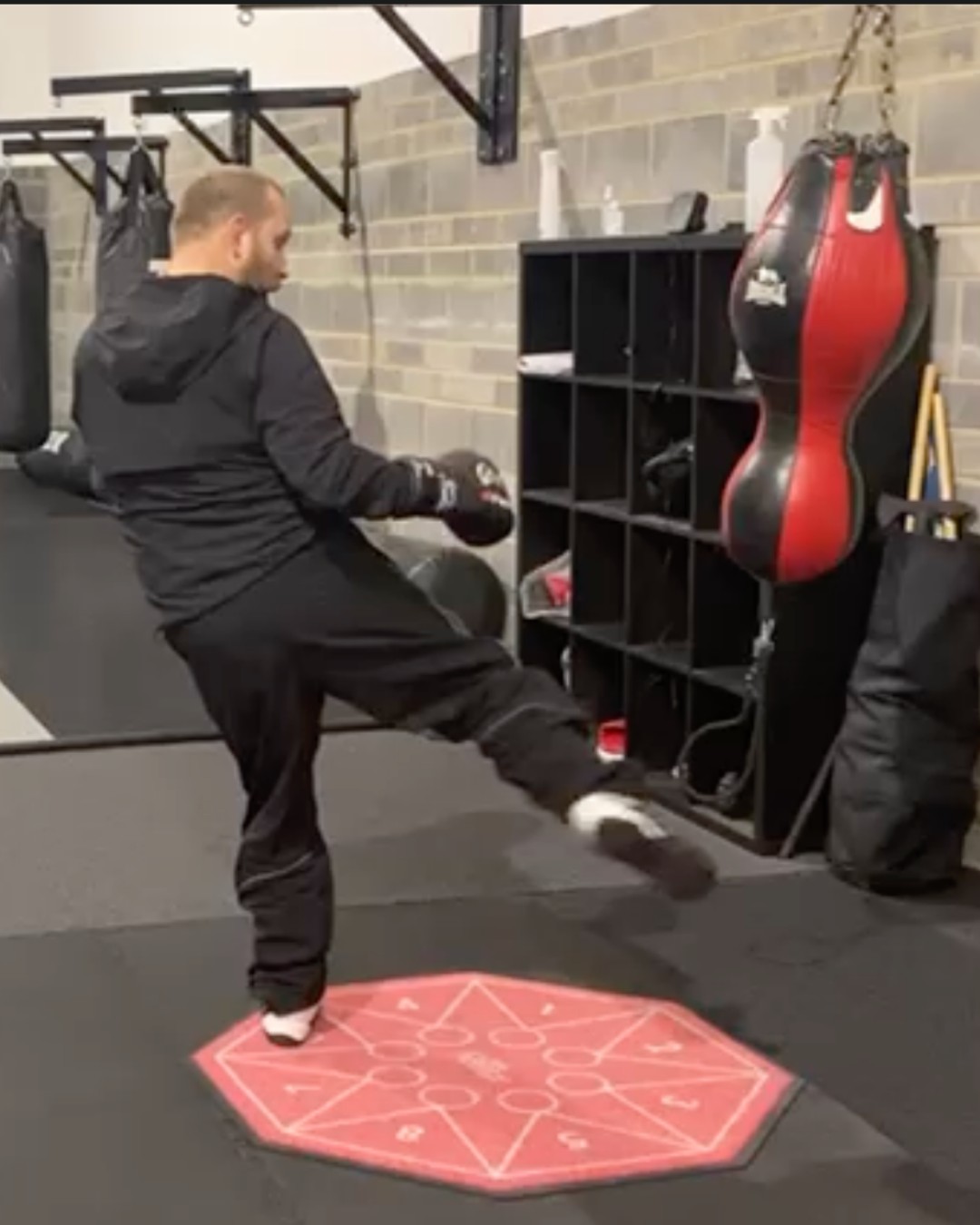
In short: Movement Trainer teaches external targets: instead of pointing a client's attention at a body movement, point it at the outcome, a height, a distance or a speed to hit. The course's own line is direct: this 'frees up the athlete's internal degrees of freedom, allowing for a more natural and efficient movement pattern to emerge.' A target can then be scaled two ways without touching the exercise itself: a REAL target (an actual step, a wall mark, a line on the floor) or a RELATIVE target (a spoken 'up', 'down' or 'roughly there'), and changing the height or distance of either one changes how hard the movement is to stabilise, decelerate or get out of.
Give a client a target, not a body part
Movement Trainer's line on this is short and doesn't hedge: "instead of focusing on body movements, coaches should guide athletes to focus on the outcome or external targets, such as hitting a target or achieving a specific speed." A target to reach, rather than a hip to think about. The course's reasoning is just as direct: it "frees up the athlete's internal degrees of freedom, allowing for a more natural and efficient movement pattern to emerge."
Put plainly, a client thinking hard about where their knee is tends to move more stiffly than a client thinking about touching a mark on the wall. The knee still does its job. It just isn't being watched by the person whose job is to do it, not think about it.
Two ways to make that target harder or easier
The course splits a target into two kinds. A REAL target is a fixed thing in the room, a step, a platform, a mark on the wall, a line on the floor, the same idea behind a vertical jump test reaching for an actual height. A RELATIVE target is spoken instead, "up," "down," "roughly there," quicker to set but looser on exactly where the rep lands each time.
Either one scales the exercise without changing it. The course is direct about this too: "changing a height or a distance in a movement can change the difficulty to stabilise, decelerate or get out of a movement." Move the wall mark higher and a reach gets harder to control on the way back down. Say "a bit further" instead of naming a distance and the rep gets looser, useful for a client who needs options rather than a fixed number today.
What this looks like from a chair, not a lecture
A trainer coaching a squat can say "sit your hips back, keep your knee behind your toes," which sends the client's attention straight to two joints at once. Or the same trainer can put a box an inch behind the client and say "touch it with your hips," which sends the same client's attention to one clear target instead. Nothing about the squat changed. Where the client's head went during it did.
The fear this answers
Someone newer to coaching, unsure whether they'll run out of useful things to say to a client mid-set, isn't short on cues. Naming a target instead of a body part is one skill, applied to any exercise a gym has in it, and it does the organising work a longer list of instructions was trying to do anyway.
What to do next
Movement Trainer (AFT), £375, teaches the full cueing module alongside the scaling tools that sit next to it. PT Manager's Radar Wheels turn a coaching conversation like this one into a tracked score against a client's own record, and it opens free the moment a trainer signs up with any FASTER course.
The FASTER Journal shares the next teaching point first. Sign up at /newsletter and it arrives the moment it's ready.
You just read one answer. The course is all of them.
Movement Trainer (AFT) — where the full cueing module is taught — taught by the people who wrote it, with free return access for life. The price is on the page, payment plans at checkout, no sales calls.
Also worth a look: PT Manager's client tools, free with any FASTER course.
See what the course covers →Frequently asked
Does this mean body-part cues are never useful?
No, they still have a place, especially early on when a client genuinely doesn't know where a movement should happen. The course's point is that once the basic shape is there, aiming attention at an outcome tends to organise the movement better than aiming it at a muscle or a joint.
What's the difference between a real target and a relative one?
A real target is a fixed thing in the room, a step, a wall mark, a line, so the height or distance never drifts between reps. A relative target is spoken, 'up', 'down', 'roughly there', which is faster to set up but leaves more room for a rep to land slightly differently each time.
Does Movement Trainer connect to PT Manager?
Yes. Passing Movement Trainer (AFT) opens PT Manager's full client tools, including the Radar Wheels, where a coaching conversation built on today's teaching point can be tracked against a client's own scores over time.
Reading this for your own training? Every trainer on the FASTER register has been assessed by us — search by town or speciality, free.
Find a FASTER trainer →