
Workouts & Exercises
Medicine Ball and Kettlebell Workouts
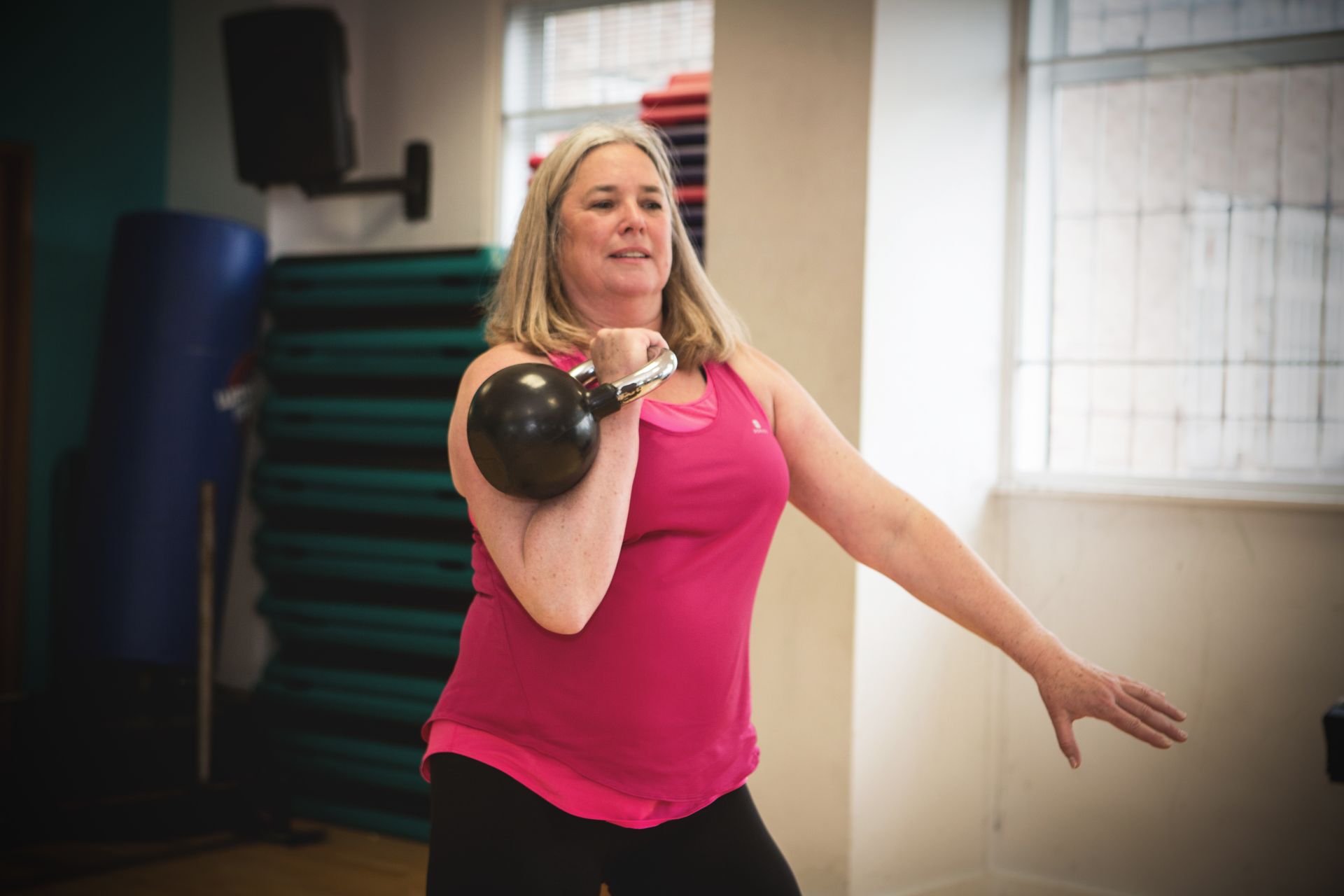
In short: The medicine ball and kettlebell each load the body differently — the ball plays with momentum, distance from the body and ground reaction, while the kettlebell rewards ballistic, dynamic patterns — so combining them gives a genuinely full-body strength and conditioning session.
Two tools, one full-body session. This workout uses a medicine ball and a kettlebell to train the upper body, lower body and core together — and, more usefully, to load the body in two genuinely different ways.
Why the medicine ball earns its place
Medicine ball training has come a long way since it first appeared in the fitness world. What makes it useful:
- It works with gravity, right up to large weights, and offers a unique grip challenge.
- Moving the ball close to or far from the body changes the momentum you have to manage.
- Moving the ball across the ground creates momentum challenges the body has to defend against.
- Travelling over the ball, or on and off it, changes ground reaction — and the client's reactions with it.
Why the kettlebell is different
The kettlebell is simply a weight with a handle. It's thought to have originated in Russia, first appearing in the Russian dictionary in 1709, where it was used as a counterweight for farm equipment. It soon became a tool for developing strength endurance — what people at the time would just have called being fit.
Before long it featured at shows, with a set of difficult lifts used to measure strength in local competitions. That sport has recently found its way back into fitness. Because the handle sits off the load, the kettlebell rewards ballistic, dynamic patterns — using both gravity and momentum — in a way a fixed dumbbell doesn't.
The workout
Format: 60-second intervals, 20 seconds' rest between exercises. Repeat the circuit four times.
- Medicine ball jump, 2-to-1 right and left, with push forward
- Kettlebell sots press
- Medicine ball upright row (moving)
- Kettlebell wide lunge and press forward
- Medicine ball jump, 2-to-1, rotate right and left
- Kettlebell alternate snatch clean
Build competence in each pattern before you chase load or speed — these are dynamic movements, and technique comes first. Once the patterns are solid, the interval format gives you a full-body strength and conditioning hit from two simple tools.
Want to go deeper? The Movement Trainer (AFT) course.
View the course →Frequently asked
What does this workout train?
A full-body session working the upper and lower body with a strong core demand, using medicine ball and kettlebell exercises.
How is the workout structured?
Six exercises at 60-second intervals with 20 seconds' rest between each, repeated four times.
Why use a medicine ball?
It works with gravity up to heavy loads, offers a unique grip challenge, and lets you change momentum by moving the ball close to or far from the body, across the ground, or on and off it.
Where does the kettlebell come from?
It's a weight with a handle thought to originate in Russia, first appearing in the Russian dictionary in 1709 as a farm counterweight before becoming a strength-endurance tool.
Do I need to be advanced to do this?
These are dynamic, ballistic movements — build competence in each pattern first, then add load and speed as your technique allows.