Workouts & Exercises
Tempo is just counting how slow the bar comes down. The industry turned counting into a science
In short: Tempo is timing how long the lowering phase of a lift takes, most often counted out loud in seconds. It's a Level 2/3 fundamental a trainer learns to prescribe and to see slip under load, not a training system that needs its own certificate.
The short version
Tempo is a count. Three seconds down, a pause at the bottom, however long back up, called out loud so a client knows the pace before the bar moves. That's the whole fundamental, taught early on Level 2 and Level 3, and the industry has built entire programmes around explaining a stopwatch back to people.
Key Takeaways
- Tempo is timing the lowering phase of a lift, usually counted in seconds out loud.
- The skill worth having is watching that count hold under load, not reciting the notation.
- Level 2 and Level 3 teach a trainer to prescribe tempo and catch it speeding up before form does.
The tempo obsession
Somewhere a course is selling "eccentric overload periodisation" to a trainer who just wants a client to lower a dumbbell without dropping it. A tempo prescription is three digits and a count, the kind of thing said out loud mid-set. The industry took a stopwatch and dressed it up as a discipline with its own vocabulary and its own weekend price tag.
Level 2/3 keeps it a count
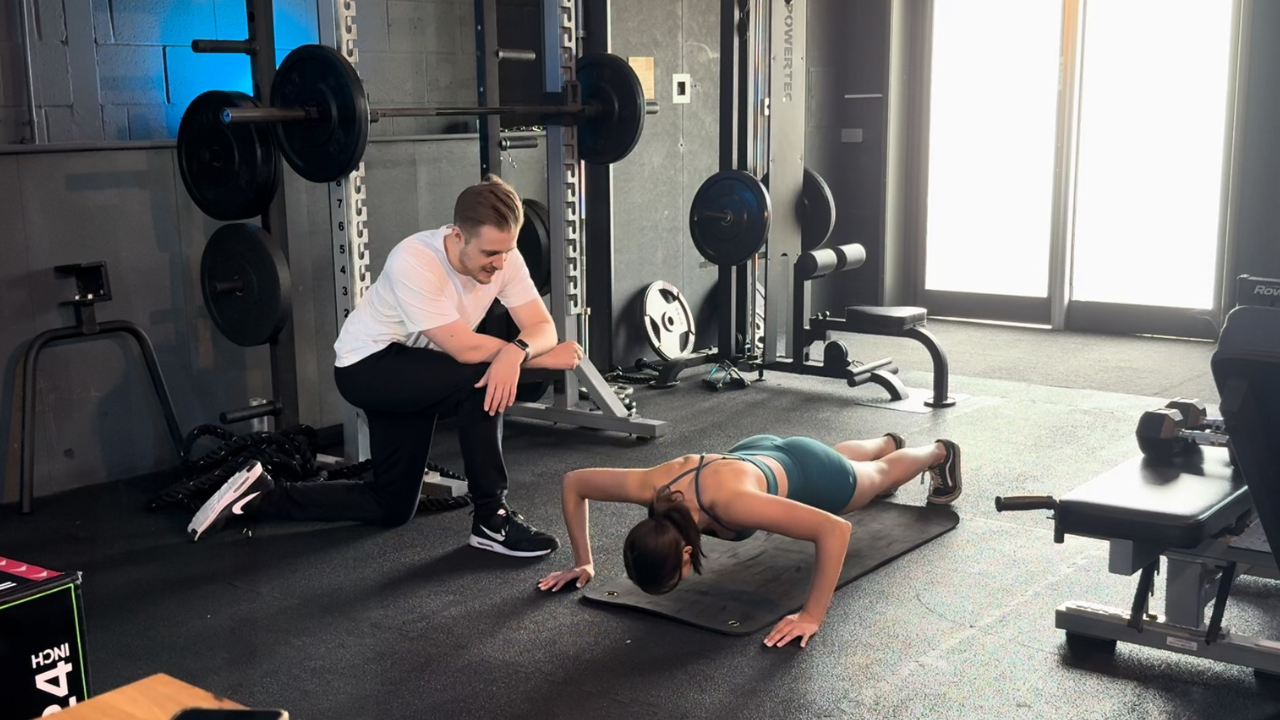
On the FASTER Level 2 and Level 3, tempo isn't a separate module hiding behind a locked door. It's taught alongside the lifts a trainer already coaches, and what actually gets tested is watching the lowering phase hold its pace as a set goes on, not defining eccentric contraction on paper. A three-second lower that quietly becomes a one-second drop by rep eight tells a trainer more than the rep count ever will.
Playing tempo down doesn't make Level 2/3 lightweight. A trainer who treats it as an ordinary count keeps their eyes on the client's control instead of on the label for it.
Why the industry inflates it
A three-digit count doesn't sell a weekend course on its own, so it gets padded: time-under-tension science, eccentric overload protocols, tempo periodisation charts, real physiology wearing a costume built to look exclusive. FASTER teaches the eye instead. See the lowering phase speed up, predict which cue slows it back down, fix it before the next rep. HMAC again, in that order.
Watching a count hold, live
The PT Manager earns its keep here too. Point the camera at a client mid-set and it lays a live skeleton over them, reading joint speed through the lift in real time. A trainer sees the exact rep the lower speeds up, long before the bar wobbles, and the client watches the same footage back instead of hearing "slow down" for the third time.
Learn to see it, not just count it
The Certified Personal Trainer course, Level 2 and Level 3 together, teaches a trainer to prescribe tempo and actually catch it slipping on a real person. It's £1,500 for both, kept for life, and the PT Manager opens the day of sign-up.
The FASTER Journal shares the next teaching point first. Sign up at /newsletter and it arrives the moment it is ready.
Want to go deeper? the Certified Personal Trainer course (Level 2 + Level 3) is £1,500.
View the course →Also worth a look: watch a lowering phase speed up under fatigue, live, in the PT Manager.
View the course →Frequently asked
What does a tempo like 3-1-3 actually mean?
Each number is seconds: three lowering the weight, one paused at the bottom, three lifting it. It's a count, not a code, and Level 2 and Level 3 teach a trainer to call it out and watch it hold.
Why does a slow lowering phase matter?
The lowering phase is where control usually breaks down first, before a client notices anything is wrong. Coaching it gives a trainer an early warning a rep count alone never provides.
How does the PT Manager help with tempo?
It lays a live skeleton over the client and reads the joint speed through the lift, so a trainer can see the exact rep a three-second lower turns into a one-second drop, from across the room.
Reading this for your own training? Every trainer on the FASTER register has been assessed by us — search by town or speciality, free.
Find a FASTER trainer →