Workouts & Exercises
Squat depth is a hip crease passing a kneecap. The industry turned a joint angle into a personality test
From the FASTER syllabus: this article is taught in full in the Certified Personal Trainer course (Level 2 + Level 3) is £1,500 →
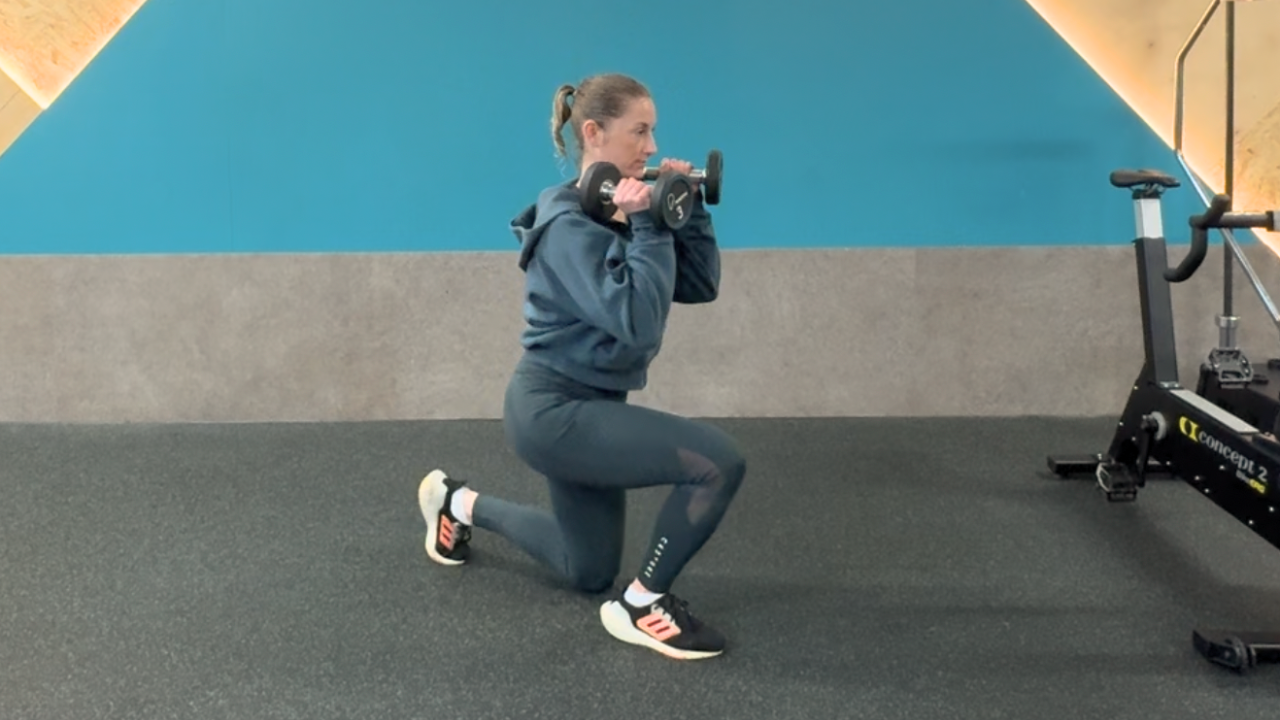
In short: Squat depth is the hip crease dropping below the top of the knee while the spine stays neutral, and a client's hip anatomy decides how far that actually is. Level 2/3 teaches a trainer to coach depth to the body on the rack, not to a number borrowed from someone else's hips.
The short version
A squat is deep enough when the hip crease drops below the top of the kneecap and the spine stays roughly where it started. That is the whole checkpoint. Somewhere along the way the internet decided depth was a referendum on how much someone cares, and a fair few clients now feel judged over a few inches their own hip sockets were never going to give them.
Key Takeaways
- Depth is a checkpoint: hip crease below the top of the knee, spine staying put. Nothing more mystical than that.
- Hip socket shape, femur length and ankle range set the ceiling, and they are different on every client.
- Level 2/3 teaches a trainer to coach the checkpoint on the body in front of them, and the PT Manager shows the actual angle reached, live.
The depth cult
A search for "proper squat depth" turns up comment sections arguing about parallel like it is a moral position. Ass-to-grass gets treated as the honest version and anything shallower as cheating, as if every hip joint on earth was carved from the same mould. A hip crease passing a kneecap is a checkpoint. It was never meant to be a personality test for the person under the bar.
Level 2/3 is where it gets simple again
On the FASTER Level 2 and Level 3, a trainer learns the checkpoint and, more usefully, learns to read it on the actual client rather than a diagram. Some hips open wide and drop past parallel without a fight. Others hit a hard bony stop well above it, and that is anatomy, not effort. The course teaches a trainer to see which is which and coach accordingly, so nobody's session turns into a client apologising for their own skeleton.
Playing this down is not underselling the course. A trainer who treats depth as one checkpoint among several keeps the session about the client's actual squat, not a number lifted from someone else's Instagram.
Why the industry inflates it
A joint checkpoint does not sell a course on its own, so it gets dressed up: depth as discipline, depth as proof, depth as the line between someone who "really" trains and someone who doesn't. FASTER teaches the eyes instead, reading a client's actual hip and knee position under load and predicting the cue that gets the honest depth out of that particular body. See it, predict it, fix it, in that order, never a script read off someone else's range of motion.
Watching depth, live
Because seeing beats describing, the PT Manager earns its keep here. Point the camera at a client mid-squat and it lays a live skeleton over them, reading the hip and knee angle rep by rep, readable from across the room rather than squinted at side-on. A trainer sees the exact depth reached on that set, and the client watches their own body on the same screen instead of measuring themselves against a stranger's video.
Learn to coach it, not just define it
The Certified Personal Trainer course, Level 2 and Level 3 together, teaches a trainer to read depth on the client in front of them rather than recite a number. It is £1,500 for both, kept for life, and the PT Manager opens the day of sign-up.
The FASTER Journal shares the next teaching point first. Sign up at /newsletter and it arrives the moment it is ready.
You just read one answer. The course is all of them.
the Certified Personal Trainer course (Level 2 + Level 3) is £1,500 — taught by the people who wrote it, with free return access for life. The price is on the page, payment plans at checkout, no sales calls.
Also worth a look: watch a client's depth on screen, live, in the PT Manager.
See what the course covers →Frequently asked
What counts as a deep enough squat?
The hip crease drops below the top of the knee while the spine stays roughly neutral. That is the checkpoint FASTER teaches on Level 2 and Level 3, not a fixed number of inches or degrees.
Why can't everyone squat to the same depth?
Hip socket shape, femur length and ankle range are different in every client, so the same coaching cue lands at a different depth on each body. Coaching the checkpoint, not a photo, respects that.
How does the PT Manager help with squat depth?
It lays a live skeleton over the client and reads the hip and knee angle in real time, so a trainer can see the exact depth reached on that rep instead of guessing from a side-on glance.
Reading this for your own training? Every trainer on the FASTER register has been assessed by us — search by town or speciality, free.
Find a FASTER trainer →