
Workouts & Exercises
A balanced session is a push for a pull, and the front of the legs for the back. Learn the rule, then earn the fun of breaking it
From the FASTER syllabus: this article is taught in full in the Certified Personal Trainer course (Level 2 + Level 3) is £1,500 →
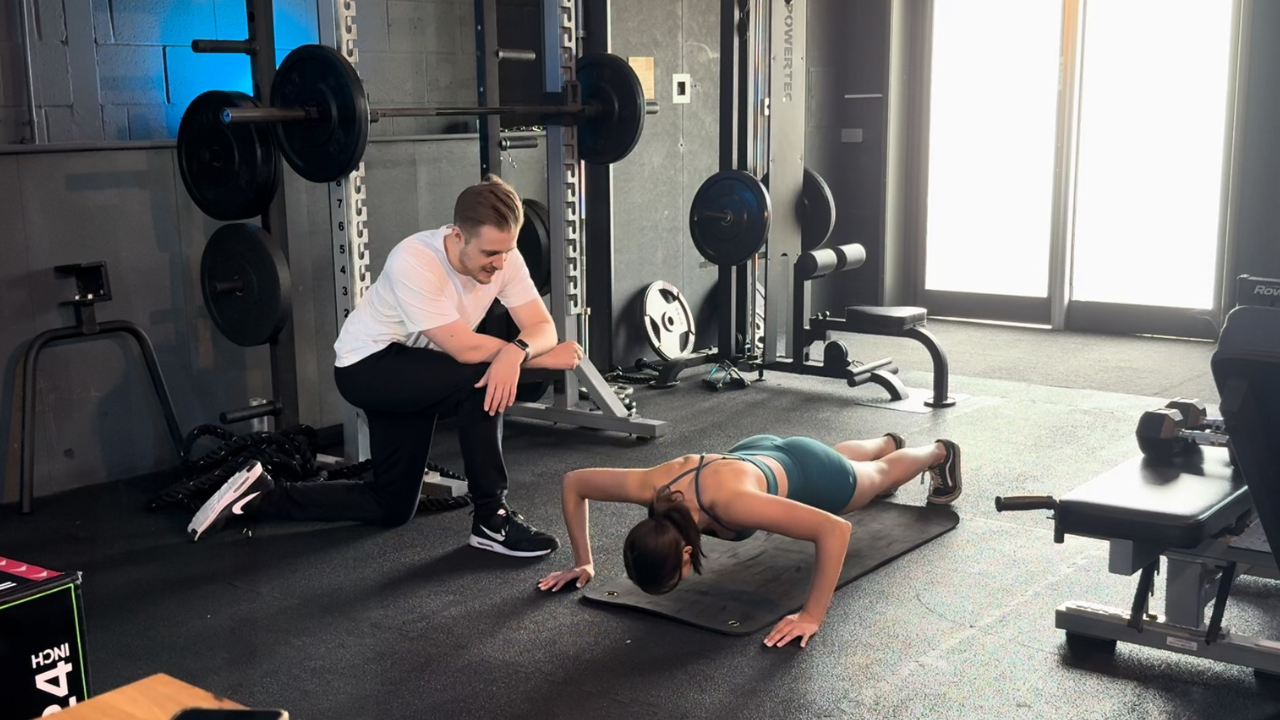
In short: A balanced session pairs its work: a push with a pull, a press or lift with a pull-down, the front of the legs with the back. At Level 2/3 that pairing is insisted on, the way a beginner storyteller is taught start, middle, end. After Level 2/3 balance stops being a rule at all, and the fun of breaking it starts, but the base comes first.
The short version
A balanced session pairs its work. A push earns a pull. A press or a lift earns a pull-down. Train the front of the legs, then train the back of the legs. At Level 2 and Level 3 that pairing is insisted on, and for good reason: it is the structure everything else is learned against. After Level 2/3 it stops being a rule at all, and the fun starts when you can leave it behind on purpose, but the base comes first.
Key Takeaways
- Pair the work: a push for a pull, a press or lift for a pull-down, the front of the legs for the back.
- Level 2/3 insists on balance the way a writing class insists on start, middle, end: the structure comes before the rule-breaking.
- The PT Manager builds the session on a ready-made skeleton, so the pairing is right in front of a trainer as they programme.
The rule, in one breath
If a session pushes, it pulls. If it presses overhead or lifts from the floor, it pulls something down. If it trains the quads at the front of the thigh, it comes back for the hamstrings at the rear. Do that and a body stays even, which is the quiet job underneath every good programme. There is more to a full session, warm-up, some cardio, a couple of functional moves for fun, a cool-down, but the pairing is the spine of it.
After Level 2/3 it stops being a rule at all
Here is the honest part the marketing usually skips: the balance rule is not a rule after Level 2/3. In fact it makes no sense at all really, once the training is built around what a particular body actually needs. So why insist on it at Level 2 and Level 3? The same reason a beginner storytelling class starts with a beginning, a middle and an end. Nobody thinks that is the only way to tell a story. It is the structure that teaches you what a story even is, so that later, when you leave it behind, you are doing it for a reason and it lands. Balance is that structure for programming. Learn it until it is boring, and from there the real programming starts.
The base first, then the fun
The Level 2 Gym Instructor is the way onto a gym floor, the Level 3 is the one that lets a trainer coach clients for a living, and the pairing rule sits inside them as a basic, taught in plain words a person can actually hold in their head. Get the Level 2/3 finished and carry on learning, because it is a solid base of information, and the fun genuinely starts when you have earned the right to break these rules and get even better. The real craft, reading a body as it moves and shaping the work to it, comes after the base, and it is worth every hour.
The FASTER courses teach these fundamentals the way they stick, watched, read, written or spoken aloud, whichever a person learns best from. The idea learned here also underpins how effort gets read once a plan is running, which is its own plain skill worth having.
Seeing the pairing as you build
The PT Manager makes the rule visible. A session starts on a ready-made skeleton, warm-up through cool-down, with the push and pull blocks, the press and the pull-down, the front-of-legs and back-of-legs work laid out in order. A trainer fills it in and the balance is already staring back at them, so the pairing becomes something they can see rather than a checklist to recite. Learning by doing, with the structure drawn out on screen, beats memorising a list every time.
Keep the fundamentals plain
The Certified Personal Trainer course, Level 2 and Level 3 together, teaches these plain rules properly, and the PT Manager opens in a trainer's own name the day they sign up. It is £1,500 for both, kept for life.
The FASTER Journal shares the next teaching point first. Sign up at /newsletter and it arrives the moment it is ready.
You just read one answer. The course is all of them.
the Certified Personal Trainer course (Level 2 + Level 3) is £1,500 — taught by the people who wrote it, with free return access for life. The price is on the page, payment plans at checkout, no sales calls.
Also worth a look: build a balanced session in minutes in the PT Manager.
See what the course covers →Frequently asked
What makes a workout balanced?
Pairing the work. A push gets a pull, a press or lift gets a pull-down, and the front of the legs gets matched by the back. That pairing keeps a body even and is taught on the FASTER Level 2 and Level 3.
Does every programme need to be balanced?
No. After Level 2/3 balance is not a rule at all — programming shifts to what a particular body needs. Level 2/3 insists on balance first the way a writing class insists on start, middle and end: it is the structure everything else is learned against.
Where can I learn to programme a balanced session?
On the Certified Personal Trainer course, Level 2 and Level 3 together, and the PT Manager lays the pairing out for you as you build.
Reading this for your own training? Every trainer on the FASTER register has been assessed by us — search by town or speciality, free.
Find a FASTER trainer →