
Business & Clients
Today's Two Posts Both Look For What's Actually Happening, And PT Manager's Live Analyser Shows The Number
From the FASTER syllabus: this article is taught in full in PT Manager, free with any FASTER course →
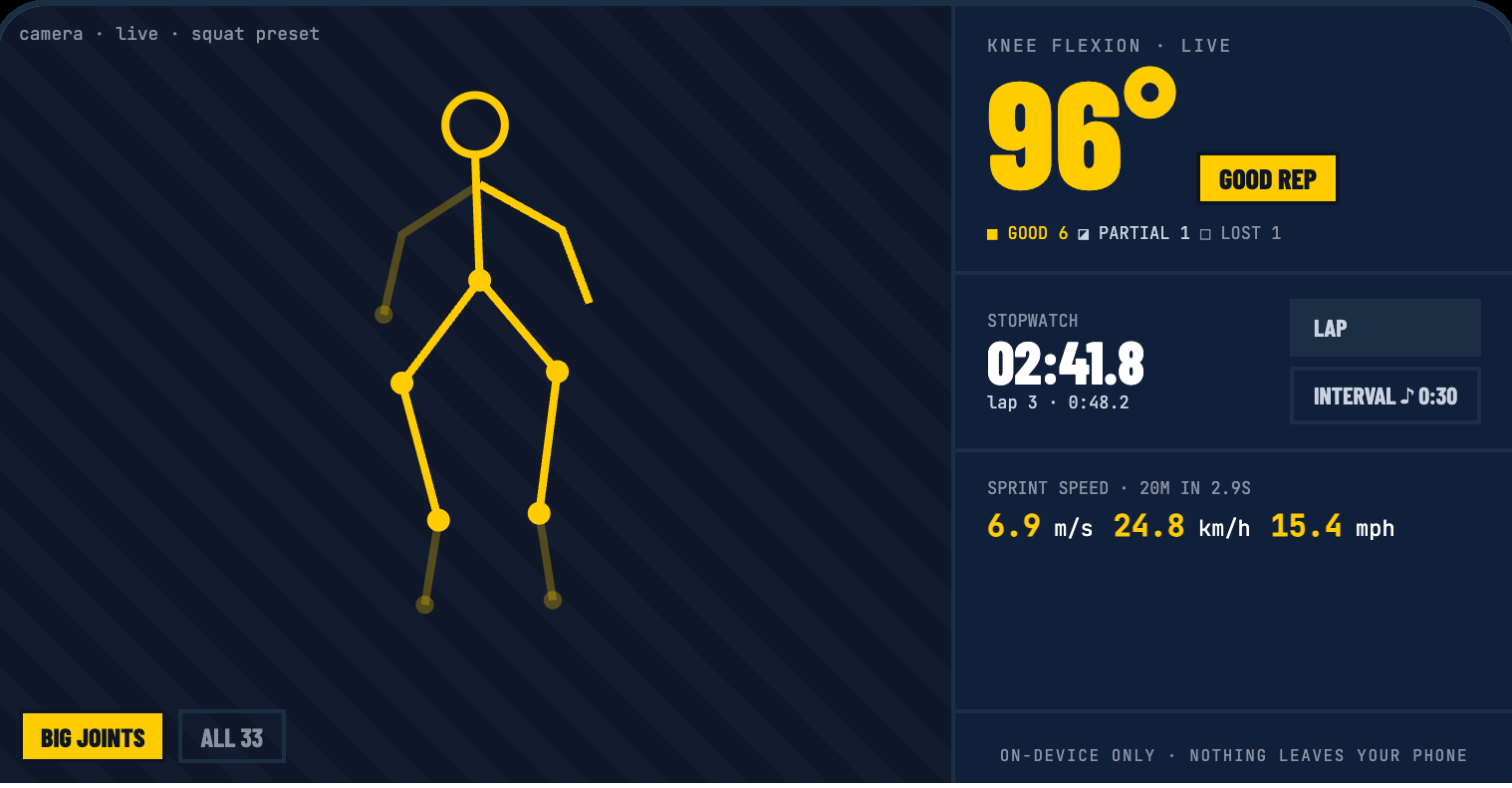
In short: Today's first post showed that a walking lunge asks the glute medius to do a job a lunge that returns to standing doesn't, controlling the hips through a moment of single-leg balance while the body is still moving, and that the fix for hips dropping sideways is different from the fix for a knee drifting forward. Today's second post showed that the fastest fix is usually changing a constraint, the environment, the task or the individual, rather than explaining more. Both depend on the same thing: knowing what's actually happening before deciding what to change. PT Manager's Live Analyser (a live skeleton overlay reading joint angle, rep quality, tempo and speed from the camera, on-device) turns that from a guess into a number a trainer can read from three metres away, mid-set, so the constraint that gets pulled is the one the movement actually needs.
Two posts, one question underneath both
Today's first post named two different things that can go wrong in a walking lunge, hips dropping sideways during the single-leg landing or a knee drifting forward, and said plainly that they need different fixes. Today's second said the fastest fix is usually a constraint, a change to the environment, the task or the individual, rather than a longer explanation. Neither post is any use without answering one question first: which one is actually happening, right now, with this client.
Where that question gets answered
PT Manager's Live Analyser puts a number on it. Point a phone or tablet's camera at a client and a live skeleton overlay reads the joints in real time, showing joint angle, rep quality and tempo on screen while the set is still happening. On a squat preset it reads knee flexion at the bottom of the rep and tallies each one as Good, Partial or Lost, readable from three metres away without breaking eye contact with the client for long. It's the same seeing-beats-describing idea both earlier posts lean on, just running live rather than from a photo afterwards.
Why the number decides which constraint to pull
A trainer guessing at a walking lunge's fault line from the side of the room gets it wrong plenty of the time, because a hip dropping sideways and a knee drifting forward can both look like "something's off" from six feet away. A trainer reading the angle live knows which one it actually is, and that decides the constraint: support the hip if that's what's dropping, support the knee's line if that's the one losing position. Pulling the wrong lever with the right intentions still wastes the set.
What to do next
PT Manager opens the moment a trainer signs up with any FASTER course, free for life, with the Live Analyser included. Today's second post, Movement Trainer (AFT), is where the constraint-led approach and the rest of the coaching delivery material are taught in full.
The FASTER Journal shares the next teaching point first. Sign up at /newsletter and it arrives the moment it's ready.
You just read one answer. The course is all of them.
PT Manager, free with any FASTER course — taught by the people who wrote it, with free return access for life. The price is on the page, payment plans at checkout, no sales calls.
Also worth a look: Movement Trainer (AFT), today's second post in full.
See what the course covers →Frequently asked
Does a trainer need special equipment to use the Live Analyser?
No, it runs from the camera already on a phone or tablet, reading the joints live and showing the number on screen during the set.
How does knowing the number help pick a constraint?
If the number shows the hip is dropping on the landing side, the constraint that helps supports the hip (a lighter step length, a line on the floor to land on); if it shows the knee is the thing losing position, a different constraint is needed. Guessing which one gets it wrong half the time.
Does this connect to today's earlier two posts?
Yes. The walking lunge post named two different ways the same exercise can go wrong. The constraint-led coaching post named the fix. The Live Analyser is how a trainer tells which one they're looking at before choosing which fix to reach for.
Reading this for your own training? Every trainer on the FASTER register has been assessed by us — search by town or speciality, free.
Find a FASTER trainer →