Business & Clients
Today's Two Posts Both Take Things One Piece At A Time, And PT Manager's Notes Stay Pinned To The Second
From the FASTER syllabus: this article is taught in full in PT Manager, free with any FASTER course →
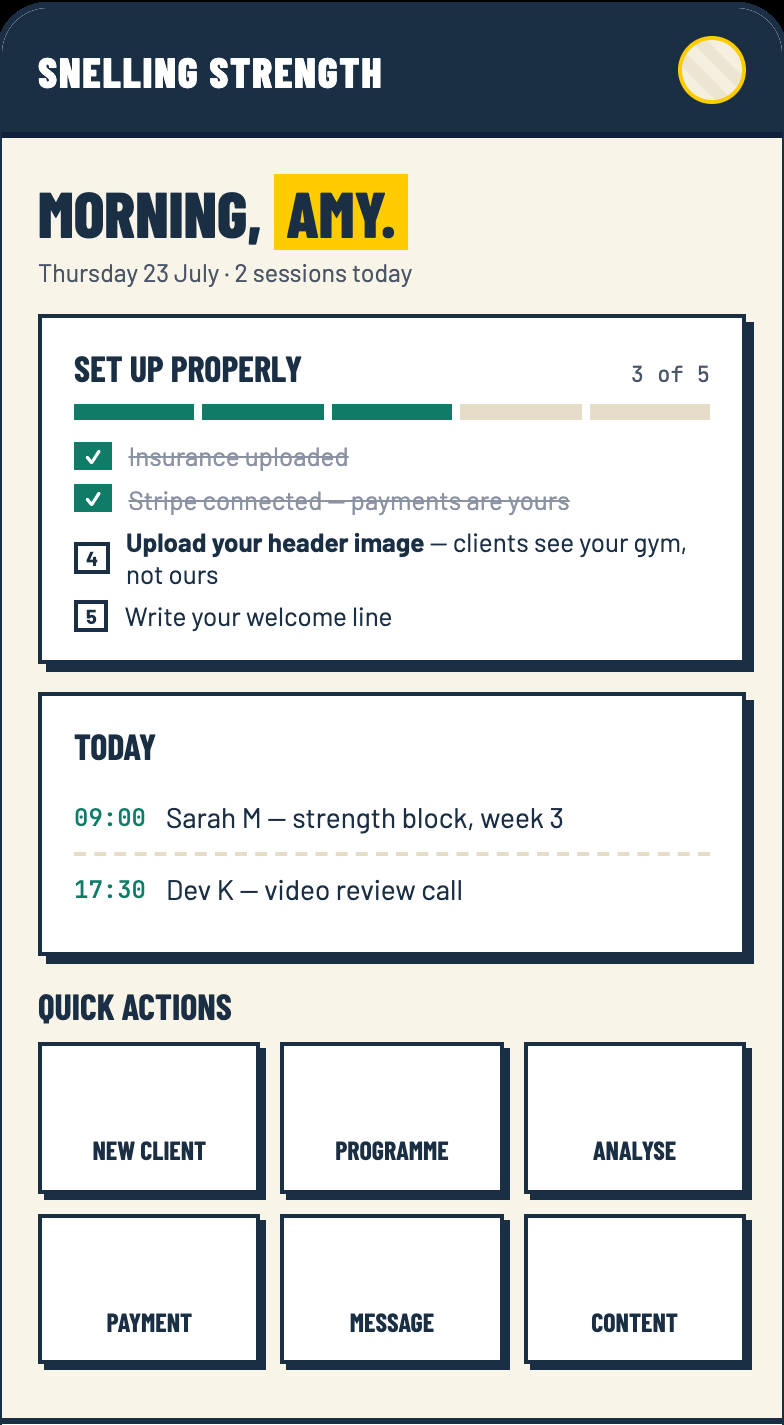
In short: Today's first post held one still position, a beast position, and named only the muscles doing the work in that hold rather than running through every exercise in the library. Today's second broke a movement's feedback into one chunk at a time instead of a full list handed over in one breath. Both posts are the same instinct in different places: a person can only hold so much at once, whether that's a static hold or a set of corrections. PT Manager's Analysis Notes (a note pane beside any client video) does the same thing to a session recording — every note a trainer writes is stamped to the exact second of the clip it applies to, and tapping the time jumps straight back to that moment, so a chunk of feedback stays pinned to the piece of the movement it was actually about instead of turning into one long list at the end.
Two posts, one habit each
A beast position is one still hold out of an unlimited number of exercises the four-step muscle method can be pointed at, and today's first post named only the muscles doing the work in that hold. Chunking is one piece of feedback handed over at a time instead of a full list in one breath, and today's second post was built entirely around that discipline. Neither post is really about restraint for its own sake. Both are about the fact that a person, whether they're holding a position or hearing a correction, can only actually take in one thing at a time.
Where that habit lives on a recording
PT Manager's Analysis Notes puts the same discipline onto a client's video after the session's over. A trainer watching a clip back adds a note at the exact second something's worth flagging, and that note is stamped to that second permanently. Tap the time next to any note and the film jumps straight back to that moment, so a note never turns into a vague paragraph about "the squats" with no way of knowing which rep it was actually about.
Why one note per moment beats one list at the end
A trainer who watches a whole session and then writes a summary is doing the opposite of chunking, bundling every correction into one block the same way an over-cued rep bundles every instruction into one breath. Analysis Notes makes the smaller habit the easy one: a note the second something happens, pinned there, rather than a memory of it competing with everything else by the time the video ends.
What to do next
PT Manager opens the moment a trainer signs up with any FASTER course, free for life. Today's second post, Movement Trainer (AFT), is where chunking and the rest of the coaching delivery material are taught in full.
The FASTER Journal shares the next teaching point first. Sign up at /newsletter and it arrives the moment it's ready.
You just read one answer. The course is all of them.
PT Manager, free with any FASTER course — taught by the people who wrote it, with free return access for life. The price is on the page, payment plans at checkout, no sales calls.
Also worth a look: Movement Trainer (AFT), today's second post in full.
See what the course covers →Frequently asked
Does a trainer have to write a note for every rep?
No, the point is the opposite: one note on the moment that actually mattered, rather than a running commentary on everything. That's the same chunking idea from today's earlier post, applied to reviewing a video instead of coaching live.
What happens to the notes afterwards?
They stay attached to the clip, so scrolling back through a client's history shows exactly which moment each piece of feedback was about, not a diary entry with no way back to the rep it describes.
Does this connect to today's earlier two posts?
Yes. The beast position post named one still hold out of an unlimited number of exercises the four-step method works on. The chunking post named one piece of feedback at a time instead of a full list. Analysis Notes is where that same one-thing-at-a-time habit happens on a recorded session.
Reading this for your own training? Every trainer on the FASTER register has been assessed by us — search by town or speciality, free.
Find a FASTER trainer →