Injury & Pain
A client guarding against movement isn't being difficult. Their nervous system is doing exactly what it's built to do
From the FASTER syllabus: this article is taught in full in the Games for Pain course is £375 →
In short: Guarding against a once-painful movement is a nervous system protecting a body part it flagged as dangerous, not a client being difficult. Games for Pain (£375) teaches a trainer to build a game around the exact avoided movement, so the guard drops without a negotiation.
The short version
A client who tenses up before a movement that once hurt them isn't overreacting. Guarding is a nervous system doing its job, protecting a body part it once flagged as dangerous, whether or not any damage remains underneath. Games for Pain teaches a trainer to build a way round that guard instead of arguing with it.
Key Takeaways
- Guarding against movement is a protective reflex, not a personality trait or a lack of effort.
- Pain and tissue damage are not the same signal, and the gap between them is where a trainer's coaching lives.
- Games for Pain teaches a trainer to build games for the specific client and the specific movement they're avoiding, so the guard drops without a negotiation.
The guard isn't the client being difficult
A shoulder that hurt eighteen months ago can still make a client flinch reaching for a shelf, long after the tissue underneath has healed. The nervous system learned that movement meant danger and kept the warning running, which is protective, sensible, and has nothing to do with how much the client wants to get stronger. Calling that stubbornness misreads the whole situation.
Where Games for Pain comes in
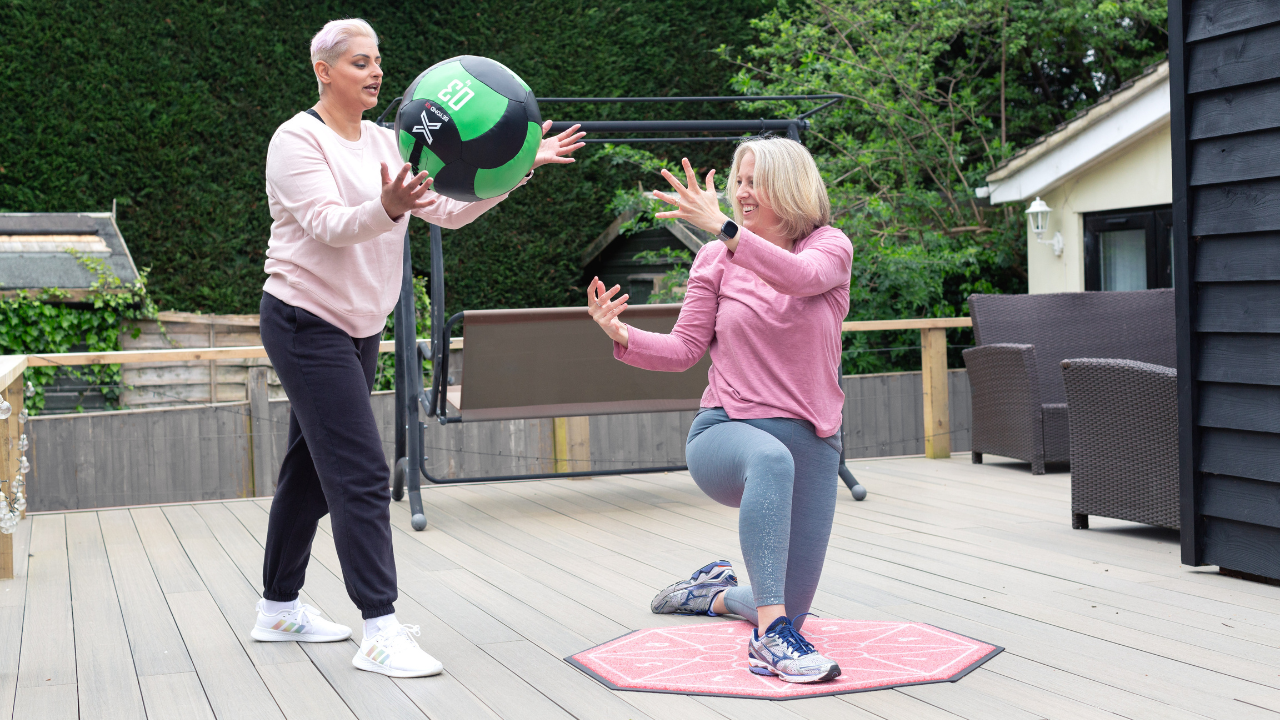
The course costs £375 and teaches a trainer to build simple games around the exact movement a client is guarding, not a generic library borrowed from someone else's client. A game changes the framing from "prove this is safe" to "catch this ball", and the guarded movement happens without ever being asked for directly. A client does more inside a game than a straight instruction would ever get out of them, session after session.
Why the industry misses this
Most of the industry jumps straight to graded exposure charts and desensitisation protocols, real ideas dressed in language that sounds like it belongs behind a locked door. FASTER teaches the same principle through play instead: build the game around the movement, watch the guard, adjust before the client notices they were tested at all. Simpler to deliver, and just as grounded in how a nervous system actually behaves.
Watching a guard drop, live
The PT Manager helps here too. Filming a session and playing it back lets a client see themselves catch, throw or reach without the flinch they were bracing for, proof a straight instruction can't offer. Watching it happen is a different kind of evidence than being told it's fine.
Build the way round it, not through it
Games for Pain, £375, gives a trainer the toolkit to build games for the client and the problem actually in front of them, with free return access for life. It sits alongside the PT Manager, which opens the moment a trainer signs up with FASTER.
The FASTER Journal shares the next teaching point first. Sign up at /newsletter and it arrives the moment it is ready.
You just read one answer. The course is all of them.
the Games for Pain course is £375 — taught by the people who wrote it, with free return access for life. The price is on the page, payment plans at checkout, no sales calls.
Also worth a look: film the guard dropping and play it back to the client in the PT Manager.
See what the course covers →Frequently asked
Is a client who avoids a movement just being difficult?
No. Guarding is a protective reflex, the nervous system flagging a movement as dangerous whether or not any tissue damage remains. Treating it as stubbornness misses what's actually happening.
What does the Games for Pain course actually teach?
A trainer learns to build simple games around the exact movement a client is guarding, so the movement happens inside play instead of being asked for directly. It costs £375 with free return access for life.
How does the PT Manager help with this kind of client?
Filming a session and playing it back lets a client see themselves move without the flinch they expected, which is a different kind of proof than being told it's fine.
Reading this for your own training? Every trainer on the FASTER register has been assessed by us — search by town or speciality, free.
Find a FASTER trainer →