
Injury & Pain
Read a joint's real range of motion properly, and know straight away whether it's injury risk or just how she's built
From the FASTER syllabus: this article is taught in full in the Certified PT course (Level 2 and Level 3) →
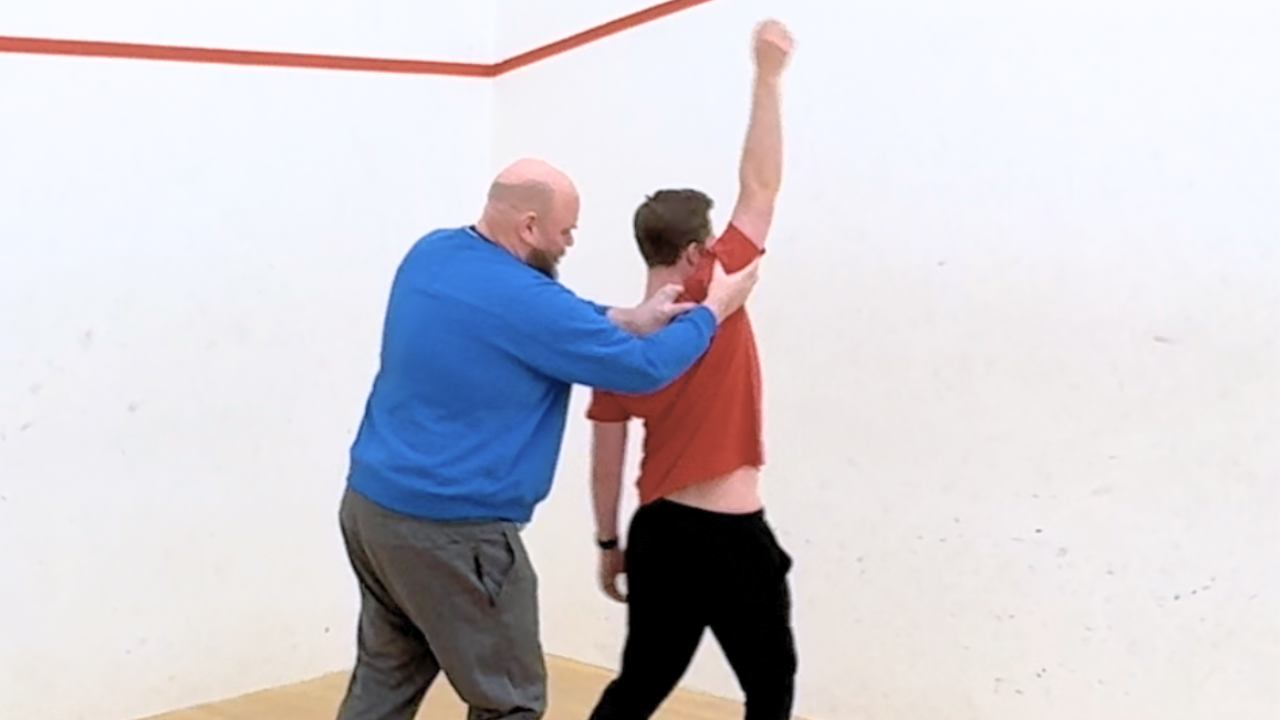
In short: A joint moving differently from the textbook is not automatically an injury risk. Level 3 names reading a joint's structure and range of motion as core knowledge, and FASTER's Field-Based Biomechanics course teaches you to read it live rather than measure it against a chart.
The short version
A client reaches overhead and one shoulder travels further than the other. Or a hip turns out more on one side during a lunge than the drawing in your head says it should. The question that matters is not "does this match the diagram." It is whether what you are looking at is how that joint is built, or a real injury risk asking to be managed. Level 3 names reading a joint's structure and range of motion as core knowledge, exactly so that call is a skill you were taught, not a guess you make up on the spot.
Key Takeaways
- Level 3 criterion 2.8 asks a trainer to describe joint structure with regard to range of motion and injury risk, together, not as two separate topics.
- A joint moving differently from the standard diagram is common and usually normal. The skill is telling that apart from a genuine risk.
- Field-Based Biomechanics builds the same reading skill further, so it works live, on a moving client, not only on a static chart.
What the unit asks
Criterion 2.8 of K/617/8594 asks a trainer to describe joint structure with regard to range of motion, movement and injury risk. The two are taught together on purpose. A shoulder, a hip, a knee, each has a normal range that varies from person to person depending on how the joint itself is built, and a trainer who only knows the textbook average will either wave through something that needs attention or flag something perfectly normal as a fault.
The same criterion sits on the Level 4 Diploma too, worded almost identically. It is not a one-off fact to memorise for an exam. It is knowledge you use in the first five minutes of meeting a new client, every time.
Reading it, not measuring it
Here is the part worth playing down rather than up. This is not a complicated skill dressed up as a mystery. It is knowing what a joint looks like when it moves well for the person doing the moving, and being confident enough to say so without reaching for a chart.
The industry tends to make range of motion sound like a specialist's job, all goniometers and reference tables. Most of it is watching properly. That is HMAC eyes doing what it is built for, anatomy at hand, movement described as if it is normal to notice, because once you have been taught to see it, it is.
PT Manager's Live Analyser puts a live skeleton over the client on screen and reads joint angle and depth as the movement happens, readable from across the room. It will not replace the read you build with your own eyes, but it backs it up in real time, which matters most on the joint that is close to the line.
The system underneath it
FASTER's whole approach is built on being able to find the science and then apply it while watching an actual person move, not instead of watching them. Field-Based Biomechanics takes this exact skill and builds it further: anatomy learned through movement rather than memorised lists, so you can watch a client move and predict what happens next, not just note down what already did. It counts as active learning, so PT Manager keeps running while you study, and stays free once you have passed.
What to do next
The Certified PT route covers this reading skill inside the full Level 2/3 qualification, taught visually and hands-on rather than as a page to learn by heart, because a joint's range of motion is far easier to understand once you have watched it happen. Field-Based Biomechanics deepens the same skill for a trainer who already has Level 3 and wants to read a body faster and with more confidence.
The FASTER Journal shares the next teaching point first. Sign up at /newsletter and it arrives the moment it's ready.
You just read one answer. The course is all of them.
the Certified PT course (Level 2 and Level 3) — taught by the people who wrote it, with free return access for life. The price is on the page, payment plans at checkout, no sales calls.
Also worth a look: Field-Based Biomechanics, for reading a joint the way it moves.
See what the course covers →Frequently asked
Is a joint that moves more or less than the textbook range automatically a problem?
No. Range of motion varies by joint structure and by person. Level 3 teaches you to read the difference between a joint that is built that way and one showing a real injury risk.
Do I need to measure every joint with a goniometer to do this properly?
No, though the tools exist if a client needs formal tracking. Most of the read happens by watching the joint move through what you ask of it and knowing what normal variation looks like for that joint.
What does Field-Based Biomechanics add on top of Level 3?
It builds the skill further, anatomy learned through movement rather than memorised lists, so you can watch a client move and predict what a joint will do next, not just describe what it just did.
Reading this for your own training? Every trainer on the FASTER register has been assessed by us — search by town or speciality, free.
Find a FASTER trainer →