Coaching & Mindset
Success Series: Truly Knowing Yourself and Your Clients
From the FASTER syllabus: this article is taught in full in The Fitness Business Accelerator →
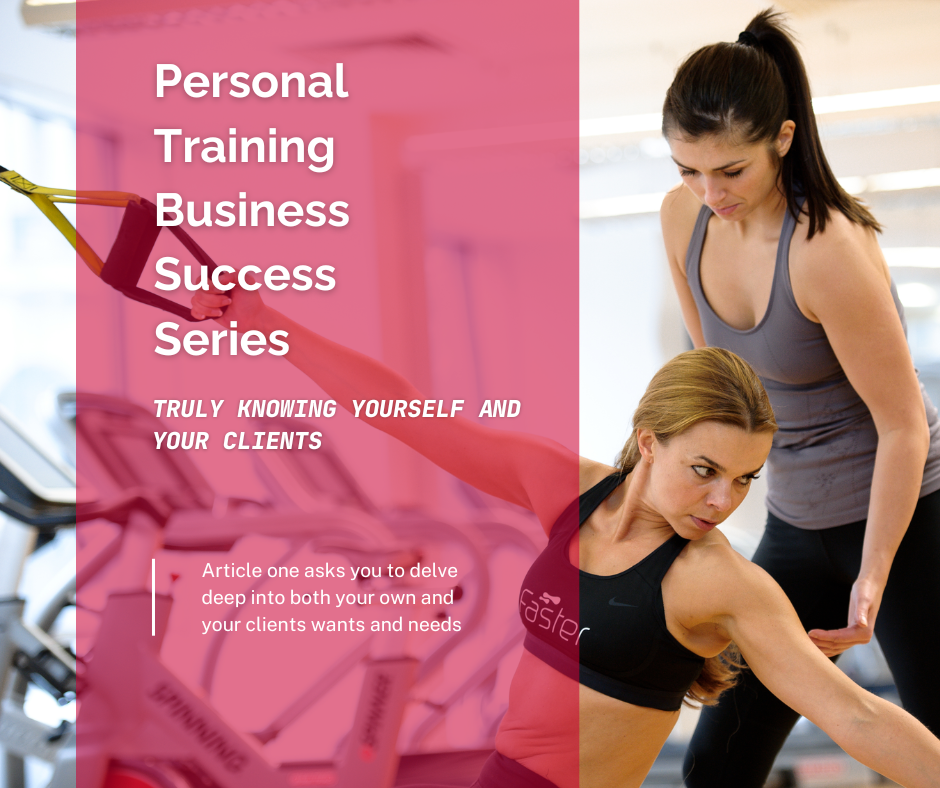
In short: Long-term success as a personal trainer rests on knowing yourself and your clients at a core level — because people don't come back for the exercises, they come back for how the sessions make them feel.
When did you last step back and really think about what makes you and your clients tick at your core? Not favourite training styles or nutrition plans — the layers underneath. In this fast-paced industry it rarely happens. We get lost perfecting workouts and chasing metrics. But here's the truth: to thrive as a personal trainer long-term, you have to know yourself and your clients at a fundamental level. That self-awareness is the foundation for marketing that converts, training that transforms, and retention that lasts.
Try this exercise
Don't take my word for it. Use these questions to write honestly about both yourself and your client:
- How do you handle stress, pressure, relationships, problems, emotion?
- Are you extroverted or shy? Intuitive or analytical? Active or passive?
- What's your most traumatic fitness experience? Your most thrilling?
- Who are you, really? What's at your core?
- What's your dominant trait?
- What do you do and think when you're alone and no one will know?
- How do you feel about yourself?
- How do you feel about the clients you train, the industry you're in, and your peers?
What did you discover? And how well do your website, your programmes and your approach actually reflect what you and your clients truly value?
What people really want
We ran this as a group on a Digital Presenter night, and the answers had almost nothing to do with technical programming. They leaned straight into a story-first approach to exercise design. What clients want:
- To feel wanted.
- To feel celebrated.
- To feel recognised.
- A safe space to be themselves.
- To feel like they've helped their trainer.
- Somewhere to turn when things are bad.
And here's the part trainers forget — the needs mirror each other. What trainers want:
- To feel wanted.
- To be part of the celebration.
- To be recognised, and to have their clients recognised.
- Their clients to feel safe, and room to show their own quirks.
- To do what's genuinely best for their clients.
Design for feelings, not just exercises
When you know yourself and your clients at a core level, you can deliver experiences that make you both feel incredible. That means programming moments where your best self shines, and building in opportunities for clients to feel wanted, celebrated and comfortable being themselves. It's never really about the exercises or the training style. It's about feelings — yours and theirs.
At FASTER, this self-discovery is the foundation of our Fitness Business Accelerator. When you enrol, you get personal one-to-one business coaching with me and with Bob Esquerre, who spearheaded personal training for Equinox. Bob's decades of experience, combined with our process of understanding you as a human being first and a trainer second, is a powerful combination. We don't just grow your business and your client list — we optimise your success by understanding you at a core level.
You just read one answer. The course is all of them.
The Fitness Business Accelerator — taught by the people who wrote it, with free return access for life. The price is on the page, payment plans at checkout, no sales calls.
Frequently asked
Why does self-awareness matter for a personal trainer?
Because it's the foundation for marketing that converts, training that transforms, and retention that lasts. If you don't know what you and your clients truly value, your business reflects it.
What do clients actually want?
To feel wanted, celebrated, recognised, safe to be themselves, and like they've helped their trainer. It's rarely about the technical programming.
Do trainers want the same things?
Yes — to feel wanted, part of the celebration, recognised, and to do what's genuinely best for their clients. The needs mirror each other.
How do you build self-awareness?
Write honestly about yourself and your clients — how you handle stress, who you are at your core, your best and worst fitness experiences, how you really feel about the work.
How does this change your sessions?
You start programming moments that let your best self show and let clients feel wanted and celebrated — designing for feelings, not just exercises.
Reading this for your own training? Every trainer on the FASTER register has been assessed by us — search by town or speciality, free.
Find a FASTER trainer →