Become a Personal Trainer
What Muscles Work In A Deadlift, And How To Work It Out For Any Exercise
From the FASTER syllabus: this article is taught in full in The honest route from scratch to qualified →
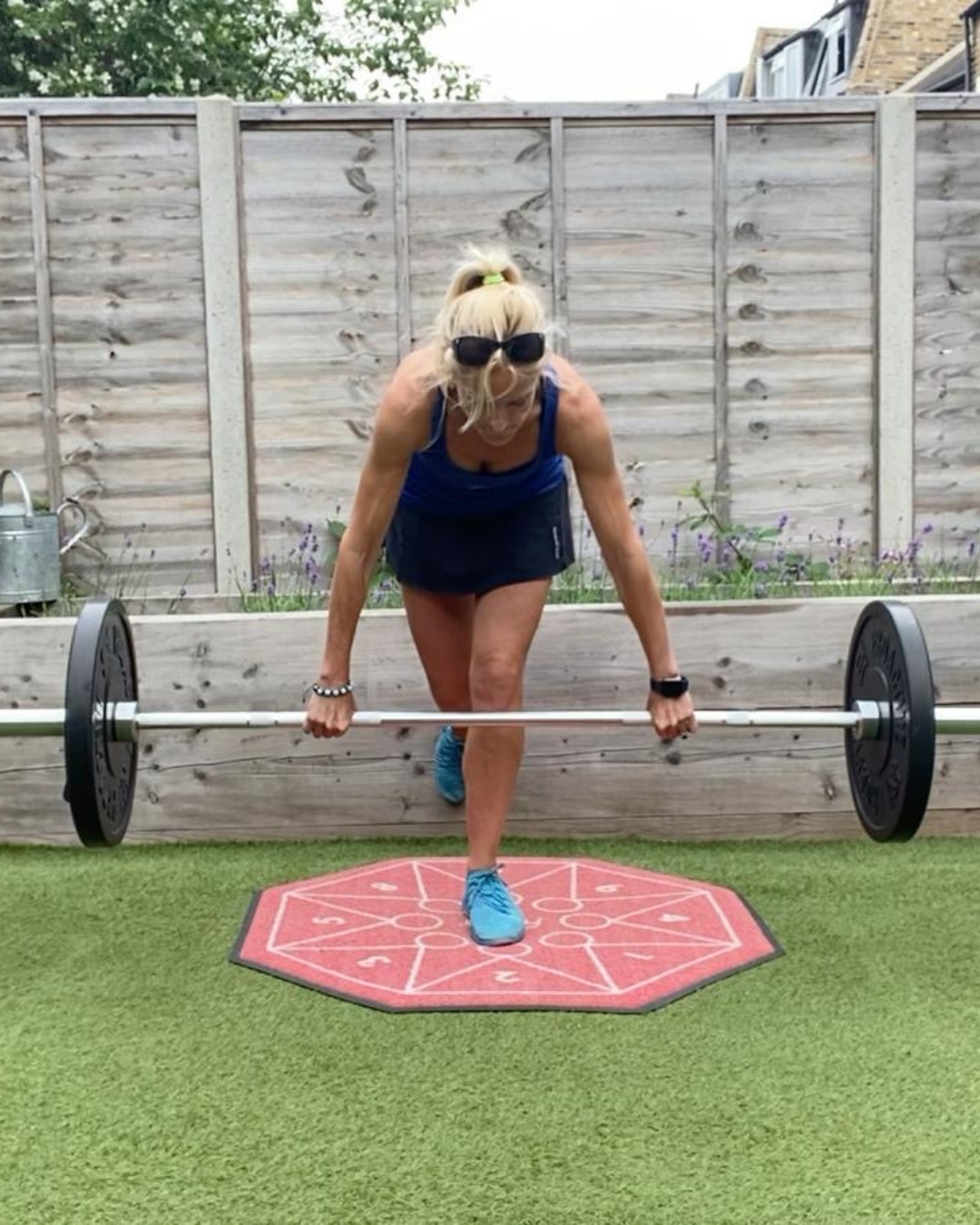
In short: A deadlift works the hamstrings and gluteus maximus at the hip as the prime movers, because the knee barely bends and almost all the work happens at the hip hinge. The quadriceps and adductors assist the small knee bend, and the erector spinae, lats, trapezius and forearms all work to hold the spine neutral and the bar close for the length of the lift. The four steps that produce that answer are: decide where the force is acting, find the muscles working directly against it, find the muscles assisting, then find the muscles supporting the joint — the same four steps that answered the same question about a squat and a lunge.
What muscles work in a deadlift
The hamstrings and gluteus maximus at the hip, doing most of the work. The erector spinae and lats holding the spine and the bar together. The trapezius holding the shoulder girdle in place, and the forearms working through the whole lift without ever letting go.
That's the answer. Like the squat and the lunge before it, it came from a method rather than a memorised list, and the method is the part worth having.
Two posts in, and the fourth step keeps being the difference
Recent posts here ran the same method on a squat, then a lunge. One of the things you learn on our CIMSPA-recognised personal training course is that the method doesn't change from exercise to exercise, only the answer does:
- Decide where the force is acting on the body
- Identify which muscles work directly against that force (muscles that lengthen are easiest to see)
- Identify which secondary muscles assist that movement
- Identify which muscles would support that joint / movement
Run it on a deadlift.
One, where is the force acting? Straight down through the middle of the foot, same as a squat, but starting from further away, because the bar begins on the floor instead of on the shoulders.
Two, what works directly against it? The hip hinges. The knee barely bends, so nearly all of the work happens at the hip, where the hamstrings and gluteus maximus lengthen under load. They carry more of a deadlift than they ever carry in a squat.
Three, what assists? The quadriceps and adductors, at the small amount of knee bend the lift does ask for, and less than either of them do in a squat.
Four, what supports? This is where the deadlift's answer stops looking like the squat's. The erector spinae and lats hold the spine neutral and the bar close to the body. The trapezius holds the shoulder girdle where it needs to be. The forearms and grip hold on for the entire lift, start to finish, without a single moment to release and reset.
Why that fourth answer is worth having
A trainer who only knows "deadlifts work the legs" has nothing useful to say when a client's forearms and lower back feel it more than their legs do. A trainer who has run the four steps can say plainly that a deadlift asks the grip and the spine to hold on the whole way through, and the legs to do comparatively less than they would in a squat.
Point it at anything
A row, where the grip and the upper back carry the same isometric job. A farmer's carry, where the forearms are doing almost the entire fourth step by themselves. Any exercise where something has to be held rather than moved asks the same fourth question, and the answer is usually a muscle group working harder than a client would guess.
What to do next
The whole route from no qualification to working trainer is set out at become a personal trainer. It sets out what Level 2 and Level 3 contain, what it costs, and how long it takes. The price is on the page, there are no sales calls, and free lifetime return access is included, so the anatomy unit is still there the week a client asks about a lift you haven't thought about since the exam.
The anatomy unit itself sits in Level 3 Personal Trainer, and in the Certified PT Bundle at £1,500 alongside Level 2 and Movement Trainer.
The FASTER Journal shares the next teaching point first. Sign up at /newsletter and it arrives the moment it's ready.
You just read one answer. The course is all of them.
The honest route from scratch to qualified — taught by the people who wrote it, with free return access for life. The price is on the page, payment plans at checkout, no sales calls.
Also worth a look: Level 3 Personal Trainer — the anatomy unit this comes from.
See what the course covers →Frequently asked
Why does the fourth step give such a different answer for a deadlift than a squat?
Because a deadlift asks the grip and the upper back to hold on for the whole lift, where a squat mostly asks the calves to manage the ankle. Same four steps, a genuinely different job for the fourth one.
Does a deadlift really use the legs less than a squat?
The quadriceps do less, because the knee barely bends. The hip does more — the hamstrings and glutes are working harder here than in a squat, not less.
Does finishing the course get me PT Manager?
Yes. PT Manager opens the moment you sign up with FASTER, and adding real clients unlocks once you pass a course.
Reading this for your own training? Every trainer on the FASTER register has been assessed by us — search by town or speciality, free.
Find a FASTER trainer →