Core & Pelvic Floor
Your Level 3 mentioned the pelvic floor once. Your clients noticed.
The short answer
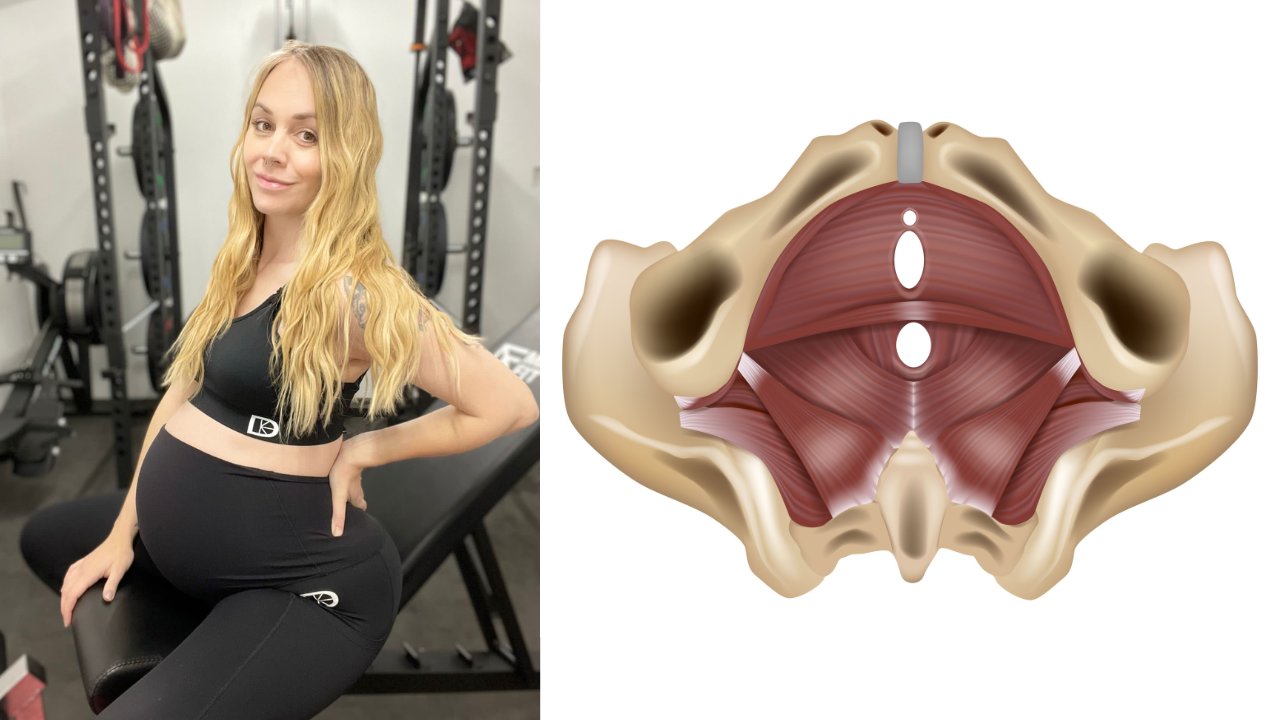
If you train anyone with a stomach or a pelvis, which is everyone, you were handed one tool for it: the kegel. Pelvic floor muscle training genuinely helps some conditions, and does nothing for others. A 2020 systematic review found that exercise regimens other than pelvic floor muscle training cannot increase pelvic muscle strength (Journal of Bodywork & Movement Therapies, Jacomo et al., 2020), which rules out a lot of what gets sold. Taping and fascial release are weaker than their marketing. Often the honest answer for a client is not a fix at all, it is movement and patience. Understanding that difference is the Pelvic Floor & Core Specialist. It is £1,800, or £300 deposit and 12 monthly payments of £150, plan total £2,100.
Key Takeaways
- Pelvic floor muscle training improves incontinence symptoms in the short term but does not fix prolapse anatomy.
- Exercises other than pelvic floor muscle training do not raise pelvic muscle strength, per a 2020 systematic review.
- For many postnatal clients the job is keeping them moving and happy in a recovering body, with doctors leading on medical issues.
The one lesson you got
Some clients ask for a better core. Some are frightened to jump because of their pelvic floor. And your Level 3 covered it in roughly a sentence, with a kegel attached.
So trainers do the reasonable thing with what they were given. They prescribe the one exercise, for every version of the problem, and hope.
Here is the odd bit worth sitting with. People describe the pelvic floor as working too hard and as not working enough, and the prescribed fix looks nearly identical either way. When one exercise is the answer to opposite problems, that is a clue the model is too thin.
Do kegels work?
Sometimes, clearly, and for specific things. This is not a takedown of pelvic floor muscle training.
A 2026 literature review found that pelvic floor muscle training consistently improved muscle strength and reduced urinary incontinence symptoms in the short term, particularly in symptomatic women, but noted it improved prolapse-related symptoms without producing anatomical improvement (Quality in Sport, Zimnoch-Wlodarczyk et al., 2026). Symptoms eased. The prolapse itself did not resolve.
That distinction matters at the point of a promise. You can honestly help someone feel better and manage symptoms. You cannot honestly say you are correcting the anatomy with exercise.
Is an exercise even the solution?
This is the question the one-lesson version never lets you ask.
A 2020 systematic review concluded that exercise regimens other than pelvic floor muscle training cannot increase pelvic floor muscle strength (Journal of Bodywork & Movement Therapies, Jacomo et al., 2020). So the various branded core routines sold as pelvic floor solutions are, for strength, not doing the advertised job.
And adherence keeps surfacing as the real variable. A 2025 systematic review and meta-analysis found people with pelvic floor disorders show high adherence to the exercises and improved quality of life in the short term (Life, Villa-Del-Pino et al., 2025). The benefit tracks with keeping going, not with the cleverness of the protocol.
What about taping and fascial release?
Both get sold hard. Both are thinner than the sales page.
A scoping review of kinesiology tape found the effect on pain relief was trivial, with no clinically important results and inconsistent range-of-motion outcomes (Journal of Bodywork & Movement Therapies, Dehghan et al., 2020). Trivial is the researchers' word, not a paraphrase.
Myofascial release fares a little better, but only as an add-on. The evidence positions it as a modest adjunct alongside proper treatment, not a standalone answer.
If your toolkit for a frightened postnatal client is a strip of coloured tape and a thumb, the toolkit is the problem.
The postnatal client, specifically
Postnatal clients get surrounded by people trying to fix them. Everyone has a protocol.
Often the fix is quieter than that. Keep them moving. Keep them healthy. Help them feel happy in a new body and willing to wait for it to recover.
Where there is a genuine medical issue, doctors lead and you support. Your job is not to out-clever the clinician. It is to keep a person moving, safely, while their body does the slow work, and to know exactly when to hand over.
That is less dramatic than a cure. It is also what actually helps.
Frequently asked questions
Do kegels fix pelvic floor problems?
They help some. Pelvic floor muscle training reduces urinary incontinence symptoms in the short term but does not correct prolapse anatomy (Quality in Sport, Zimnoch-Wlodarczyk et al., 2026). It is a symptom and quality-of-life tool, not an anatomical repair.
Can core exercises other than kegels strengthen the pelvic floor?
The evidence says no. A 2020 systematic review found exercise regimens other than pelvic floor muscle training cannot increase pelvic floor muscle strength (Journal of Bodywork & Movement Therapies, Jacomo et al., 2020). Branded core routines sold for this are overstating what they do.
Does kinesiology taping help?
Barely. A scoping review found the effect on pain relief was trivial with no clinically important results (Journal of Bodywork & Movement Therapies, Dehghan et al., 2020). It is not a pelvic floor treatment.
What does the Pelvic Floor & Core Specialist cost?
£1,800 paid in full, or £300 deposit and 12 monthly payments of £150, plan total £2,100. It counts as active learning, so your PT Manager access runs while you study.
Start here
The Pelvic Floor & Core Specialist is £1,800, or £300 deposit and 12 monthly payments of £150, plan total £2,100. It teaches the real mechanics, what the evidence supports, and how to keep a client moving safely inside your scope, with doctors leading on medical issues.
Not sure it is your next step? Ask. John will tell you honestly, including if the answer is not yet. The founder answers the WhatsApp.
Sources
- Quality in Sport, "Effectiveness of exercise-based interventions on pelvic floor function in postpartum women: A literature review," Zimnoch-Wlodarczyk et al., 2026, retrieved 2026-07-26, https://doi.org/10.12775/qs.2026.50.67975
- Journal of Bodywork & Movement Therapies, "Exercise regimens other than pelvic floor muscle training cannot increase pelvic muscle strength: a systematic review," Jacomo et al., 2020, retrieved 2026-07-26, https://doi.org/10.1016/j.jbmt.2020.08.005
- Life, "Compliance and adherence to pelvic floor exercise therapy in people with pelvic floor disorders: A systematic review and meta-analysis," Villa-Del-Pino et al., 2025, retrieved 2026-07-26, https://doi.org/10.3390/life15040613
- Journal of Bodywork & Movement Therapies, "Kinesio taping in sports: A scoping review," Dehghan et al., 2020, retrieved 2026-07-26 (DOI per source list)
What every FASTER student gets
Built around you, not around the course
- A real person marks every answerEvery answer is read and marked by a tutor, with written feedback.
- Marked as you goEach teaching point is marked as you answer it, not at the end of the module.
- Dictate instead of typeA microphone on every written answer: say your answer and it types it for you (Chrome, Edge and Safari).
- Listen to the lessonsVoice-overs on the lessons, and the audio to download.
- Built for the way your brain worksShort lessons, one point at a time, marked as you go, with the choice to listen, read, print or speak your answers.
- Streaks that never punish youYou set how many days a week you want to study. Miss a day and your streak pauses; it is never lost.
- Accessible to WCAG AA, with an AAA optionEvery page measured against the WCAG accessibility standard: no faults at level A or AA, with a skip link, screen-reader labels and pages that hold together zoomed to 400%. A high-contrast option takes it to AAA.
- Keep it plainOne switch turns off the extras, the streaks, the badges, the celebrations and the movement, so the site stays plain and calm. Switch them back on whenever you like.
- Bigger text and wider spacingTwo steps of bigger text, and more room between lines, words and letters, on every page.
- Calmer motionOne switch stops animations and videos that play on their own. It is on already if your phone or computer asks for reduced motion.
- A personal video lessonWhen an answer needs real explaining, your marker records a video that lands in your course.
- A note before you sendBefore you send, the page tells you if your answer copies the lesson word for word, so you can put it in your own words.
- The skeleton and muscle labsTap any bone on the skeleton, and see the muscles light up on the model.
- Print the notesPrint the lessons and go old school.
- Case studies on your phoneBuilt into the site, saved as you go, there on your laptop when you sit down.
- Pin it to your home screenNo App Store and no Google Play. It is just there.
- No resit feesWork sent back is a chance to add more, with no resit fee.
- Return access for lifeQualify once and come back to the content whenever you need it.
- PT Manager from day onePT Manager is yours to learn on from the day you sign up. Using it with real clients comes once you hold your Level 3 and are listed on the FASTER Trainer Register.
- The FASTER Trainer RegisterA free listing on the Register once you qualify.
- Your certificates in one placeEvery course and its certificate on one page.
- Ask JohnThe Ask John button on every page, and his WhatsApp.
And PT Manager, free
52 tools to run your business, with no monthly fee and no cut of your money
PT Manager is yours to learn on from the day you sign up. Using it with real clients comes once you hold your Level 3 and are listed on the FASTER Trainer Register.
See all 52 tools
Set-up
- Import clients Bring a whole client list across in one go.
- My quotes Daily lines your clients see — yours, not stock.
- Programme templates The programme shapes you reuse — a session or twelve weeks. Pick one for a client, get your own copy.
- Exercise library Every exercise with FASTER coaching detail.
- Money Products, payments and who owes what.
- Send from your own email Connect your own email service so invites arrive from you, on your domain.
- My brand & client view What your clients see when they walk in — views, header, accent, logo.
- Your enrolment pack What every new client gets the moment you enrol them — your forms, ours, or a mix.
- Products and services What you sell — blocks, packages, memberships and one-offs, with their prices.
- Insurance Your policy on record — provider and expiry. Client features unlock while it is valid.
- My menu Switch any tool on or off — for your menu, your home and your whole account.
- Your website A free website on your own web address, filled from PT Manager. Or just the client sign-in door on your domain.
- Your public page Your verified Trainer Register listing, linking out to your own site and socials.
Business day to day
- Clients Your client list — invite, open a client, manage their space.
- Clubs Group your clients — a board they share, a programme or a monthly price if you want one.
- Challenges A dated push everyone logs against — for everyone you train, or for one club.
- Calendar Sessions, classes, capacity and bookings.
- Reminders The dates your business can't let lapse — insurance and first aid, nagged ahead of time.
- Nudges Who needs a nudge today — opportunities, one tap each.
- Who needs chasing Every conversation about money, in the order to work through them.
- What needs doing Your own list, in your own words — the jobs you keep meaning to get to.
- Till Sell at the desk — cash, card or on their phone — and download the sales sheet.
- What you are making What is coming in every month, what was paid in the last 30 days, and what sells.
Templates and systems
- Forms & interviews PAR-Q, consent, consultations and your own forms.
- Coaching room The coaching tools shelf — wheels, journeys and resources in one place.
- Radar wheels Build a life or performance wheel a client fills in — see change over time.
- Nutrition by FASTER Nutrition sheets and habits without meal-plan pretence.
- Pathways Automated coaching journeys you assign to clients.
- Programmes Start a programme — a session, a month, 12 weeks or a season — and find the ones you have built.
- Games & drills planner Build game-based sessions and drills.
- Sport screens Pick a sport — the shots to film, the analyser, and a ready-made radar of the qualities that matter.
- Movement screen → radar Read joint angles off the analyser — they auto-score and fill a radar wheel.
- Assessment builder Build and run client assessments and re-tests.
- Tag analytics Every tag across your clips, grouped and exportable.
Client
- AI prompts Your reusable prompt library for coaching copy.
- Workout library Short workouts your members put together by how they feel and how long they have.
- Before & after Side-by-side progress comparisons.
Trainer tools
- Exercise generator Fresh exercise ideas from constraints you set.
- FASTER dice & wheel Spin-and-roll session variety for groups and games.
- Movement demonstrator A 3D model of the FASTER movement patterns — body or skeleton view, prime movers lit up, live joint angles.
- Client video analysis Your media library — client folders and your own. Pick a clip to analyse.
- Movement by FASTER (HMAC) Human movement analysis charts — see how a client moves.
- Live analysis Mount your phone and coach live — skeleton, reps, angles and depth in real time.
- Tell a group One thing, to the right people — and you see exactly who it reaches first.
Media centre
- Video builder Reels, stories and client report videos, in your own branding.
- Image builder Branded posts and cards for your socials, at the right size.
- Shot list builder Every shot with its size, angle, lens, location, people, kit and sound; sorted into shooting order, ticked off on the day, printed or sent as a sheet.
- Storyboard builder Plan a video shot by shot: what the camera sees, what is said, the move and the cut.
- Script writer Write what you will say, with the word count and how long it takes to say.
- Teleprompter Read your script off the screen at your speed, and film yourself behind it.
- Video and image organiser Everything you have made and every source you can pull from.
- Ad builder Make your own ads, coached as you go, in your branding. As many as you like, no fee, no cap.
Reading this for your own training? Every trainer on the FASTER register has been assessed by us — search by town or speciality, free.
Find a FASTER trainer →