

Biomechanics
Read the hips in front of you and they will tell you that client's squat depth
From the FASTER syllabus: this article is taught in full in the Field-Based Biomechanics course is £600 →
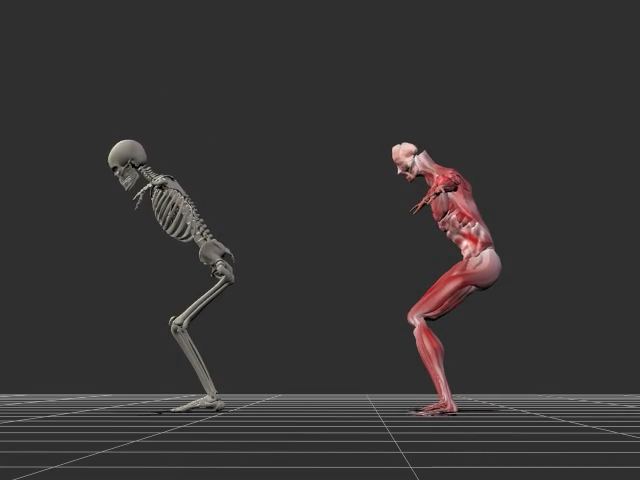
In short: A squat diagram in a textbook shows one hip's version of the movement, not a universal standard. Field-Based Biomechanics (£600) teaches a trainer to read the actual joints in front of them, so 'different' stops being mistaken for 'wrong'.
The short version
A textbook squat diagram is one pelvis's version of the movement, drawn once and printed for everyone. A trainer measuring every client's depth and knee line against that single picture is grading real hips against a pelvis that isn't in the room. Field-Based Biomechanics teaches a trainer to read the joint actually in front of them instead.
Key Takeaways
- A textbook diagram shows one person's hip anatomy, not a universal standard for every client's squat.
- Healthy pelves vary considerably — two healthy pelves in the course text measured neutral at 0 degrees and 23 degrees — and that variation is anatomy, not a technique fault.
- Field-Based Biomechanics teaches a trainer to read the real joint in front of them, live, not compare it to a printed picture.
The textbook trap
Somewhere a course teaches "correct squat form" from a single diagram, the same knee angle and depth marked as the target for every client who walks in. Two pelves can measure completely differently and both be completely healthy — the course text documents one whose neutral ASIS-PSIS angle sat at 0 degrees and another at 23, and 'female-pattern' features turn up in male pelves and vice versa. Grading both against one picture finds a fault that was never there.
What Field-Based Biomechanics actually teaches
The course costs £600 and trains a trainer to read a joint in a live client, not recite an angle off a slide. Healthy pelves vary far more than the textbook admits, so the same cue produces different squats in different bodies, and a squat that looks shallow next to the diagram may simply be that client's pelvis doing that client's movement. Reading the real body instead of a printed one is the entire skill.
Why the industry misses this
Most of the industry sells "correct form" as if one drawing applies to every skeleton that walks through the door, the kind of certainty that photographs well on a course brochure. FASTER teaches the opposite: see the joint doing what it's actually built to do, predict where it stops, coach from there. HMAC eyes, not a printed diagram.
Reading it live, not from memory
The PT Manager helps here too. Film a client's squat and the software lays a skeleton straight over the movement, so week to week a trainer compares that client's own depth and angle to themselves, not to a stranger in a textbook. The client watches the same footage and sees their own joint, not someone else's ideal.
Read the joint, not the diagram
Field-Based Biomechanics, £600, teaches a trainer to read real movement instead of matching it to a picture that was never built for that client. It pairs with the PT Manager, which opens the moment a trainer signs up with FASTER.
The FASTER Journal shares the next teaching point first. Sign up at /newsletter and it arrives the moment it is ready.
You just read one answer. The course is all of them.
the Field-Based Biomechanics course is £600 — taught by the people who wrote it, with free return access for life. The price is on the page, payment plans at checkout, no sales calls.
Also worth a look: film a client's own squat and compare it to itself, not a stock diagram, in the PT Manager.
See what the course covers →Frequently asked
Does every client have to squat to the same depth?
No. Healthy pelves vary considerably — the course text measured one neutral pelvis at 0 degrees and another at 23 — so the same cue produces different squats in different bodies. Field-Based Biomechanics teaches a trainer to read the body in front of them instead of grading against one diagram.
Is a shallow squat always a mobility problem?
Not always. Pelves differ far more between healthy people than a single diagram allows, so a shallower squat can simply be that client's version of the movement, and the job is to read the body in front of them rather than chase a number off a picture.
How does the PT Manager help read a client's own movement?
Filming a squat lays a skeleton over the client, so a trainer compares that client's own depth and angle week to week, against themselves rather than a stock picture.
Reading this for your own training? Every trainer on the FASTER register has been assessed by us — search by town or speciality, free.
Find a FASTER trainer →