Biomechanics
Looking At Movement In Fine Detail Until It Looks Like Intuition, And Motor Skill Application Specialist Teaches The HMAC To Get You There
From the FASTER syllabus: this article is taught in full in Motor Skill Application Specialist, where Module 6 teaches the HMAC →
In short: HMAC stands for Holistic Movement Assessment Chart. Module 6 of the Motor Skill Application Specialist course teaches it as a way to look at movement in fine detail, repeatedly, until it happens in real time and feels like intuition. The course names the skills to look for: Vertical Displacement Down, Rapid Change of Direction, Locomotion, Reach, Training In'Tension, Torso Still and Limb Still. The chart has five columns: joints, sequence of events, expected joint reactions, bone motions and muscles. A trainer who understands the module can let go of the form fairly quickly.
Seeing movement is a skill that sounds harder than it is
Most trainers describe a squat as "going down and coming up". The Motor Skill Application Specialist course teaches a finer way to look, and it starts with a chart.
Module 6 opens by saying the module is one you might keep refining throughout your whole career. The technique is close to chunking, which the course says has been described as thin slicing. The goal is to look at movement in fine detail, repeatedly, until you see it happen in real time and probably think it is just intuition.
What the HMAC is
HMAC stands for Holistic Movement Assessment Chart, a whole view of the motion in front of you. The course calls it FASTER's dumbbell: a tool you train with so your eyes get stronger. Some people have used it as an assessment or guidance form. The course says that if you really understand the module, you can let go of the HMAC fairly quickly and come back when you want to sharpen how you see motion.
The chart does not record every movement. It looks for the most important parts of a movement and describes the most important motions in each one.
The skills it looks for
The course names the skills FASTER chose, which come from research into the skills behind athletic performance:
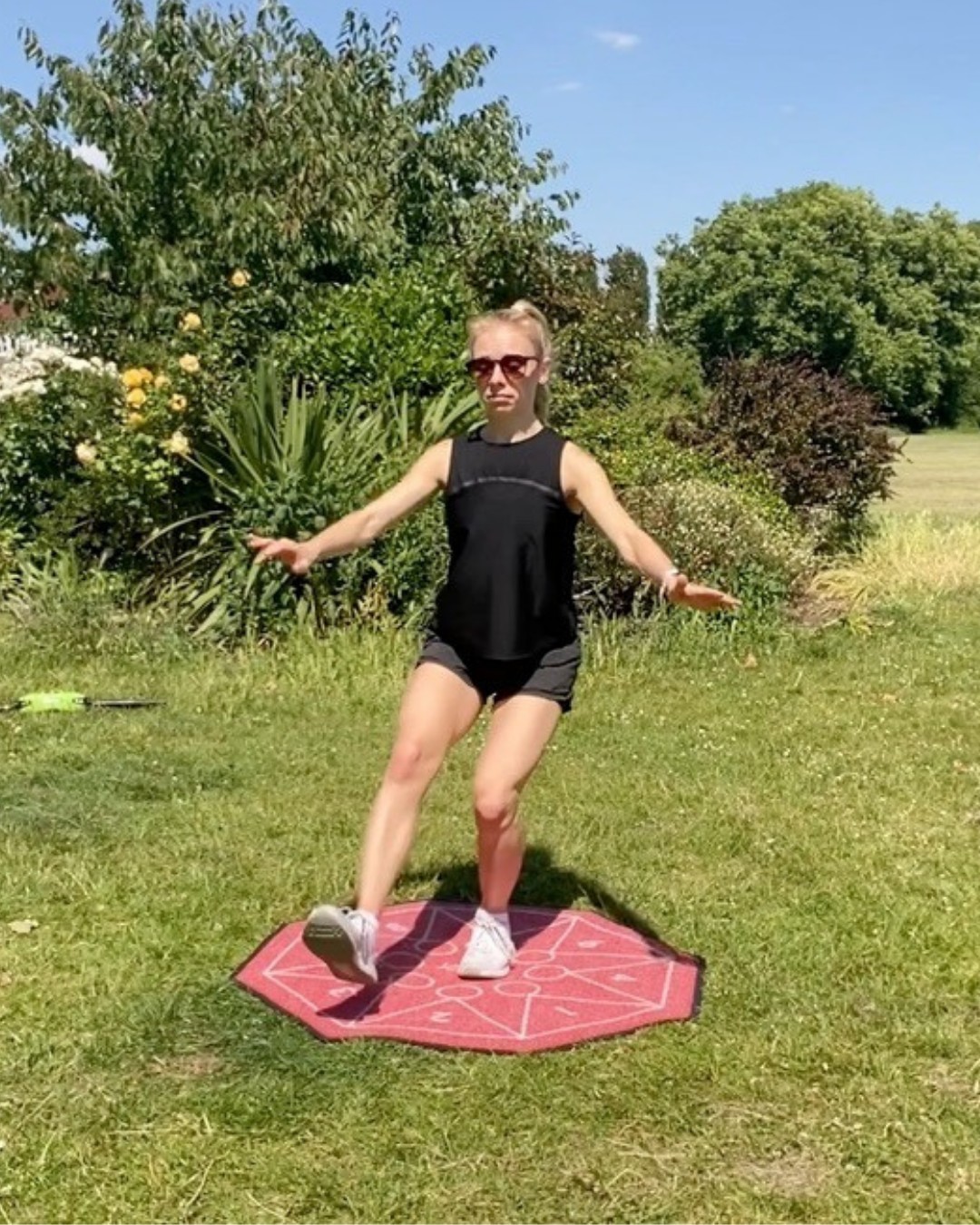
- Vertical Displacement Down, the ability to control a collapse and then return. A squat or lunge in the gym, and all their variants.
- Rapid Change of Direction
- Locomotion
- Reach, a joint-by-joint, slow and controlled motion such as an end range reach, where the destination of the limb is the goal
- Training In'Tension
- Torso Still
- Limb Still
These become the backbone of what you observe, and later of how you build exercises.
The five columns
- Joints. Use the ones that matter for the skill and leave the rest.
- Sequence of events, numbered, with body parts that move together sharing a number.
- Expected joint reactions for each body part, which shows how you expect the client to approach the task.
- The most important descriptions from the six possible bone motions, which matters when you load with a tool or your hands.
- Muscles, which the course says is vague by nature.
How the course teaches it
FASTER courses are visual and interactive. You read, listen, and answer in writing or by dictating. The HMAC form can be downloaded in Keynote, PowerPoint or PDF so you can edit it and practise, and the live sessions take real motions apart together.
Where to go next
The module sits in Motor Skill Application Specialist. PT Manager is free with any FASTER course and keeps HMAC charts you build, so practice has a home.
The FASTER Journal shares the next teaching point first. Sign up at /newsletter.
You just read one answer. The course is all of them.
Motor Skill Application Specialist, where Module 6 teaches the HMAC — taught by the people who wrote it, with free return access for life. The price is on the page, payment plans at checkout, no sales calls.
Also worth a look: PT Manager, where HMAC charts are saved.
See what the course covers →Frequently asked
What does HMAC stand for?
Holistic Movement Assessment Chart, a whole view of the motion in front of you.
What skills does the course teach you to look for?
Vertical Displacement Down, Rapid Change of Direction, Locomotion, Reach, Training In'Tension, Torso Still and Limb Still.
What are the five columns of the chart?
Joints, sequence of events, expected joint reactions, the most important of the six bone motions, and muscles.
Do you need the chart forever?
No. The course says that once the module is understood, a trainer can let go of the form fairly quickly and return to it when they want to sharpen how they see motion.
Reading this for your own training? Every trainer on the FASTER register has been assessed by us — search by town or speciality, free.
Find a FASTER trainer →