Business & Clients
The one camera feed that catches a brace slipping and a shin angle landing
From the FASTER syllabus: this article is taught in full in the PT Manager opens when you sign up with FASTER →
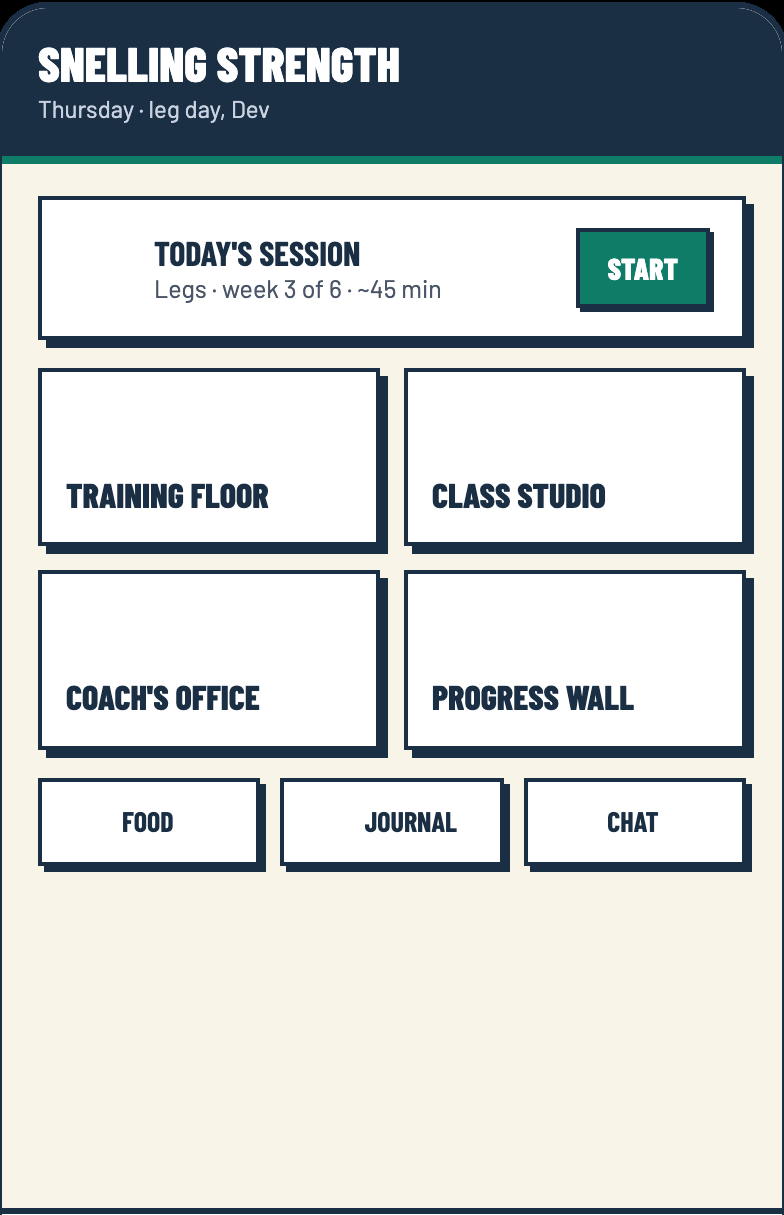
In short: The PT Manager's Live Analyser lays a live skeleton over a client, whether the job is watching a brace hold under load or a shin angle land on a fast first step. It opens at sign-up; adding clients unlocks when you pass a course.
The short version
A trunk holding steady under a loaded lift and a shin leaning hard forward on a sprint start look nothing alike, but a trainer catches both the same way: watching a joint do the wrong thing for a fraction of a second. The PT Manager's Live Analyser tracks either one, live, on the same camera feed.
Key Takeaways
- Bracing and a fast first step are different skills, but both live or die in a fraction of a second most eyes miss.
- The Live Analyser lays a live skeleton over whatever is happening and tracks the joints that matter, whichever movement it is.
- It opens at sign-up. Adding clients switches on when a trainer passes a course, from scratch or already qualified.
Two different moments, one blind spot
Bracing slips somewhere mid-set, when the stomach lets go and the spine takes the load instead. A fast first step lands or doesn't in well under half a second, decided by one shin angle at contact. Neither moment holds still long enough for a trainer standing at the side of the room to catch it every time, no matter how sharp their eye is.
What the Live Analyser actually does
Point the camera at whichever is happening and the PT Manager lays a live skeleton straight over the client or the athlete, tracking every joint as they move. For a brace, that means watching the trunk and hips hold position through a lift. For a first step, it means reading the shin angle at the exact instant the foot lands. Same tool, same skeleton, a different joint doing the talking depending on what a trainer needs to see.
Built on the eye, not instead of it
None of this replaces what Level 2, Level 3 or the Stop Turn Accelerate course actually teach: what to look for, and which cue fixes it once it's spotted. The PT Manager gives that eye a screen to work from, readable from across the room instead of guessed at from a hunch, and lets the client or athlete watch the same footage back rather than take someone's word for it.
Watched, listened to, or answered back
Nobody here is handed a manual to read either. Watch the skeleton move, listen to the cue, or dictate a note back after the set, whichever way something actually sticks for that person that day.
Yours from sign-up
The PT Manager opens the moment a trainer signs up with FASTER, ready straight away in their own name. Adding real clients switches on when they pass a course. Starting from scratch, the Certified Personal Trainer course, £1,500 for Level 2 and Level 3, brings it in from day one. Already qualified, a specialist course like Stop Turn Accelerate or anything above Level 3 brings a trainer in without repeating what they already know.
The FASTER Journal shares the next teaching point first. Sign up at /newsletter and it arrives the moment it is ready.
You just read one answer. The course is all of them.
the PT Manager opens when you sign up with FASTER — taught by the people who wrote it, with free return access for life. The price is on the page, payment plans at checkout, no sales calls.
Also worth a look: the Certified Personal Trainer course, £1,500, is the way in from scratch.
See what the course covers →Frequently asked
Can the PT Manager track more than one type of movement?
Yes. The Live Analyser lays a live skeleton over any movement the camera can see, a trunk holding under a deadlift or a shin angle landing on a sprint start, tracked joint by joint in real time.
Do I need to be a strength coach and a sprint coach to use it?
No. The tool reads the joints; the trainer supplies the eye FASTER's courses teach, whether that eye came from Level 2/3 or a specialist course like Stop Turn Accelerate.
How do I get the PT Manager?
It opens the moment you sign up with FASTER. Adding real clients switches on when you pass a course, and there are two honest routes in, from scratch or already qualified.
Reading this for your own training? Every trainer on the FASTER register has been assessed by us — search by town or speciality, free.
Find a FASTER trainer →