
Workouts & Exercises
The Same Exercise Has Fourteen Ways Left Before It Needs Replacing
From the FASTER syllabus: this article is taught in full in Movement Trainer (AFT) — where the full progression list is taught →
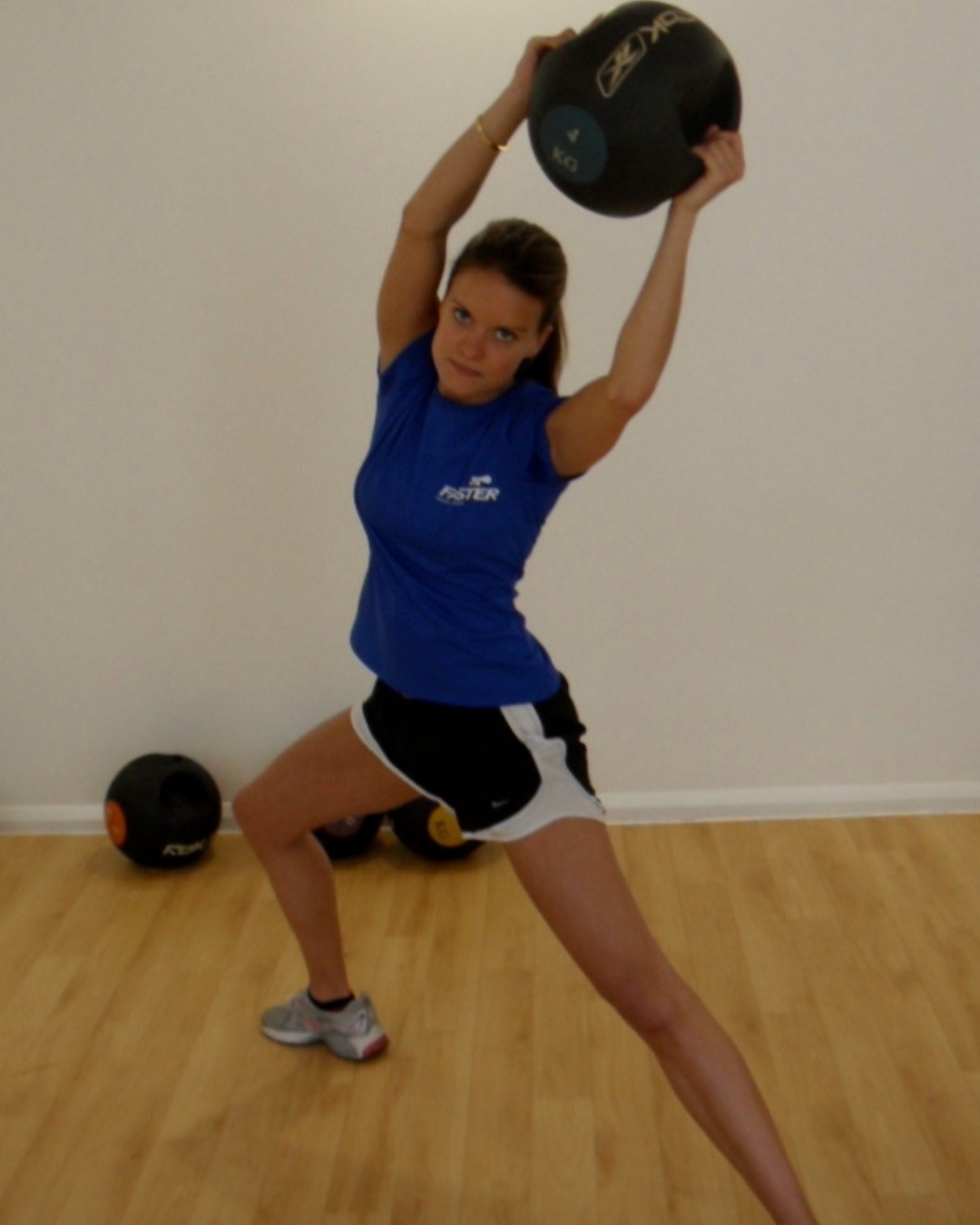
In short: Movement Trainer's Building Exercise Progressions lesson lists fourteen separate ways to make one exercise harder without swapping it for a new one: increase weight, adjust tempo, add reps, add sets, reduce rest, change the angle, move to a complex movement, train unilaterally, add a second movement, use an unstable surface, add an isometric hold, increase the range of motion, add an explosive element, or chain it into a complex set with another exercise. Run even four or five of those on the same squat and a client can progress for months before the exercise itself ever needs to change.
The question this answers
Not "when does this client need a new exercise," but "which of the dials on this exact exercise hasn't been turned yet." Movement Trainer teaches fourteen separate ways to make one movement harder, and most of a working trainer's programming life is spent moving through that list on exercises a client already knows, long before a new one is needed at all.
Fourteen dials, in four groups
Make it heavier. Add weight, add reps, or add sets. These are the three most obvious dials, and also the three a trainer reaches for first and then runs out of room on, because a client's grip or a session's length has a ceiling long before their muscles do.
Make it slower to survive. Slow the tempo down, especially the lowering phase, to hold tension in the muscle for longer. Reduce the rest between sets so the next set starts before the last one has fully recovered from. Add an isometric hold at the hardest point in the range, like pausing at the bottom of a squat. None of these change the weight on the bar. All three change how long the muscle has to argue with it.
Make it a different shape. Change the angle of the exercise, like raising the feet on a press-up. Increase the range of motion, going deeper into the same squat. Move from a simple movement to a complex one, the course's own example being a bicep curl becoming a curl-to-press. Move from both sides working together to one side at a time, the way a double-leg squat becomes a single-leg one.
Make it less predictable. Perform it on an unstable surface. Add a second movement into the same rep, like a twist added to a plank. Add an explosive element, the course's own example turning a regular squat into a jump squat. Or chain it straight into another exercise with no rest between the two, a complex set rather than a single one.
Run it on a squat
Week one, a bodyweight squat, full range, two seconds down. Week three, the same squat with a three-second lowering phase. Nothing added, nothing new, just tempo. Week five, the same squat held for two seconds at the bottom before standing. Week seven, the same squat on one leg. Week nine, the same squat finished with a jump. Five weeks of visible, felt progress, and the exercise on the card never changed once. A client who thinks they've "done squats" for two months has done five different jobs.
The fear this answers
A trainer worried a session is starting to look the same week to week usually isn't short of exercises. They're short of a way to see the one they're already running as more than one thing. Fourteen dials on a single movement is a lot more room than it looks like from the outside, and a client feels the difference in the set long before they could ever name which dial moved.
What to do next
Movement Trainer (AFT), £375, teaches the full progression list alongside programme blocks and the assessment skills that decide which dial a given client needs next. PT Manager's programme builder saves the choice against the client's own record, so a trainer isn't relying on memory for which of the fourteen has already been used, and it opens free the moment a trainer signs up with any FASTER course.
The FASTER Journal shares the next teaching point first. Sign up at /newsletter and it arrives the moment it's ready.
You just read one answer. The course is all of them.
Movement Trainer (AFT) — where the full progression list is taught — taught by the people who wrote it, with free return access for life. The price is on the page, payment plans at checkout, no sales calls.
Also worth a look: PT Manager's programme builder, free with any FASTER course.
See what the course covers →Frequently asked
Do all fourteen ways apply to every exercise?
No, and the course doesn't claim that. A press-up can take tempo, angle, range of motion, an isometric hold and unilateral loading easily; a heavy barbell deadlift is a worse fit for instability training. The list is a menu to check against the exercise in front of you, not a checklist to force through in order.
Is this just progressive overload with extra steps?
Progressive overload is usually taught as one dial — more weight. This is the same idea widened to fourteen dials, most of which never touch the number on the bar at all.
Does PT Manager help apply this?
Yes. The programme builder saves which of the fourteen a client's programme is already using, so a trainer isn't relying on memory to know what's left to try.
Reading this for your own training? Every trainer on the FASTER register has been assessed by us — search by town or speciality, free.
Find a FASTER trainer →