
Biomechanics
What Absorbs The Shock When A Client Lands, And Why The Spine Does Its Share Too
From the FASTER syllabus: this article is taught in full in Movement Trainer (AFT) — where the full anatomy module is taught →
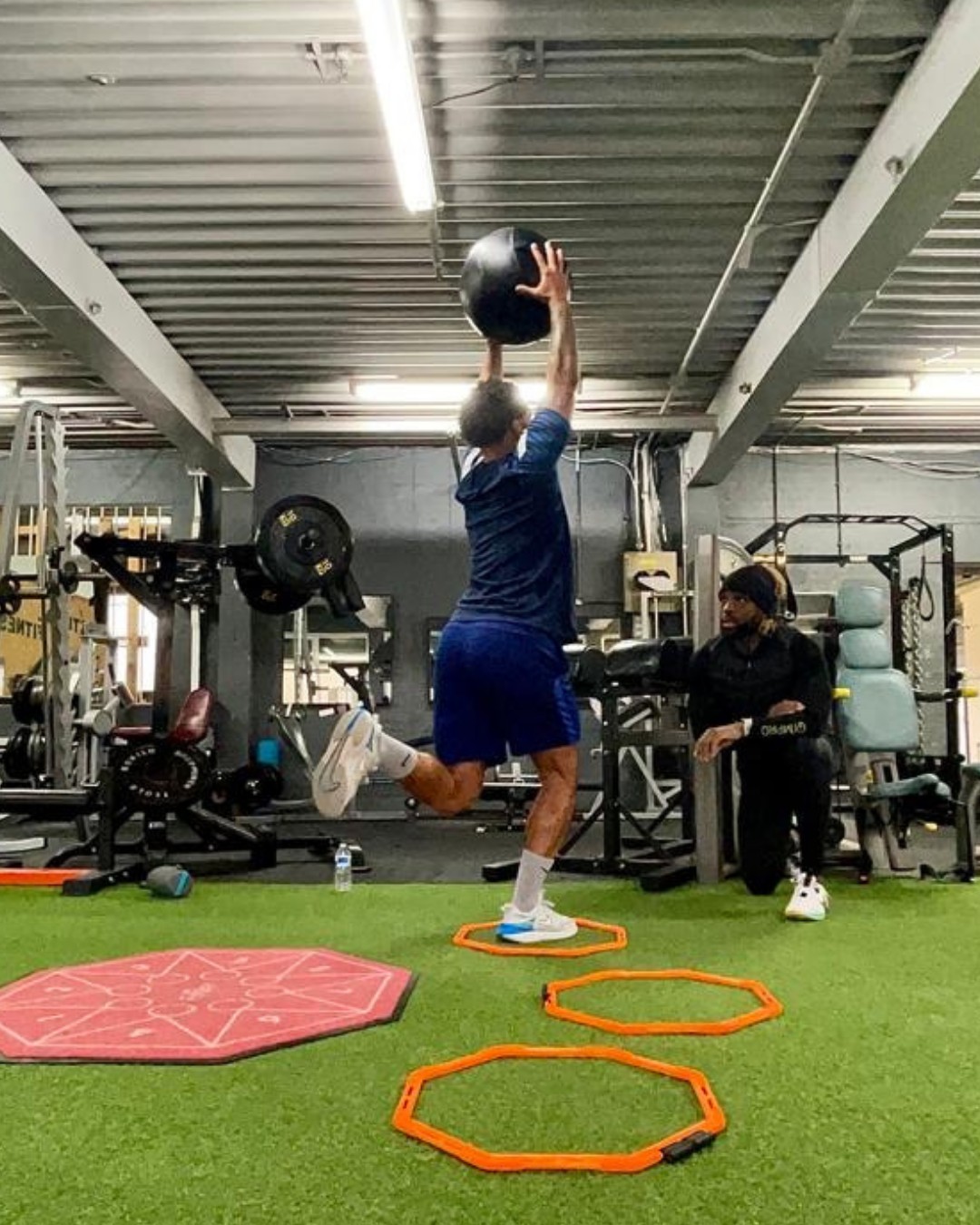
In short: Shock absorption on a landing isn't one joint's job, it's a chain. The knee and ankle flex and the articular cartilage and synovial fluid inside them spread the force across the joint surface rather than letting it land on one spot. The muscles and tendons around those joints, quads and calves especially, contract and lengthen at the same time to slow the drop under control. And the part most people never picture: the spine's own intervertebral discs, a tough outer ring around a gel-like centre, absorb their share of the force that travels up the body from the floor. A trainer who's only watching the knee is watching one link in a chain that runs all the way up.
One landing, several joints, one chain
Movement Trainer names shock absorption as a chain, not a single joint's job. The course's own words: it's "the ability of the joint and its surrounding structures to absorb and dissipate forces," and that's "particularly important in weight-bearing joints like the spine, which must regularly absorb the shock of our body weight and any additional forces when we run or jump." Most trainers watch the knee. The chain runs well past it.
What's doing the absorbing
The course lists the mechanisms in order. Inside the knee and ankle, the articular cartilage gives "a smooth, low-friction surface for joint movement," and the synovial fluid "helps to distribute forces evenly across the joint surface" rather than letting the whole load land on one point. Around those joints, the muscles and tendons, quads and calves especially, do their own job: "by contracting and lengthening, they can absorb forces and slow down movements," which is what controls how fast the drop happens.
The part almost nobody pictures
Here's the one that surprises a trainer who's only ever thought about knees. The spine has its own shock absorbers, the intervertebral discs sitting between each vertebra, built from "a tough outer layer (the annulus fibrosus)" that gives the disc its strength, wrapped around "a gel-like inner layer (the nucleus pulposus)" that lets it deform and spread force. Every landing sends force up through the legs and into the spine, and the discs take their share of it the same way the knee cartilage does further down.
The whole chain, run on one jump
The course's own example ties it together: when a client jumps and lands, "the knee and ankle joints flex to absorb some of the shock, the articular cartilage in these joints helps to distribute the force, and the muscles of the lower body... contract to control the movement and further absorb the shock." Then, further up, "the intervertebral discs absorb the shock transmitted up the body from the landing." One event, four or five structures doing a coordinated job, and every one of them is doing exactly what it's built to do.
Why seeing the whole chain changes the coaching
A trainer who's only watching the knee is watching one link. A trainer who's run this teaching point watches the ankle flex, the knee bend, the hips drop and the spine take its share, all in the same half second, because that's what's happening whether anyone's watching for it or not. That's the whole point of HMAC eyes: describing a landing as the ordinary, coordinated thing it is, joint by joint, rather than a single moment to react to.
What to do next
Movement Trainer (AFT), £375, teaches the full anatomy module this comes from, the same one that builds the muscle-and-force method behind today's earlier post. PT Manager's Live Analyser lays a live skeleton over a client and reads a joint moving in real time, the same chain this post describes, seen rather than pictured from memory, and it opens free the moment a trainer signs up with any FASTER course.
The FASTER Journal shares the next teaching point first. Sign up at /newsletter and it arrives the moment it's ready.
You just read one answer. The course is all of them.
Movement Trainer (AFT) — where the full anatomy module is taught — taught by the people who wrote it, with free return access for life. The price is on the page, payment plans at checkout, no sales calls.
Also worth a look: PT Manager's client tools, free with any FASTER course.
See what the course covers →Frequently asked
Is shock absorption only relevant to running and jumping?
No, any weight-bearing movement asks the same joints to do the same job to some degree, it's just easiest to see and easiest to teach on a clear landing.
Does the spine really absorb shock from a landing in the legs?
Yes. The course is direct about it: the spine is a weight-bearing structure too, and the intervertebral discs take their share of the force that travels up the body, not just the knees and ankles.
Does Movement Trainer connect to PT Manager?
Yes. Passing Movement Trainer (AFT) opens PT Manager's full client tools, including the Live Analyser, which reads a joint moving in real time rather than asking a trainer to picture it from memory.
Reading this for your own training? Every trainer on the FASTER register has been assessed by us — search by town or speciality, free.
Find a FASTER trainer →