Coaching & Programming
Build A Client Test In A Park Or A Hall In Five Steps, And Movement Coach Gives You The Order
From the FASTER syllabus: this article is taught in full in Movement Coach, where assessment building is taught in full →
In short: Movement Coach teaches three kinds of test: proven academic tests, comparison tests taken from sport, and self-built tests for a client's own outcome. The course focuses on the third. Building one takes five steps: list the movements, decide which matter most to the client's end goal, define the forces and the bone, joint and muscle movements, decide the final physical component that shows success, and build a pre-test that chunks the requirements down. Seven principles keep it fair: specificity, validity, reliability, objectivity, feasibility, safety and progression.
The short answer
A client test is built in five steps, and the order is the useful part. Movement Coach lays it out: list the movements you want to test, decide which of them matter most to the client's end goal, define the forces on the client and the bone, joint and muscle movements that answer them, decide the final physical component that has to show for the test to count as a success, and build a pre-test that chunks the requirements down.
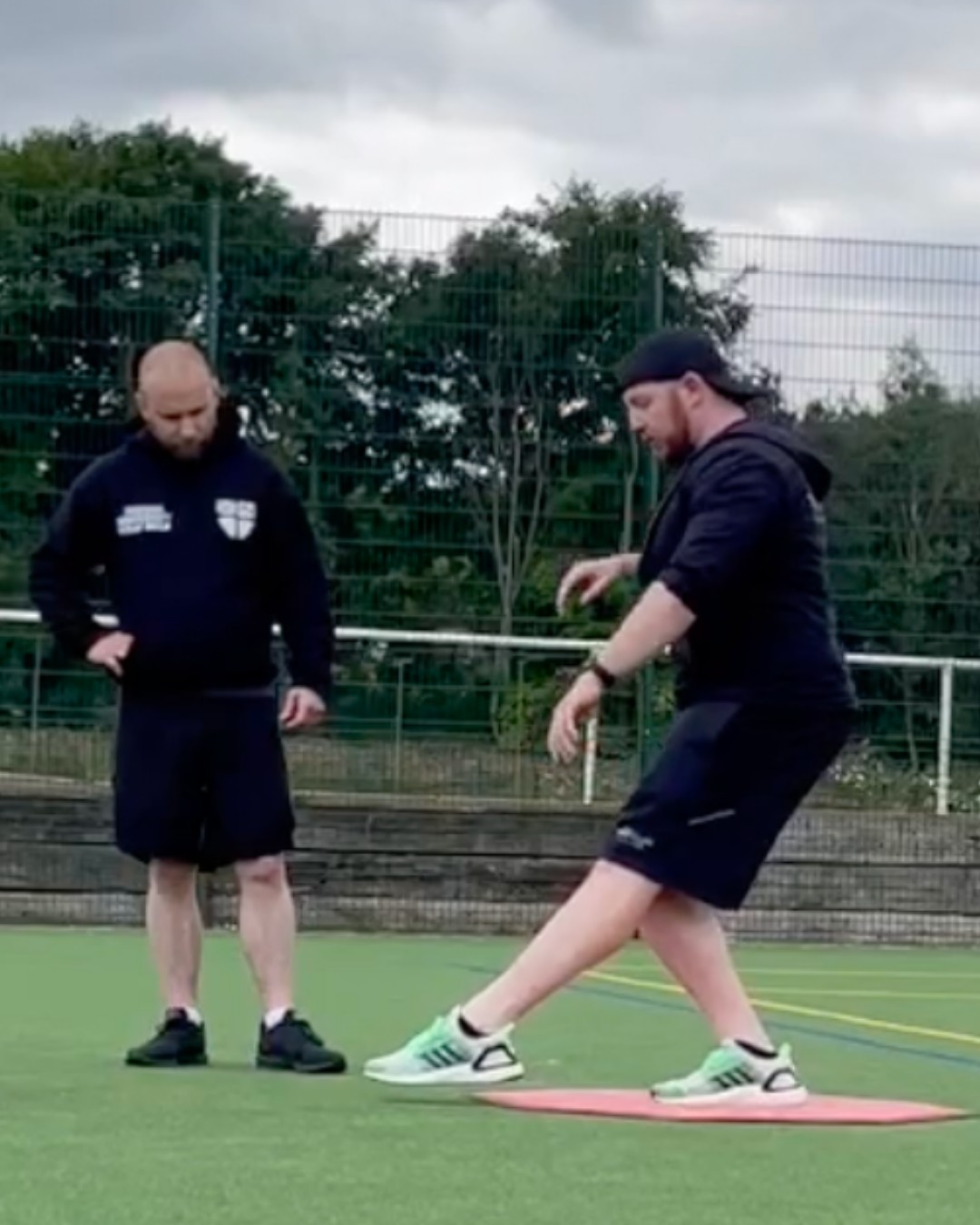
That is a test a trainer can build in a kitchen, a park or a hall.
Three kinds of test, and the one the course teaches
Movement Coach sorts tests into three families. A proven academic test is built to prove one intervention on one fitness component, usually in lab conditions. A comparison or correlation test comes from sport: minimums for a bench press in rugby, or the American football combine, which has used a 40-yard dash, a vertical jump, a broad jump and a three cone drill. A self-built test is made for a client's own outcome.
The course focuses on the third, because that is what most clients need. The standard tests are covered on the Level 3 course already, and the Level 4 Strength and Conditioning Coach course goes further.
Seven principles that keep a self-built test fair
The course gives a checklist to hold the test against:
- Specificity. The test relates to the client's sport or goal. A sprinter's test looks at speed and a marathoner's at endurance.
- Validity. It measures what it says it measures. An agility test assesses agility, not stamina.
- Reliability. The same conditions give a similar result each time.
- Objectivity. Whoever measures gets the same outcome.
- Feasibility. The space, kit and time exist.
- Safety. Health status, warm-up and equipment use are considered first.
- Progression. A test repeated over time gets harder as the client gets fitter.
Start with the interview
The test sits downstream of the interview. Movement Coach puts three priorities in order: make sure the client is within your scope of practice, identify their real end goal, then define the biomechanics and fitness requirements for that goal. The course also suggests asking how the client will know they have achieved the goal, and how they will secretly measure themselves when nobody is looking. That second answer is often the best test on offer.
The test can live inside the session
With a regular client, the course says the assessment can be part of the workout, usually in the style of a circuit or an obstacle course. The client trains, and the trainer records. No separate testing day, and nothing to dread.
Where this goes
Movement Coach covers the whole assessment unit, with the interview, the test and the programme that follows. It is at Movement Coach, and PT Manager, free with any FASTER course, holds the tools to time and measure what you build: PT Manager.
If you are starting from the beginning, today's first post on the business side of the Level 3 course is here.
The FASTER Journal shares the next teaching point first. Sign up at /newsletter.
You just read one answer. The course is all of them.
Movement Coach, where assessment building is taught in full — taught by the people who wrote it, with free return access for life. The price is on the page, payment plans at checkout, no sales calls.
Also worth a look: PT Manager, free with any FASTER course.
See what the course covers →Frequently asked
What are the three types of test in Movement Coach?
A proven academic test, a comparison or correlation test taken from sport, and a self-built test for a client-specific outcome. The course focuses on the self-built kind.
What are the five steps to build a test?
List the movements, decide which matter most to the end goal, define the forces and the bone, joint and muscle movements, decide the final physical component that shows success, and build a pre-test that chunks the requirements down.
Does a test need equipment?
Not necessarily. The course says that without a university lab it is often better to plan a test that needs no equipment.
Can a test be part of the workout?
Yes. With a regular client the assessment can sit inside the session, usually as a circuit or an obstacle-style course.
Reading this for your own training? Every trainer on the FASTER register has been assessed by us — search by town or speciality, free.
Find a FASTER trainer →