
Coaching & Programming
The Spine Moves In Three Directions, And Core & Pelvic Floor Turns Them Into Eight Combinations You Can Describe To A Client
From the FASTER syllabus: this article is taught in full in Core & Pelvic Floor, where this lesson lives →
In short: Core & Pelvic Floor, in its Functional Anatomy module, says the spine moves in three planes: flexion and extension in the sagittal plane, left and right lateral flexion in the frontal plane, and left and right rotation in the transverse plane, with circumduction as a combination of all of them. The regions share the work differently: the neck is highly mobile, the thoracic spine moderately so because of the ribs, and the lower back gives a lot of flexion and extension with limited rotation. Pair flexion or extension with a side bend and a rotation and the course counts eight combinations. Which ones a trainer uses depends on the client and their goals. Muscles support and move the spine, so the job is to see which direction is happening, in plain words.
The short answer
The spine moves forward and back, side to side and round. Core & Pelvic Floor puts it in the course's words: flexion and extension in the sagittal plane, left and right lateral flexion in the frontal plane, left and right rotation in the transverse plane. Circumduction, a circle drawn with the trunk, is those four combined. That is the whole vocabulary, and it fits on one card.
Three planes, three pairs
A pair per plane is easy to carry into a session.
- Flexion and extension. Bending forward and bending back. A sit-up and a lean backward are the course's own examples.
- Lateral flexion. Bending to the side, as in reaching for something beside you.
- Rotation. Twisting around the length of the spine, as in turning to look over a shoulder.
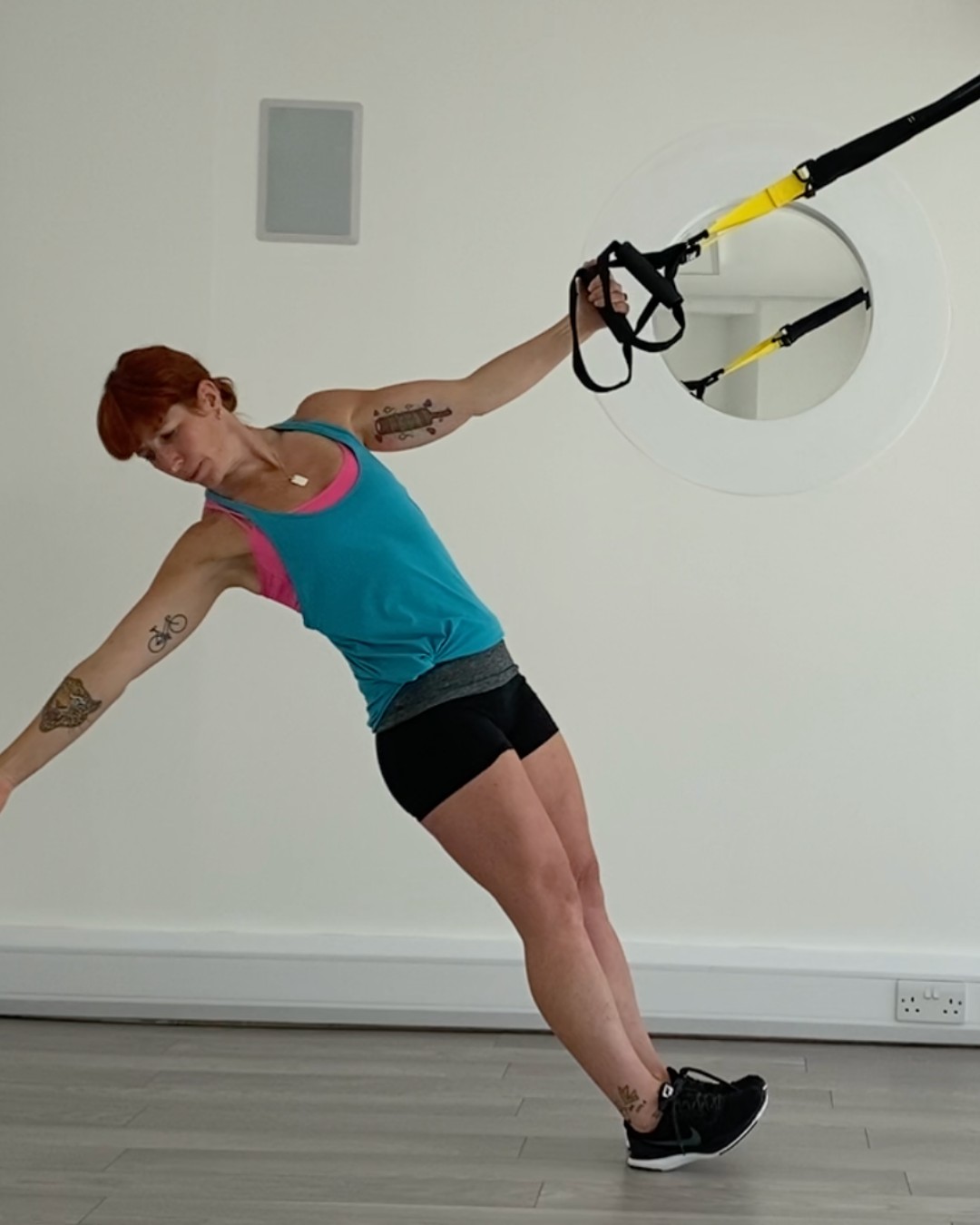
Describing what the spine is doing in those words, as if it were normal, is the skill. A client who reaches sideways on a TRX is doing a lateral flexion. Nothing is wrong with it. It is a movement with a name.
Each region gives a different amount
The course also says the regions share the work differently, and that is the part that makes a trainer's eye more precise.
| Region | What the course says |
|---|---|
| Neck (cervical) | High mobility in flexion, extension, lateral flexion and rotation |
| Upper and mid back (thoracic) | Moderate mobility, because the ribs attach there |
| Lower back (lumbar) | A lot of flexion and extension, limited rotation |
So when a client turns their whole trunk, a trainer who knows this expects the upper back and the neck to be doing a good share of the twist. Muscles support and move the spine, along with the discs, the facet joints and the ligaments, and seeing which direction the movement takes comes first.
Eight combinations from three planes
Pick flexion or extension. Add a right or a left side bend. Add a right or a left rotation. Two choices, then two, then two, gives eight combinations, and the course lists every one: flexion with right side bend and left rotation, flexion with right side bend and right rotation, and so on through extension.
The course adds one useful note. Starting a movement in one plane affects the others, so rotating left gives more rotation than rotating left while also bending to the left. Which combinations get used depends on the client and their goals. A client who wants to feel stronger lifting and carrying, for example, spends their day in a different set of combinations from one who plays golf.
Why this helps a trainer in the room
The same words work for a client, a colleague and a programme card. "That was extension with a right side bend" is clearer than a wave of the hand. Because FASTER courses are visual and interactive, the lesson shows each movement as a start and finish picture, and you can read it, listen to it, write your answers or dictate them.
PT Manager opens the moment you sign up with FASTER, and adding real clients unlocks when you pass a course. It is free. Today's third post shows how its programme builder orders a session, so a spine-moving preparation can open it and a cool down can close it.
If you are new to the industry, the day's first post covers the Level 3 worksheet for planning a safe session.
Where to go next
Core & Pelvic Floor is where the full Functional Anatomy module lives, with the start and finish pictures for each region.
The FASTER Journal shares the next teaching point first. Sign up at /newsletter and it arrives the moment it is ready.
You just read one answer. The course is all of them.
Core & Pelvic Floor, where this lesson lives — taught by the people who wrote it, with free return access for life. The price is on the page, payment plans at checkout, no sales calls.
Also worth a look: PT Manager, free with any FASTER course.
See what the course covers →Frequently asked
What are the movements of the spine?
Flexion and extension, left and right lateral flexion, left and right rotation, and circumduction, which combines them. The course sorts them by plane: sagittal, frontal and transverse.
Which part of the spine moves the most?
It depends on the direction. The course describes the neck as highly mobile, the thoracic spine as moderately mobile because the ribs attach to it, and the lower back as giving significant flexion and extension with limited rotation.
What are the eight combinations?
Flexion or extension, each paired with a right or left side bend and a right or left rotation. Two options for the first, two for the second and two for the third make eight.
Does a trainer need to teach all eight?
No. The course says the combinations used depend on the client and their goals.
Reading this for your own training? Every trainer on the FASTER register has been assessed by us — search by town or speciality, free.
Find a FASTER trainer →