Become a Personal Trainer
What Muscles Work In A Loaded Carry, And How To Work It Out For Any Exercise
From the FASTER syllabus: this article is taught in full in The honest route from scratch to qualified →
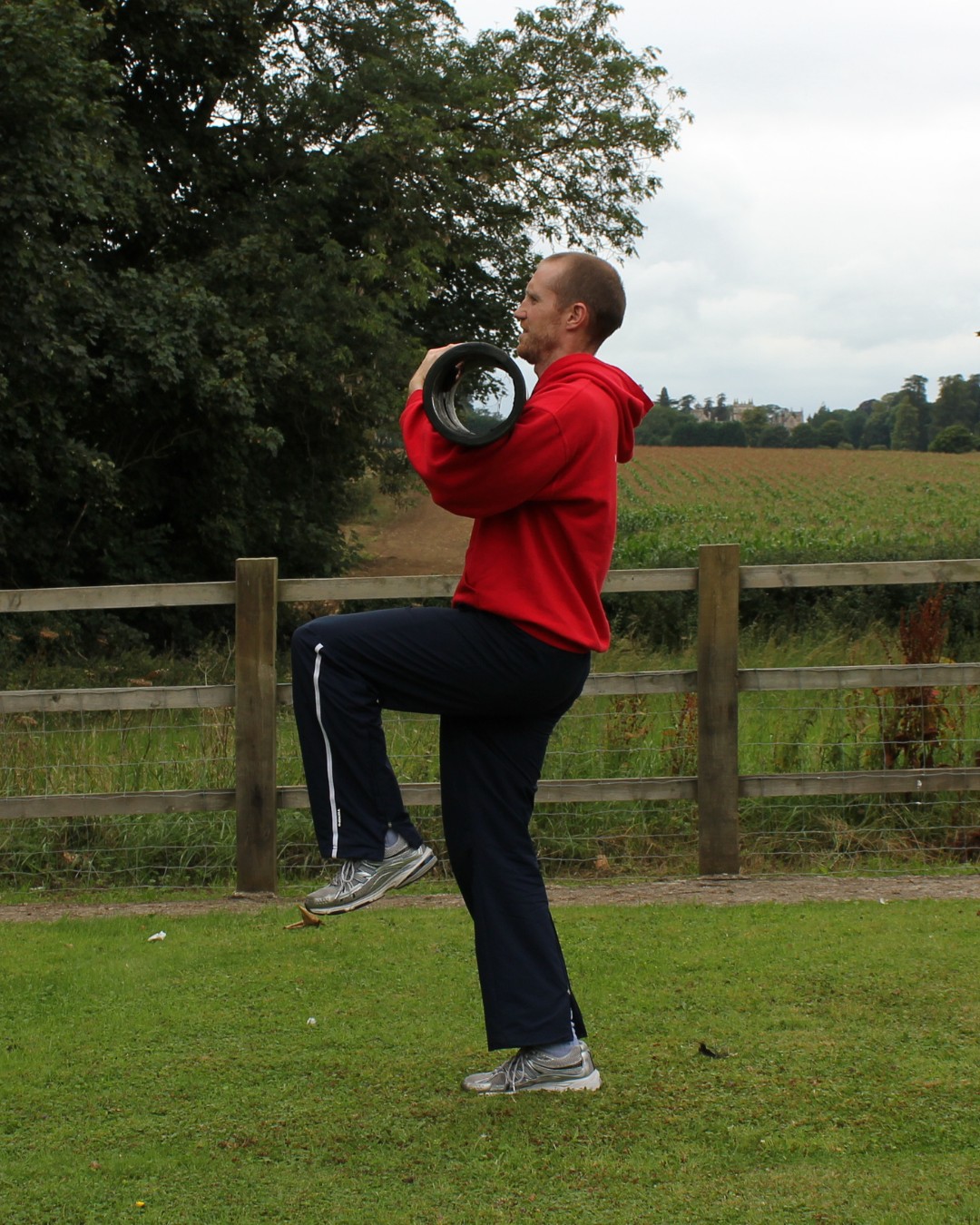
In short: A loaded carry is held up by the upper trapezius and the muscles that elevate the scapula, fighting the load's pull down through the shoulder, with the forearms and grip anchoring it in place. The glutes, quadriceps, hamstrings and calves do the actual work of walking under that added weight, while the obliques, quadratus lumborum and erector spinae keep the ribs stacked level over the pelvis so the extra load at the front doesn't turn into a lean. The four steps that produce that answer are: decide where the force is acting, find the muscles working directly against it, find the muscles assisting, then find the muscles supporting the joint — the same four steps that already answered the same question about a squat, a lunge, a deadlift, a press-up, a row and a shoulder press.
What muscles work in a loaded carry
The trapezius and the muscles around the shoulder blade, holding the load up in the rack position rather than letting it settle through the chest. The forearms and the hand, anchoring the kettlebells there without them rolling off the shoulder. The glutes, quadriceps, hamstrings and calves, doing the actual work of walking under it, step after step. And the obliques, quadratus lumborum and erector spinae, keeping the ribs stacked level over the pelvis so none of that extra weight at the front turns into a lean.
That's the answer. Like the squat, the lunge, the deadlift, the press-up, the row and the shoulder press before it, it came from a method rather than a memorised list, and the method is the part worth having before a single client ever walks in.
Nobody's taken a client yet, and that's fine
Someone weighing up a career change into personal training hears "carries are a grip exercise" repeated often enough to take it as the whole answer, then wonders whether the rest of the anatomy unit is going to be just as thin. One of the things you learn on our CIMSPA-recognised personal training course is that the grip is real, but it's the smallest job on the list, which is exactly the kind of gap a method closes and a repeated phrase never does.
Seven exercises in, and the method still hasn't changed
A squat, a lunge, a deadlift, a press-up, a row and a shoulder press have all run through the same four steps:
- Decide where the force is acting on the body
- Identify which muscles work directly against that force (muscles that lengthen are easiest to see)
- Identify which secondary muscles assist that movement
- Identify which muscles would support that joint / movement
Run it on a loaded carry.
One, where is the force acting? Downward, through the rack position at the front of each shoulder, and down again through the trunk into the ground with every stride.
Two, what works directly against it? The upper trapezius and the muscles that lift the scapula, holding the load up rather than letting it settle through the chest. At the hip and knee, the glutes and quadriceps, producing the stride itself under the added weight.
Three, what assists? The forearm flexors and the small muscles of the hand, keeping the kettlebells anchored in place, and the hamstrings and calves, assisting the glutes and quadriceps through each step.
Four, what supports? The obliques and quadratus lumborum, holding the ribs level over the pelvis so the load at the front doesn't pull the trunk into a lean, and the erector spinae keeping the spine upright the whole way down the field.
Why that fourth answer is worth having
A trainer who only knows "carries work your grip" has nothing left to look at once the hands are fine. A trainer who has run the four steps is watching the ribs and the pelvis instead, which is where a loaded carry gets harder for most clients long before their grip does.
Point it at anything
A farmer's carry, load in both hands at the sides rather than racked at the shoulders, where the trapezius's job barely changes but the obliques get less help from the rack position. A suitcase carry, load in one hand only, where the same obliques and quadratus lumborum on the loaded side suddenly have the whole job to themselves. Any way of carrying a load a client already does, in the gym or picking up shopping, can be answered the same way, without a new list to learn.
What to do next
If you are looking at courses, the whole route from no qualification to working trainer is set out at become a personal trainer. It sets out what Level 2 and Level 3 contain, what it costs, and how long it takes. The price is on the page. There are no sales calls. Free lifetime return access is included, so the anatomy unit is still there the week a client asks you something you have not thought about in a year.
The anatomy unit itself sits in Level 3 Personal Trainer, and in the Certified PT Bundle at £1,500 alongside Level 2 and Movement Trainer.
FASTER Daily News sends you each day's blog links, the latest on new courses and live opportunities, and updates to PT Manager, free for students. Sign up at /newsletter.
You just read one answer. The course is all of them.
The honest route from scratch to qualified — taught by the people who wrote it, with free return access for life. The price is on the page, payment plans at checkout, no sales calls.
Also worth a look: Level 3 Personal Trainer — the anatomy unit this comes from.
See what the course covers →Frequently asked
Do I need every muscle in a loaded carry memorised before I take my first client?
No. The method matters more than the memory — decide where the force is acting, find what's working against it, find what's assisting, find what's supporting. Run that on any exercise and you've got the answer, exam or no exam.
Isn't a carry just a grip exercise?
Grip is doing real work, holding the load in place, but it's the smallest job on the list. The bigger jobs are the shoulder holding the load up and the trunk keeping the ribs level over the pelvis while the legs do the actual walking.
Does finishing the course get me PT Manager?
Yes. PT Manager opens the moment you sign up with FASTER, and adding real clients unlocks once you pass a course.
Reading this for your own training? Every trainer on the FASTER register has been assessed by us — search by town or speciality, free.
Find a FASTER trainer →