Become a Personal Trainer
What Muscles Work In A Split Squat, And How To Work It Out For Any Exercise
From the FASTER syllabus: this article is taught in full in The honest route from scratch to qualified →
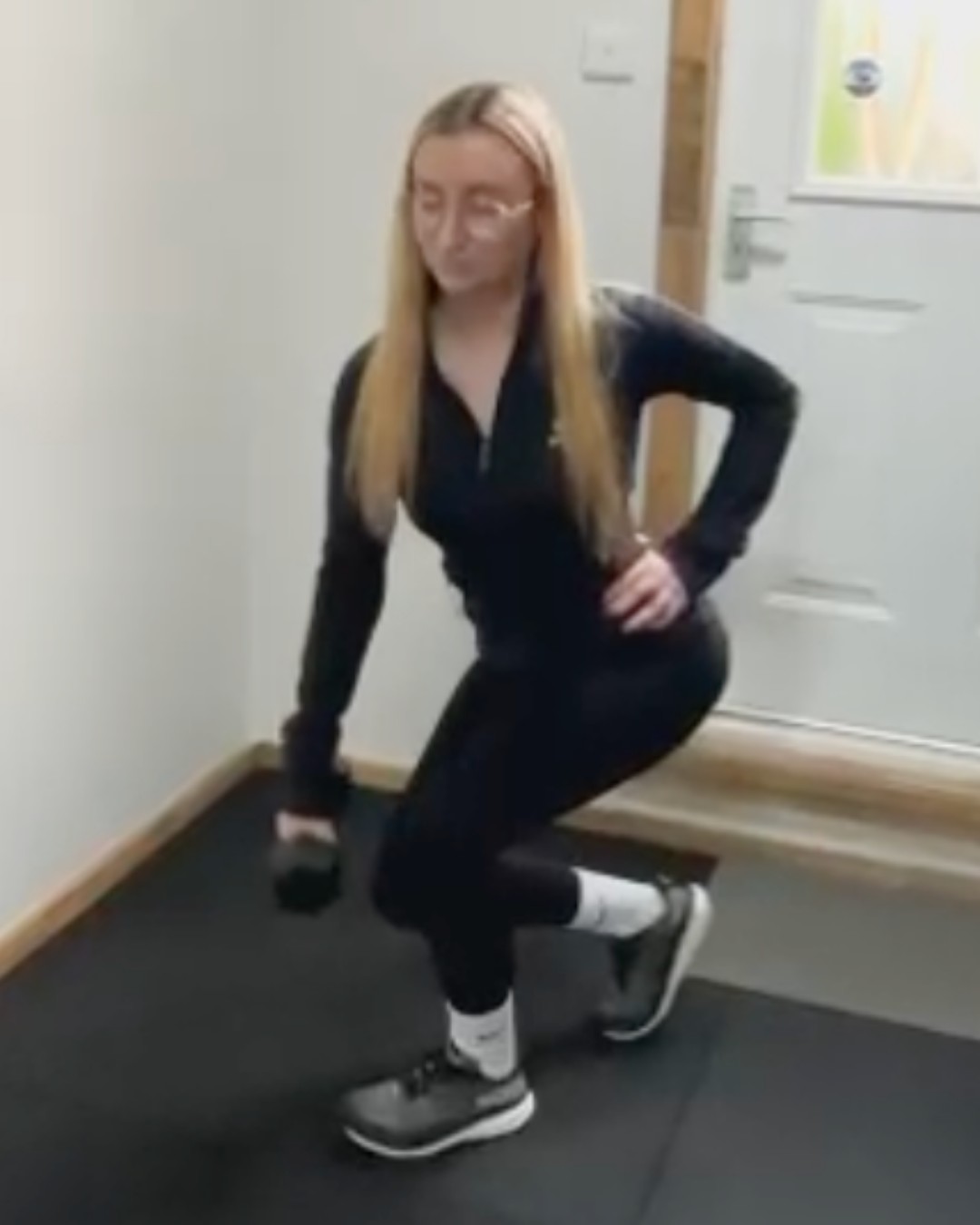
In short: A split squat is held together by the glutes and quads of the front leg, lengthening as the hips and knee bend to lower the body, and the hip flexors of the rear leg, stretching as that hip extends back and down under the weight it carries. The hamstrings of the front leg assist the glutes on the way back up, and the deep core, obliques and the front leg's glute medius hold the trunk and pelvis level over a stance that never returns to two feet sharing the load evenly. The four steps that produce that answer are: decide where the force is acting, find the muscles working directly against it (the ones lengthening are easiest to see), find the secondary muscles assisting, then find the muscles supporting the joint. The same four steps already answered the same question about a squat, a lunge, a deadlift, a press-up, a row, a shoulder press, a loaded carry, a suspended plank, a sprint, a medicine ball throw, a vertical jump, a kettlebell swing, a band wood chop, a bird dog, a single-leg overhead reach, a hip hinge, a lateral lunge and a lateral shuffle.
What muscles work in a split squat
The glutes and quads of the front leg, lengthening as the hips and knee bend to lower the body, then shortening to drive it back up. The hip flexors of the rear leg, stretching as that hip extends back and down under the bodyweight it carries, even though the rear leg isn't where most of the load sits. The hamstrings of the front leg, assisting the glutes on the way up. And the glute medius of the front leg, working with the deep core and obliques to keep the pelvis level over a stance that never gets the two-feet, side-by-side base a standard squat has to lean on.
That's the answer, and like the squat, the lunge, the deadlift, the press-up, the row, the shoulder press, the loaded carry, the suspended plank, the sprint, the medicine ball throw, the vertical jump, the kettlebell swing, the band wood chop, the bird dog, the single-leg overhead reach, the hip hinge, the lateral lunge and the lateral shuffle before it, it came from a method rather than a memorised list.
Nobody's taken a client yet, and that's fine
Somebody weighing up a career change into personal training can watch a class doing split squats and file it under "one-legged squats," missing that the stance being fixed rather than travelling changes which muscles are doing the stabilising. One of the things you learn on our CIMSPA-recognised personal training course is a method that turns a held, staggered stance into a specific list of muscles, each doing exactly the job it's built for, front leg and rear leg both. The course teaches it in the browser too, so it can be watched, read or answered by dictating the answer back, whichever fits the hour you have.
Nineteen exercises in, and the method still hasn't changed
A squat, a lunge, a deadlift, a press-up, a row, a shoulder press, a loaded carry, a suspended plank, a sprint, a medicine ball throw, a vertical jump, a kettlebell swing, a band wood chop, a bird dog, a single-leg overhead reach, a hip hinge, a lateral lunge and a lateral shuffle have all run through the same four steps:
- Decide where the force is acting on the body
- Identify which muscles work directly against that force (muscles that lengthen are easiest to see)
- Identify which secondary muscles assist that movement
- Identify which muscles would support that joint / movement
Run it on a split squat.
One, where is the force acting? At the hip and knee of the front leg, taking most of the bodyweight straight down as it bends, and at the hip of the rear leg, held in an extended, stretched position for the whole set rather than working through a range.
Two, what works directly against it? The glutes and quads of the front leg, lengthening as the body lowers onto the bent knee. The hip flexors of the rear leg, lengthening as that hip is pushed back and down by the staggered stance holding it there.
Three, what assists? The hamstrings of the front leg, helping the glutes finish the drive back to standing. The adductors of the front leg, keeping the knee tracking forward rather than caving in under a one-sided load.
Four, what supports? The glute medius of the front leg, along with the deep core and obliques, stopping the pelvis dropping or rotating toward the unweighted side, since a split squat never gets the two-footed base a bilateral squat leans on for that job.
Why that fourth answer changes how it's coached
A trainer who only knows "keep the knee behind the toes" has nothing specific to watch when a client's pelvis starts tipping sideways halfway through the set. A trainer who's run the four steps knows that's the glute medius of the front leg losing the job of holding the pelvis level under a one-sided load, and can cue the exact muscle instead of repeating a knee cue that was never the actual problem.
Point it at anything
A rear-foot-elevated version, where the same staggered stance holds true and the rear hip flexors stretch even further under the raised back foot. A step-up onto a low box, where the front leg's job is identical but the rear leg leaves the floor partway through instead of staying staggered behind. A single-leg landing after a jump, where the same front-leg sequence has to fire in a fraction of a second instead of a controlled few. Any exercise built on one leg carrying more of the load than the other can be answered the same way, without a new list to learn.
PT Manager opens the moment you sign up with any FASTER course, and adding real clients unlocks the day you pass one. Read more about the Level 3 Personal Trainer Certificate this method comes from.
The FASTER Journal shares the next teaching point first. Sign up at /newsletter and it arrives the moment it's ready.
You just read one answer. The course is all of them.
The honest route from scratch to qualified — taught by the people who wrote it, with free return access for life. The price is on the page, payment plans at checkout, no sales calls.
Also worth a look: Level 3 Personal Trainer — the anatomy unit this comes from.
See what the course covers →Frequently asked
How is a split squat different from a lunge?
A lunge steps forward and returns to standing, so the load travels through space. A split squat holds the same staggered stance still and only moves up and down, which is why the rear hip flexors are doing a stretching job under a fixed position rather than a moving one.
Why does the rear leg matter if the front leg carries the weight?
The rear hip flexors lengthening under load is what stops the pelvis tipping forward as the body drops; take the rear leg's job away and the front leg is left correcting a fault it didn't cause.
Does finishing the course get me PT Manager?
Yes. PT Manager opens the moment you sign up with FASTER, and adding real clients unlocks once you pass a course.
Reading this for your own training? Every trainer on the FASTER register has been assessed by us — search by town or speciality, free.
Find a FASTER trainer →