Become a Personal Trainer
What Muscles Work In A Bear Crawl, And How To Work It Out For Any Exercise
From the FASTER syllabus: this article is taught in full in The honest route from scratch to qualified →
In short: A bear crawl is held together by the deep core, mainly the obliques and transverse abdominis, resisting the trunk twisting as one arm and the opposite leg reach forward together, and the scapular stabilisers keeping the shoulder blade under control, because a crawl only ever has two points of contact holding the whole body up at once. The shoulder and hip flexors of the reaching pair lengthen as they extend forward, and the triceps and glutes of the supporting side hold the body up while that happens. The four steps that produce that answer are: decide where the force is acting, find the muscles working directly against it (the ones lengthening are easiest to see), find the secondary muscles assisting, then find the muscles supporting the joint. The same four steps already answered the same question about a squat, a lunge, a deadlift, a press-up, a row, a shoulder press, a loaded carry, a suspended plank, a sprint, a medicine ball throw, a vertical jump, a kettlebell swing, a band wood chop, a bird dog, a single-leg overhead reach, a hip hinge, a lateral lunge, a lateral shuffle, a split squat and a single-leg deadlift.
What muscles work in a bear crawl
The deep core, mainly the obliques and transverse abdominis, resisting the trunk twisting as one arm and the opposite leg reach forward together. The scapular stabilisers, keeping the shoulder blade under control on the supporting arm. And the shoulder and hip flexors of the reaching pair, lengthening as they extend forward, while the triceps and glute of the supporting side hold the rest of the body up through it.
That's the answer, and like the squat, the lunge, the deadlift, the press-up, the row, the shoulder press, the loaded carry, the suspended plank, the sprint, the medicine ball throw, the vertical jump, the kettlebell swing, the band wood chop, the bird dog, the single-leg overhead reach, the hip hinge, the lateral lunge, the lateral shuffle, the split squat and the single-leg deadlift before it, it came from a method rather than a memorised list.
Nobody's taken a client yet, and that's fine
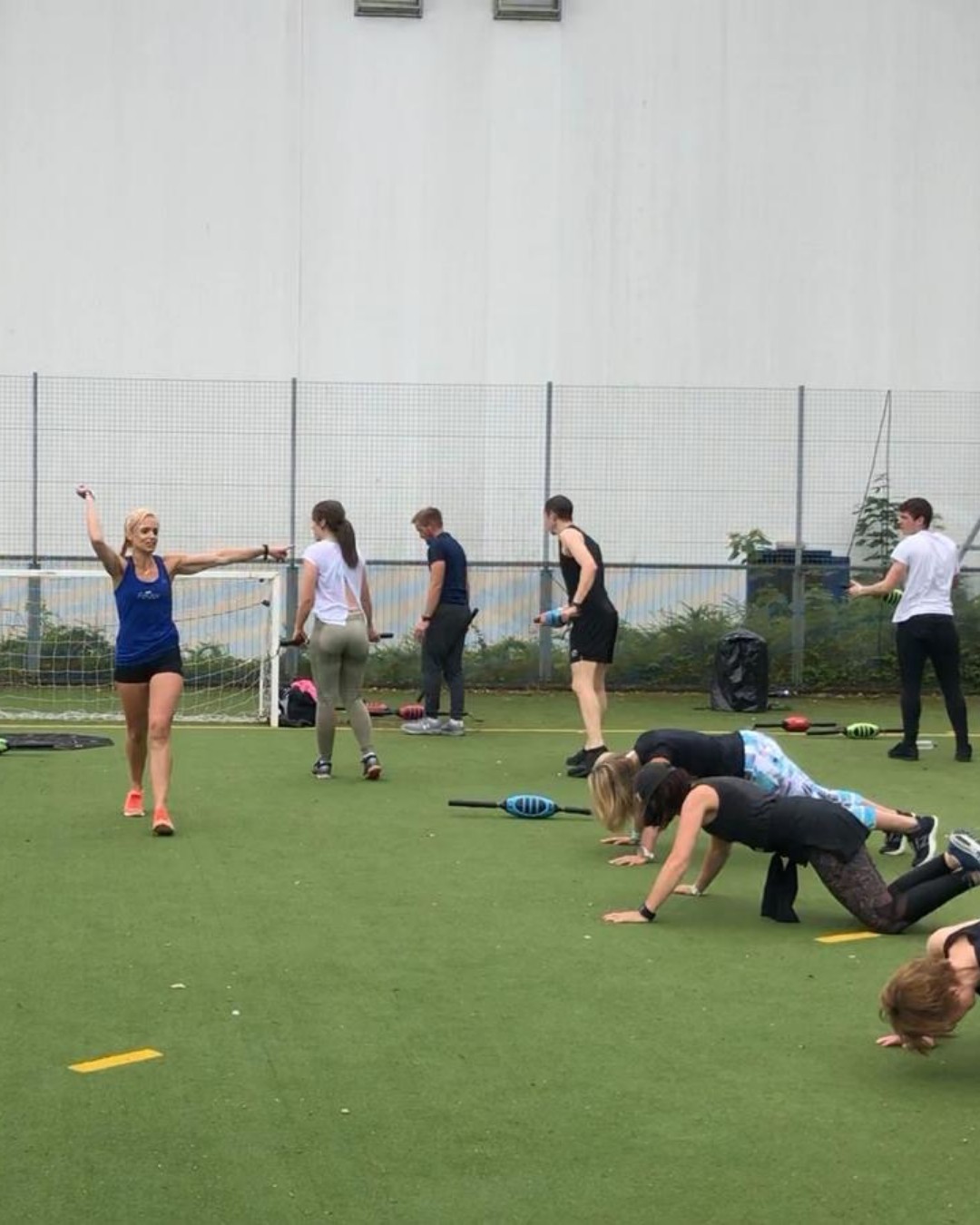
Somebody weighing up a career change into personal training can watch a group crawl forward on hands and feet and see nothing more than a warm-up drill, missing that a crawl only ever has two points of contact touching the ground at once, and the core is working the whole time to stop the trunk twisting towards whichever side just lifted off. One of the things you learn on our CIMSPA-recognised personal training course is a method that turns four limbs taking it in turns to leave the ground into a specific list of muscles, each doing exactly the job it's built for, on every step. The course teaches it in the browser too, so it can be watched, read or answered by dictating the answer back, whichever fits the hour you have.
Twenty-one exercises in, and the method still hasn't changed
A squat, a lunge, a deadlift, a press-up, a row, a shoulder press, a loaded carry, a suspended plank, a sprint, a medicine ball throw, a vertical jump, a kettlebell swing, a band wood chop, a bird dog, a single-leg overhead reach, a hip hinge, a lateral lunge, a lateral shuffle, a split squat and a single-leg deadlift have all run through the same four steps:
- Decide where the force is acting on the body
- Identify which muscles work directly against that force (muscles that lengthen are easiest to see)
- Identify which secondary muscles assist that movement
- Identify which muscles would support that joint / movement
Run it on a bear crawl.
One, where is the force acting? At the shoulders and hips, bearing the whole body's weight through whichever two limbs are still on the ground while the opposite arm and leg reach forward.
Two, what works directly against it? The shoulder and hip flexors of the reaching pair, lengthening under control as they extend forward before taking any weight.
Three, what assists? The triceps and glute of the supporting side, holding the body up while the opposite pair moves. The lats, pulling the reaching arm back down to the ground once it lands.
Four, what supports? The deep core and obliques, resisting the trunk twisting toward whichever side just lifted off, and the scapular stabilisers, keeping the shoulder blade controlled with only one arm answering for the whole of the upper body's weight at that instant.
Why that fourth answer changes how it's coached
A trainer who only knows "keep your back flat" has nothing specific to watch when a client's hips start twisting every time the opposite arm and leg move together. A trainer who's run the four steps knows that's the deep core losing its grip on the rotation it's meant to be resisting, and can cue the exact job instead of repeating a flatness cue aimed at the wrong plane.
Point it at anything
A lateral bear crawl, where the same two-points-of-contact rule now has to resist a sideways drift instead of a forward one. A bear crawl holding a weight plate flat on the upper back, where the core has to keep the plate from sliding as well as keep the trunk from twisting. A crawl under a low bar, where the hips have to stay lower without losing the same shoulder control. Any exercise built on limbs leaving the ground in turns can be answered the same way, without a new list to learn.
PT Manager opens the moment you sign up with any FASTER course, and adding real clients unlocks the day you pass one. Read more about the Level 3 Personal Trainer Certificate this method comes from.
The FASTER Journal shares the next teaching point first. Sign up at /newsletter and it arrives the moment it's ready.
You just read one answer. The course is all of them.
The honest route from scratch to qualified — taught by the people who wrote it, with free return access for life. The price is on the page, payment plans at checkout, no sales calls.
Also worth a look: Level 3 Personal Trainer — the anatomy unit this comes from.
See what the course covers →Frequently asked
Why does a bear crawl need more core control than a plank?
A plank has four points of contact holding it still. A bear crawl only ever has two at any moment, and it's moving, so the core has to resist the trunk twisting towards whichever side just lifted off, on every single step.
Does the hip do anything if the leg is the one moving?
Yes. The standing-side hip and glute are doing the supporting work of holding the whole body level while the opposite arm and leg reach forward, the same job a hip does in plenty of upright exercises, just now on all fours.
Does finishing the course get me PT Manager?
Yes. PT Manager opens the moment you sign up with FASTER, and adding real clients unlocks once you pass a course.
Reading this for your own training? Every trainer on the FASTER register has been assessed by us — search by town or speciality, free.
Find a FASTER trainer →