Become a Personal Trainer
What Muscles Work In A Romanian Deadlift, And Why It Reads Different To A Deadlift From The Floor
From the FASTER syllabus: this article is taught in full in The honest route from scratch to qualified →
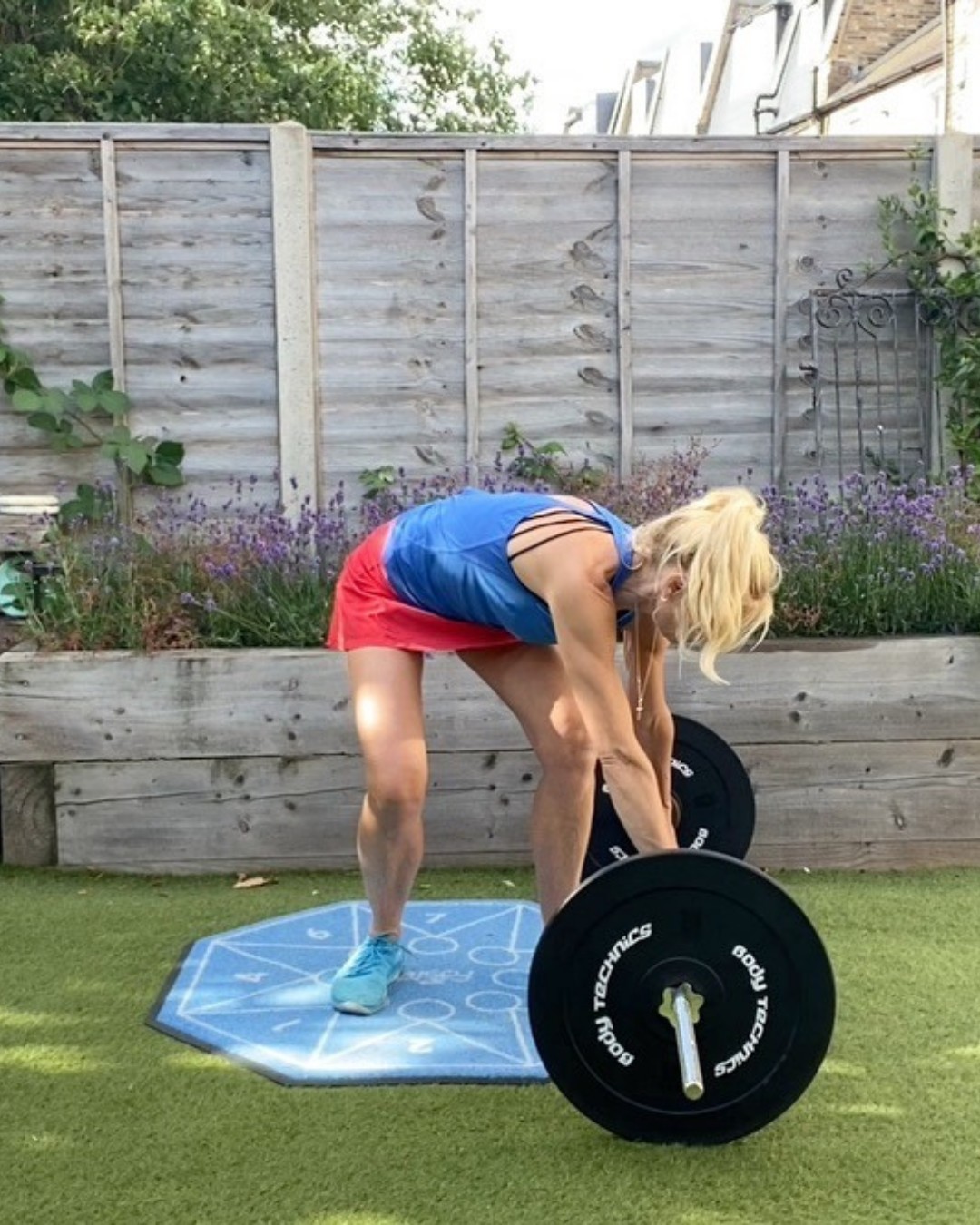
In short: A Romanian deadlift works the hamstrings and glutes hardest, lengthening under control on the way down and driving hip extension back up, with the knees staying softly bent throughout rather than doing the work. The erector spinae holds the spine in position isometrically the whole rep, the forearms and grip hold the bar, and the lats pull it in close to the legs so the load stays over the middle of the foot. The four steps that produce that answer are: decide where the force is acting, find the muscles working directly against it (the ones lengthening are easiest to see), find the secondary muscles assisting, then find the muscles supporting the joint. The same four steps already answered the same question about a squat, a lunge, a deadlift, a press-up, a row, a shoulder press, a loaded carry, a suspended plank, a sprint, a medicine ball throw, a vertical jump, a kettlebell swing, a band wood chop, a bird dog, a single-leg overhead reach, a hip hinge, a lateral lunge, a lateral shuffle, a split squat, a single-leg deadlift, a bear crawl, a beast position, a walking lunge and a high kick.
What muscles work in a Romanian deadlift
Start with what doesn't move much. The knees stay softly bent the whole rep, barely travelling, which is the detail that tells a trainer this isn't a deadlift off the floor. Almost everything else happens at the hip: the hamstrings and glutes lengthen under control as the bar lowers, then drive hip extension to bring it back up.
The one people assume they already know
Somebody weighing up a career change into personal training has probably seen a Romanian deadlift filed under "deadlift" without ever being shown why the two versions ask different muscles to do the work. One of the things you learn on our CIMSPA-recognised personal training course is a method that pulls that apart and gets specific about what's happening at each joint. The course teaches it in the browser too, so it can be watched, read or answered by dictating the answer back, whichever fits the hour you have.
Twenty-five exercises in, and the method still hasn't changed
A squat, a lunge, a deadlift, a press-up, a row, a shoulder press, a loaded carry, a suspended plank, a sprint, a medicine ball throw, a vertical jump, a kettlebell swing, a band wood chop, a bird dog, a single-leg overhead reach, a hip hinge, a lateral lunge, a lateral shuffle, a split squat, a single-leg deadlift, a bear crawl, a beast position, a walking lunge and a high kick have all run through the same four steps:
- Decide where the force is acting on the body
- Identify which muscles work directly against that force (muscles that lengthen are easiest to see)
- Identify which secondary muscles assist that movement
- Identify which muscles would support that joint / movement
Run it on a Romanian deadlift.
One, where is the force acting? Almost all of it at the hip, as the torso hinges forward and the bar travels down the front of the legs, with the knee staying close to its starting angle the whole way.
Two, what works directly against it? The hamstrings lengthen first, under control, as the hips fold, then shorten to drive the hip back to standing, with the glutes working alongside them through the same range, the two groups doing almost all of the visible work.
Three, what assists? The adductors, helping extend the hip alongside the hamstrings and glutes, and the erector spinae, holding the spine in one steady position rather than moving through a range of its own, which is what keeps the back flat instead of rounding under the load.
Four, what supports? The forearms and grip, holding onto a bar that's trying to pull straight down and out of the hands, and the lats, pulling the bar in close to the shins so the weight stays over the middle of the foot instead of drifting forward.
Why the fourth answer changes how it's coached
A trainer who only watches the back rounding has half the picture. A trainer who's run the four steps knows a Romanian deadlift that drifts forward at the bottom is just as likely to be the lats losing the fight to keep the bar close as it is anything happening at the spine, which is a different thing to build capacity for.
Point it at anything
A Romanian deadlift done on one leg, where the same hip hinge now has to balance itself too. One done with a pause at the bottom, where the hamstrings hold the lengthened position instead of reversing straight out of it. Any exercise built around a hip hinge with the knees mostly out of the conversation can be answered the same way, without a new list to learn.
PT Manager opens the moment you sign up with any FASTER course, and adding real clients unlocks the day you pass one. Read more about the Level 3 Personal Trainer Certificate this method comes from.
The FASTER Journal shares the next teaching point first. Sign up at /newsletter and it arrives the moment it's ready.
You just read one answer. The course is all of them.
The honest route from scratch to qualified — taught by the people who wrote it, with free return access for life. The price is on the page, payment plans at checkout, no sales calls.
Also worth a look: Level 3 Personal Trainer — the anatomy unit this comes from.
See what the course covers →Frequently asked
How is a Romanian deadlift different from a regular deadlift?
A regular deadlift starts on the floor, so the knees and hips both drive the first pull. A Romanian deadlift starts standing and only travels as far down as the hamstrings allow with the knees barely bending, which shifts almost all of the work onto the hip hinge itself.
Why do the knees stay so still?
Because bending them more would turn the movement into a squat pattern and take load off the hamstrings, which is the muscle group this version of the lift is built to work hardest.
Does finishing the course get me PT Manager?
Yes. PT Manager opens the moment you sign up with FASTER, and adding real clients unlocks once you pass a course.
Reading this for your own training? Every trainer on the FASTER register has been assessed by us — search by town or speciality, free.
Find a FASTER trainer →